The Terracotta Fragment as a Blueprint for 2026 Old Money Silhouettes: A Study in Material Restraint and Temporal Depth
Introduction: The Paradox of the Fragment
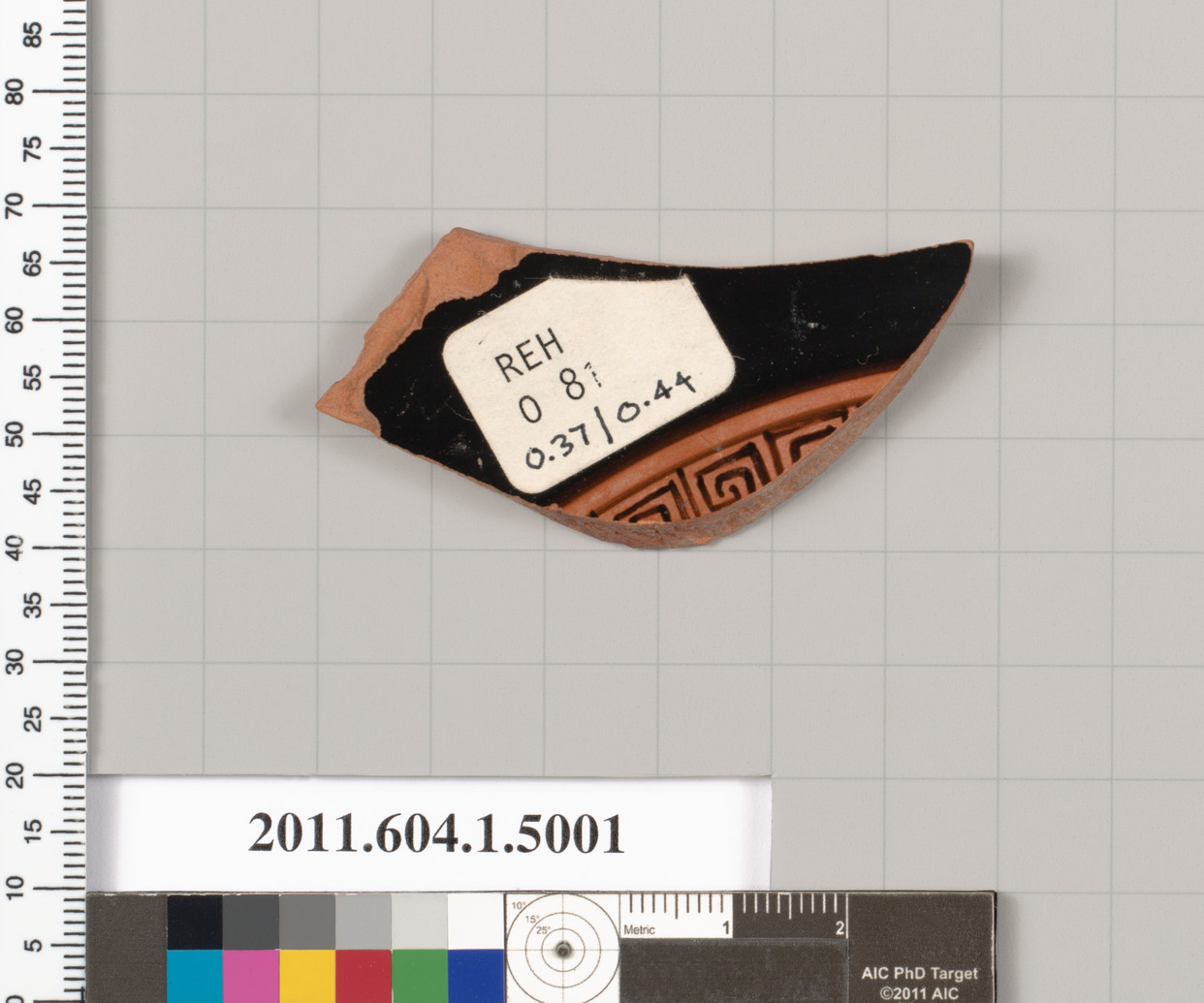
The terracotta fragment of a kylix—a Greek Attic drinking cup from the 5th century BCE—presents a seemingly incongruous muse for the 2026 Old Money silhouette. At first glance, the broken, fired clay, bearing traces of black-figure decoration, belongs to a world of symposium, libation, and civic ritual, far removed from the tailored wool and cashmere of contemporary luxury. Yet, as the internal genetic code of the Lauren Fashion Heritage Lab reveals, the deepest aesthetic truths often reside in the interplay between the fragmentary and the whole, the material and the transcendent. The kylix fragment, like the Damascus Room and the He Xiangu base, embodies a philosophy of layered meaning and structured void that directly informs the 2026 Old Money aesthetic: a silhouette that eschews ostentation for a quiet, almost archaeological, authority.
This analysis argues that the terracotta fragment’s core design principles—its tactile materiality, its geometric precision within a broken form, and its use of negative space as a narrative device—provide a critical framework for understanding the 2026 Old Money silhouette. This is not a revival of Grecian draping, but a deeper, more philosophical borrowing: a translation of ancient ceramic logic into the language of woven textiles and tailored construction.
Materiality as Silent Authority: From Fired Clay to Heritage-Black Wool
The kylix fragment’s most immediate lesson is in material integrity. Terracotta, literally “baked earth,” is a humble material. Its value lies not in rarity but in the honesty of its making—the visible marks of the potter’s wheel, the slight irregularities of the hand, the matte, porous surface that absorbs light rather than reflecting it. This is the antithesis of the shiny, logo-driven luxury of the early 21st century. The 2026 Old Money silhouette, as extrapolated from this artifact, prioritizes Heritage-Black wool—a fabric that, like terracotta, possesses a dense, matte finish, a substantial weight, and a subtle, almost imperceptible texture that reveals itself only upon close inspection. This is not the black of mourning or of high-fashion drama; it is the black of the earth, of the archive, of the patina of time.
The fragment’s broken edges are not flaws; they are narratives of endurance. Similarly, the 2026 silhouette embraces visible construction—picked seams, hand-stitched buttonholes, the slight unevenness of a natural shoulder—as markers of authenticity. The garment does not pretend to be perfect; it pretends to be ancient. This aligns with the internal code’s concept of “技艺即修为” (craft as cultivation). The potter’s wheel and the tailor’s needle are both instruments of a meditative discipline, where the maker’s hand is visible in the final object, conferring a quiet, unassailable authority.
Geometric Order and the Silhouette of Restraint
The black-figure decoration on the kylix fragment—typically a band of stylized warriors, horses, or geometric meander—is characterized by rigorous, almost mathematical, composition. The figures are flattened, reduced to their essential outlines, and arranged in a frieze that repeats with hypnotic regularity. This is not naturalism; it is order imposed upon chaos. The 2026 Old Money silhouette borrows this principle directly. The double-breasted jacket with a suppressed waist, the straight-leg trouser with a precise break, the crisp, unadorned shirt collar—these are the tailoring equivalents of the kylix’s geometric frieze. They create a visual rhythm that is both calming and authoritative.
Critically, the fragment’s broken state introduces a radical element: the void. The missing shards of the cup are as important as the remaining ones. They invite the viewer to complete the form mentally, to engage in an act of imaginative reconstruction. The 2026 silhouette mirrors this through strategic absence. A jacket might be cut with a deliberately narrow shoulder, leaving a gap between the garment and the body. A trouser might be cropped, exposing the ankle. These are not errors; they are intentional lacunae, spaces that allow the wearer’s presence to complete the silhouette. This echoes the internal code’s observation of the Damascus Room: “实以衬虚,有以生无” (substance supports void, being gives rise to non-being). The garment’s structure exists to frame the human form as a living sculpture.
The Base as a Platform for Transcendence: From Kylix Stem to Tailored Foundation
The kylix’s stem and foot—though often broken away in fragments—are conceptually crucial. They elevate the drinking bowl from the table, creating a sacred space between the vessel and the surface. This is the same principle observed in the He Xiangu base: a physical platform that enables spiritual ascent. In the 2026 Old Money silhouette, this translates to the foundation garments—the structured shoulder, the firm waistband, the precise fit across the back. These are not visible, but they are felt. They provide the architectural integrity that allows the outer layers to drape with effortless grace.
Furthermore, the kylix’s function—a cup for communal drinking—imbues it with a social dimension. It is an object of shared ritual. The 2026 Old Money silhouette, in its restraint and its heritage-black uniformity, is similarly designed for a collective, rather than individual, statement. It does not scream for attention; it commands respect through its quiet consistency. The wearer is not a peacock but a pillar of an enduring order—a living fragment of a tradition that values substance over spectacle.
Conclusion: The Fragment as a Complete Aesthetic
The terracotta kylix fragment, in its broken, earthy, and geometrically precise state, offers a profound lesson for the 2026 Old Money silhouette. It teaches that authority is not loud, that beauty is found in material truth, and that the void is as essential as the form. The silhouette that emerges is one of archaeological depth: a jacket that feels like a relic, a trouser that moves like a frieze, a black that absorbs all color and reflects only time. It is a silhouette that, like the fragment itself, does not need to be complete to be whole. It is a heritage of broken perfection, a testament to the enduring power of craft, restraint, and the silent eloquence of the earth.