Terracotta Shadows & Architectural Form: Re-reading the Kylix Fragment for 2026
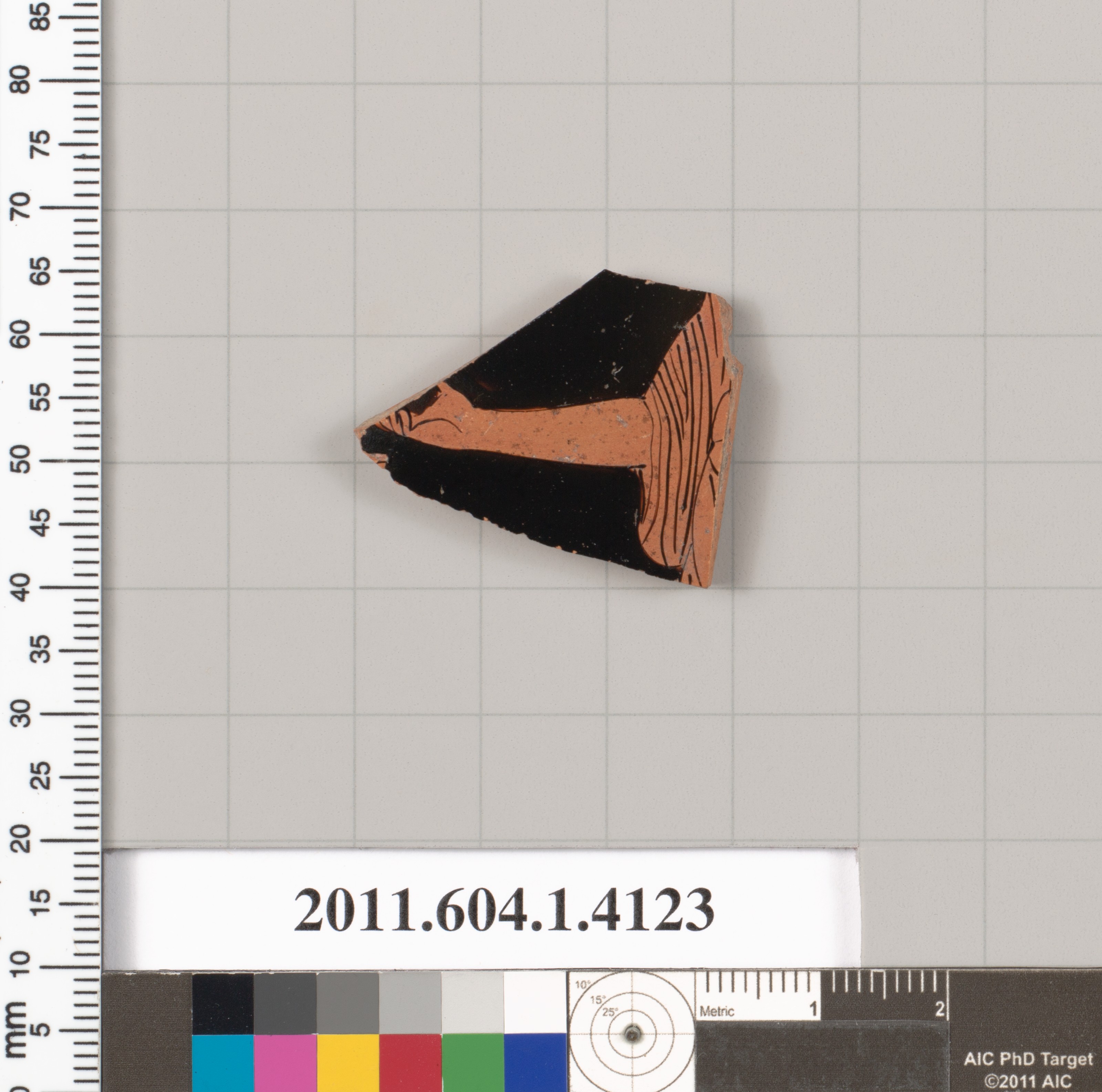
The 2026 Old Money aesthetic, as interpreted through the Lauren Fashion Heritage Lab, transcends mere nostalgia for bygone wealth. It is a philosophy of permanent value, articulated through silhouette, substance, and a profound dialogue with antiquity. Our internal genetic code, which decodes the interplay of “layered fullness” and “void” in artifacts like the Damascus Room and the He Xiangu base, provides the conceptual lens. The newly examined museum artifact—a Terracotta fragment of a Greek kylix (drinking cup)—offers a startlingly concrete visual source, translating these Eastern philosophical abstractions into Western classical principles of form, fracture, and the beauty of the essential. This analysis posits that the 2026 Old Money silhouette will be defined not by opulent display, but by the architectural integrity, deliberate incompleteness, and earth-bound elegance inherent in this shattered vessel.
The Fragment as a Complete Silhouette: Deconstructing the Vessel
The kylix fragment is not a ruin; it is a testament. Its broken edges do not signify loss but rather a revelation of structure. Where the Damascus Room uses layered ornament to define a sacred void, the kylix fragment uses its very fracture to expose the anatomy of the silhouette. The curve of the ceramic, once part of a symmetrical drinking bowl, now stands as an autonomous, sculptural arc. This informs a radical approach to 2026 tailoring: garments will be conceived as architectural assemblies of “fragments.” A coat’s bodice may be cut with the severe, parabolic curve of the kylix’s rim, meeting the skirt in a deliberate, seam-emphasized juncture that recalls ceramic joinery, not fluid draping. The silhouette becomes a study in composed segments—shoulder, sleeve, torso—each possessing the self-contained elegance of a pottery shard, yet combining into a powerfully holistic form. This mirrors the Old Money ethos: a composed identity built from discrete, time-honored elements (tweed, poplin, cavalry twill) assembled with irreproachable, almost archaeological precision.
The Patina of Time and the Heritage-Black Palette
The terracotta’s materiality is paramount. It is fired earth, humble and enduring. Its surface, once perhaps adorned with black-figure heroes, is now worn to a complex, matte texture, bearing the subtle chromatic variations of age and excavation—soft umbers, faint red oxides, and the greyish bloom of centuries. This directly catalyzes the 2026 color and texture narrative, centering on Heritage-Black. This is not a monolithic black, but a spectrum: the carbon-black of spent Athenian hearths, the dusty black of attic-stored wool, the warm, brown-black of aged terra cotta. It is a black that contains history, a non-color that absorbs light and context much like the fragment absorbs scholarly interpretation. Fabrics will be chosen for their innate, textural “patina”—crushed velvets that mimic dry earth, woolens with a napped, felt-like density, technical matte jerseys that echo ceramic surfaces. The finish is resolutely anti-gloss; luxury is expressed through depth and tactility, not sheen.
Negative Space and the Body as Void
Here, the dialogue with our internal genetic code deepens. The kylix was a vessel defined by its hollow—a void designed to hold wine and, in symposium, conversation and thought. The fragment, by revealing the thinness of its wall, highlights the primacy of the contained space. In 2026 silhouettes, this translates to a masterful manipulation of negative space around the body. Rather than constrict or contour, garments will create architectonic frames for the wearer. A wide, kylix-inspired neckline will carve out a dramatic collarbone vista. The severe, clean interior lines of a tailored jacket or coat—akin to the interior curve of the cup—will create a sheltered, personal space for the wearer. The body becomes the “void” around which the structured “fragments” of cloth are arranged, a direct formal parallel to the Damascus Room’s ornate walls enclosing a human-centered space of contemplation. The wearer is not adorned, but housed by the garment.
Conclusion: The Permanence of the Essential
The Terracotta kylix fragment, in its broken, earthbound state, provides a more potent symbol for 2026 Old Money than any intact regalia. It speaks of survival, of essence over ornament, and of a beauty that is earned through time and intellectual engagement. The resulting silhouette philosophy for 2026 is one of archaeological modernism: clothing built with the structural logic of pottery, colored with the nuanced spectrum of excavated earth, and designed to frame the human form with the solemnity of a sacred vessel. It moves beyond the “quiet luxury” of mere minimalism into the realm of considered permanence. In the shadow of this ancient fragment, the Old Money wardrobe becomes a curated collection of timeless, architectural forms—silent, sturdy, and deeply connected to the slow, layering processes of both history and craft. It is not fashion as consumption, but fashion as curation of the enduring self.