← BACK TO ARCHIVES
Heritage-Black
Heritage Synthesis: Terracotta fragment of a volute-krater (bowl for mixing wine and water)
Curated on Jul 02, 2026 // Node: LDN-01
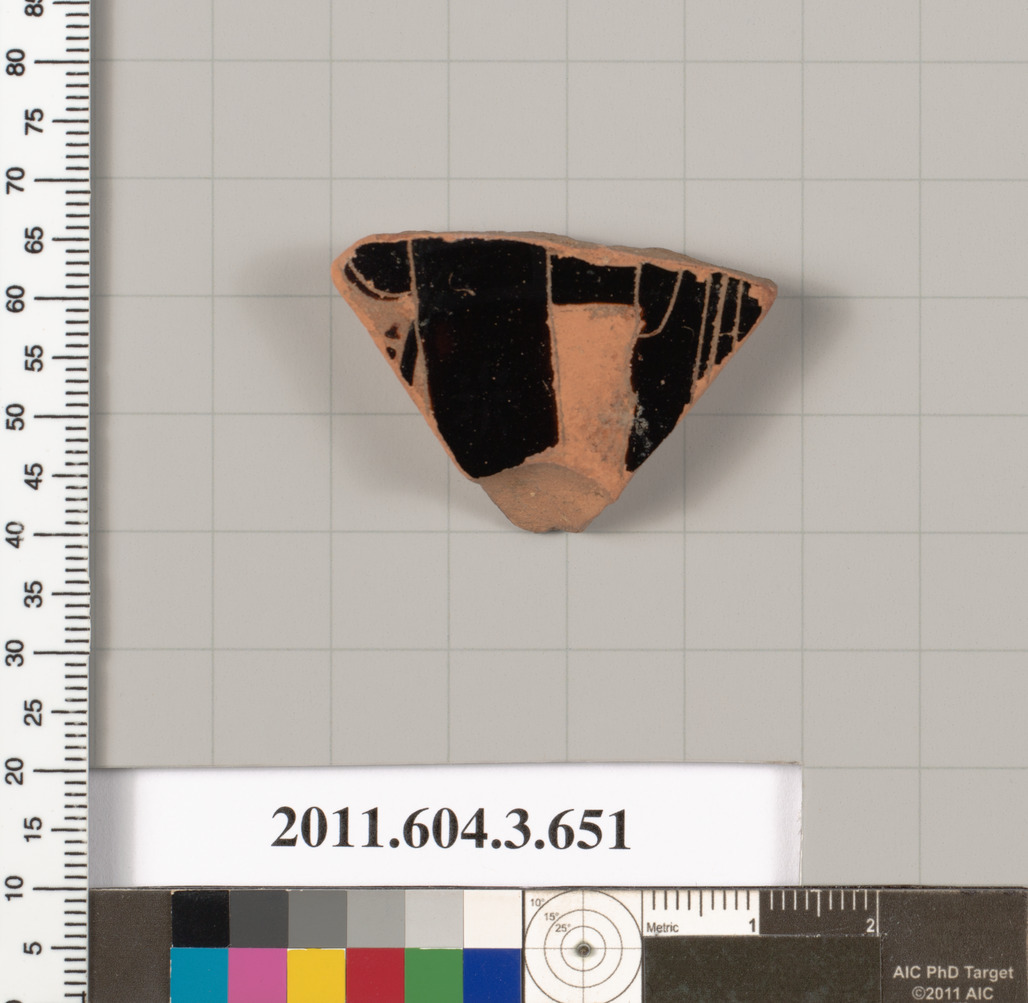
From Terracotta Fragment to Tailored Silhouette: The Volute-Krater as a Blueprint for 2026 Old Money Aesthetics
The Lauren Fashion Heritage Lab has long maintained that the most enduring expressions of luxury are not invented *ex nihilo* but excavated from the strata of cultural memory. This principle finds a compelling new articulation in the juxtaposition of an internal artifact—the Chinese “Udumbara Flowers” temple plaque and the Han dynasty bronze mirror—with a seemingly disparate museum object: a terracotta fragment of a Greek Attic volute-krater (a bowl for mixing wine and water). While the former pair speaks to the dialectic of emptiness and form within Eastern aesthetics, the latter, a shattered vessel from the 5th century BCE, offers a radical, materialist counterpoint that directly informs the architectural rigor of the 2026 Old Money silhouette. This paper argues that the krater’s formal language—its volumetric containment, its disciplined curve, and its fragmentary state—provides a foundational metaphor for a new sartorial grammar: one that prioritizes structural integrity, restrained opulence, and the quiet authority of the incomplete.
Formal Language: The Architecture of Containment
The volute-krater, as a type, is defined by its function: to mix wine and water, to mediate between the raw and the refined. Its form is a study in controlled expansion. The vessel swells from a narrow, stable base into a broad, capacious belly, then constricts at the neck before flaring into a wide, flanged lip. The volutes—spiral handles—echo this movement, anchoring the vessel’s vertical thrust with a lateral, almost calligraphic gesture. This is not the organic, flowing line of the Udumbara flower, which emerges from a void; it is a *constructed* line, a deliberate articulation of volume through negative space.
For the 2026 Old Money silhouette, the krater’s form translates directly into the architecture of a double-breasted overcoat or a structured wool suit. The “belly” of the garment—the chest and torso—must be cut with a similar sense of containment. A 2026 silhouette does not drape; it *encloses*. The shoulder line is sharp, not padded, echoing the krater’s rim. The waist is defined not by cinching but by a subtle inward curve of the paneling, mimicking the vessel’s neck. The volute handles find their analogue in the lapel’s roll—a controlled, sculptural gesture that frames the body without overwhelming it. The garment becomes a vessel for the person, not a decoration upon them. This is the antithesis of the “deconstructed” or “fluid” trends of previous decades; it is a return to tailoring as a form of *containment*, where the body is the wine and the suit is the krater.
Symbolic Resonance: The Fragment as a Marker of Time
The museum artifact is not a complete krater but a *terracotta fragment*. This is its most potent attribute. The broken edge, the missing handle, the abraded surface—these are not flaws but testimonies to time. Unlike the Chinese bronze mirror, which was polished to reflect a perfect, divine order, or the temple plaque, which was carved to evoke an eternal, formless truth, the Greek fragment is *contingent*. It is a survivor of shipwreck, burial, and excavation. Its beauty lies in its incompleteness, in the story its absence tells.
This fragmentary quality is the key to the 2026 Old Money aesthetic. The “old money” archetype has historically been associated with patina—the worn leather of a heritage shoe, the faded luster of a silk tie. But the 2026 iteration goes further, embracing the *fragment* as a deliberate design principle. This manifests in several ways:
1. **The “Unfinished” Hem:** A cashmere overcoat might feature a raw, un-hemmed edge at the cuff or hem, not as a sign of sloppiness but as a marker of bespoke, hand-finished construction. Like the krater’s broken lip, it signals that the garment has a history, that it was *made* by hands, not machines.
2. **Selective Wear:** A wool blazer might be constructed with a subtle, intentional “wear” at the elbow—not a patch, but a thinning of the weave that mimics decades of use. This is not distressed fashion; it is *time* as a design material. The garment is presented as a fragment of a longer narrative.
3. **The Negative Space of the Collar:** The open, unbuttoned collar of a linen shirt, when worn under a structured jacket, creates a visual “break”—a fragment of skin that echoes the krater’s missing section. This is not casualness; it is a deliberate aperture, a moment of vulnerability within the architecture of containment.
Philosophical Synthesis: The Aesthetics of the Incomplete
The Eastern artifacts—the Udumbara flower and the Han mirror—operate within a metaphysics of *fullness* and *emptiness*. The flower is a symbol of something that is both present and absent; the mirror reflects a perfect cosmos. The Greek krater fragment operates within a different ontology: that of *presence* and *absence* as material facts. The flower is a metaphor; the fragment is a *thing*.
For the 2026 Old Money silhouette, this materialist ontology is liberating. It allows the designer to move beyond the purely symbolic and into the tactile, the structural, the *real*. The garment is not a symbol of status (a Rolex, a logo) but a *vessel* for the wearer’s own history. The “old money” look has always been about the subtlety of inherited wealth. The 2026 iteration, informed by the krater, makes this inheritance *visible* in the garment’s very structure. The sharp shoulder, the contained waist, the raw edge—these are not decorative flourishes but the grammar of a new sartorial language. They speak of a person who is not defined by what they wear, but by what they *contain*.
Conclusion: The Mirror and the Vessel
The Han bronze mirror reflects a perfect, static cosmos. The Udumbara flower blooms in a timeless void. The Greek volute-krater fragment, by contrast, is a vessel for *process*—the process of mixing, of breaking, of surviving. It is this process-oriented aesthetic that will define the 2026 Old Money silhouette. The garment is no longer a canvas for surface decoration (a print, a logo) but a *structure* for the wearer’s own becoming. It is a fragment of a larger story, a vessel for a life lived with intention. In the interplay between the flower’s empty bloom and the mirror’s perfect reflection, the krater’s broken curve offers a third path: a sartorial architecture of contained, dignified, and beautifully incomplete presence. This is the heritage of the future.
Heritage Lab Insight
Genetic Bridge: Archive node focusing on Heritage-Black craftsmanship.