The Fragmented Lyre: Attic Terracotta and the 2026 Old Money Silhouette
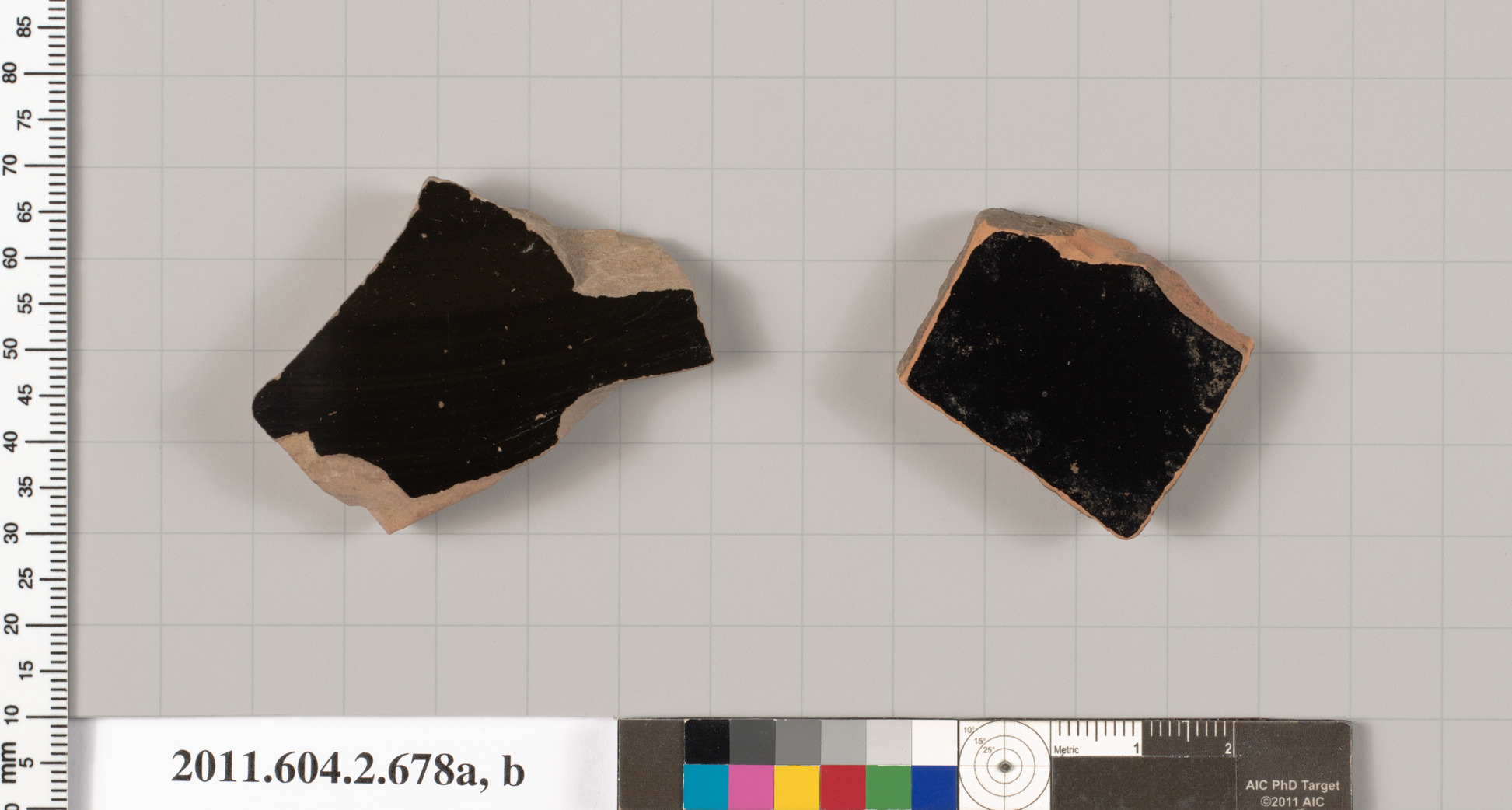
The Lauren Fashion Heritage Lab’s internal genetic code—rooted in the Tang dynasty’s philosophy of “the unity of sound and painting”—finds an unexpected yet profound resonance in the Terracotta fragments of column-kraters from Attic Greece. These ancient shards, once part of vessels used to mix wine and water for symposia, are not merely archaeological remnants; they are a lexicon of broken time, a material testament to the aesthetic of the incomplete. For the 2026 Old Money silhouette, which demands a quiet, generational authority rather than transient spectacle, these fragments offer a radical redefinition of luxury: not as perfection, but as the weight of history carried in the grain of the garment.
I. The Aesthetics of the Fragment: From Terracotta to Tailoring
The Attic column-krater fragments, with their weathered edges and faded black-figure or red-figure decoration, embody a heritage of use. They are not pristine museum objects; they are survivors. Their value lies not in their wholeness, but in the narrative of breakage and endurance. This principle directly informs the 2026 Old Money silhouette’s departure from the hyper-polished, zero-defect luxury of the past decade. Instead, we see a turn toward “archaeological tailoring”—garments that appear to have been excavated from a family archive, bearing the subtle patina of time.
In practical terms, this translates to unfinished hems, raw-edge seams, and deliberate asymmetry in jacket shoulders and trouser lengths. The terracotta fragment teaches us that the cut is not a boundary but a rupture. A double-breasted blazer in heavy wool, for instance, might feature one lapel slightly longer than the other, mimicking the irregular break of a krater’s rim. The silhouette is structured but not rigid—like the fragment, it holds its form while acknowledging the forces that have shaped it. The “broken line” of the shoulder seam, echoing the jagged edge of the terracotta, becomes a signature detail for 2026: a visual cue that the wearer’s lineage is not a smooth narrative, but a layered, contested history.
II. The Symposiastic Silhouette: Volume, Weight, and the Body as Vessel
The column-krater was a functional object, designed to hold liquid and facilitate social ritual. Its form—a broad, swelling body atop a narrow stem—creates a tectonic relationship between volume and support. The 2026 Old Money silhouette translates this into a “vessel-like” garment architecture. We see exaggerated, rounded shoulders that evoke the krater’s bulbous belly, balanced by a cinched or structured waist that acts as the stem. This is not the sharp, aggressive power shoulder of the 1980s; it is a soft, volumetric power that suggests containment and generosity.
The materiality of terracotta—its earthy, matte finish and slightly granular texture—dictates the fabric choices for 2026. Heavy wool flannel, unfinished cashmere, and slubbed silk replace the slick, high-shine fabrics of earlier luxury. The color palette is drawn directly from the Attic fragments: terracotta red, ochre, charcoal, and faded black. These are not bright, saturated hues, but weathered, mineral tones that seem to have been pulled from the earth. A coat in this palette does not announce itself; it absorbs light, creating a quiet, authoritative presence.
Furthermore, the symposiastic function of the krater—its role in a ritual of shared consumption—informs the silhouette’s relationship to the body in motion. The 2026 Old Money garment is not designed for static display; it is designed for gesture. The wide, flowing trousers allow for the expansive arm movements of a speaker at a symposium. The coat’s deep armholes and generous back pleats enable the wearer to lean in, to pour, to converse. The silhouette is hospitable, not defensive.
III. The Broken Mirror: Time, Surface, and the Patina of Luxury
Returning to the Tang dynasty’s Square Mirror with Two Phoenixes and Floral Sprays, we see a parallel between the mirror’s dialectic of surface and void and the terracotta fragment’s dialectic of form and absence. The mirror’s polished face reflects the present; its carved back holds the eternal. The terracotta fragment, in its broken state, does the opposite: its broken edge reflects the past, while its intact surface holds the memory of a complete vessel. The 2026 Old Money silhouette synthesizes these two temporalities.
The garment’s surface treatment becomes a site of temporal negotiation. We see the rise of “patina finishes” in luxury textiles: subtle, irregular dyeing that mimics the uneven coloration of ancient pottery; hand-stitched repairs that are left visible, like the kintsugi of a ceramic bowl; frayed edges that are not flaws but signatures of use. A cashmere sweater might have a deliberately mended elbow, the repair thread a slightly different shade, creating a visual echo of the fragment’s broken rim. This is not deconstruction for its own sake; it is a hermeneutic of wear, a way of encoding the garment with the wearer’s own history.
The silhouette itself becomes a broken mirror. The asymmetrical closure of a coat—one side longer than the other—references the irregular break of the terracotta. The double-faced fabric, with one side finished and the other raw, creates a dialogue between interior and exterior, much like the mirror’s front and back. The 2026 Old Money silhouette is not a seamless whole; it is a fragmentary totality, a garment that acknowledges its own incompleteness as a condition of its authenticity.
IV. Conclusion: The Fragment as Foundation
The Attic terracotta fragments, when read through the lens of Tang aesthetics, reveal a transhistorical truth: that the most enduring luxury is not the pristine object, but the fragment that carries the weight of time. For the 2026 Old Money silhouette, this means a fundamental reorientation from display to endurance, from perfection to patina, from surface to depth. The garments of 2026 will not shout; they will whisper of symposiums long past, of hands that have touched them, of lives that have been lived in them. They will be, like the terracotta fragment, broken vessels that still hold the wine of history.