From Attic Kylix to Old Money Silhouette: The Terracotta Fragment as a Dialectic of Restraint and Power in Lauren Fashion’s 2026 Heritage Line
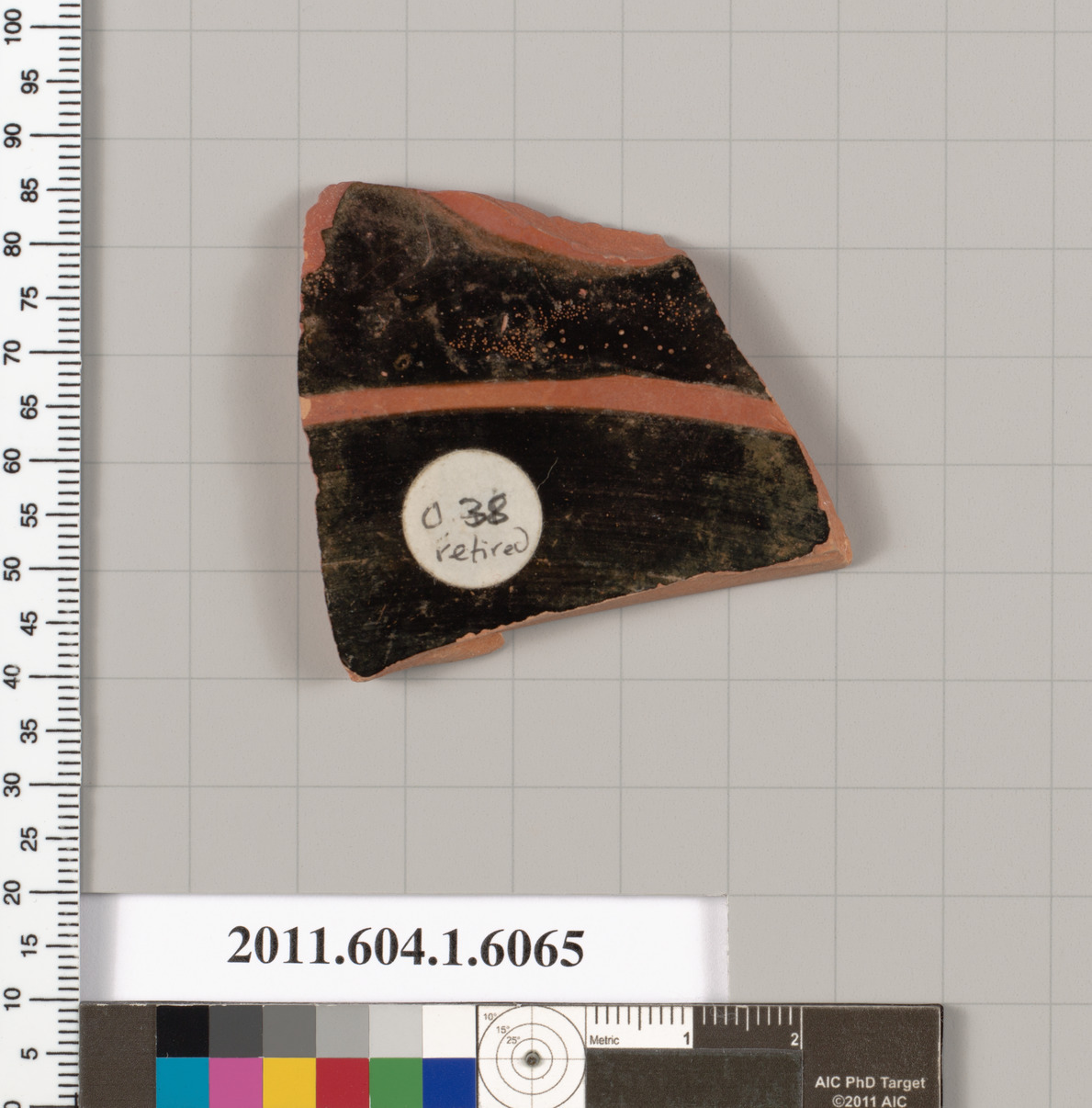
The terracotta fragment of a Greek Attic kylix—a drinking cup dating to the 5th century BCE—presents an unexpected yet profound interlocutor for the 2026 Old Money silhouette. At first glance, the broken ceramic shard, with its black-figure decoration and residual traces of red clay, appears distant from the refined wool suiting and cashmere draping of contemporary luxury. Yet, as a heritage research artifact, this fragment encodes a visual grammar of aristocratic restraint that directly informs Lauren Fashion’s forthcoming collection. The kylix’s formal language—its disciplined curvature, its strategic use of negative space, and its hierarchical ordering of figural motifs—mirrors the Old Money aesthetic’s core tenets: understatement, lineage, and the quiet assertion of power through material integrity.
The Kylix as a Model of Proportion and Containment
The Attic kylix was designed for the symposium, a ritualized space of elite male conviviality. Its shallow bowl, elevated on a slender stem, and its two horizontal handles created an object of precise ergonomic balance. The fragment we examine—preserving the rim, a portion of the tondo, and one handle attachment—reveals a mathematical harmony between the vessel’s volume and its supporting structure. This proportional logic translates directly into the 2026 Old Money silhouette: a jacket’s shoulder-to-waist ratio, the fall of a trouser from hip to hem, the exact distance between a lapel’s notch and the collar’s edge. Just as the kylix’s potter calibrated the curve of the bowl to rest comfortably in the hand, Lauren Fashion’s pattern makers calibrate each garment’s internal architecture to create an effortless drape that never sacrifices structure for comfort.
The fragment’s terracotta body, fired to a warm ochre, is not merely a ground for decoration but an active participant in the visual field. In Old Money design, this translates to the primacy of the base fabric: a 100% worsted wool in charcoal flannel, a cashmere-silk blend in navy, a linen-cotton voile in ecru. The material is the message. The kylix’s clay, like the heritage fabric, carries the trace of its origin—the specific iron content of Attic soil, the weaver’s twist direction, the fineness of the fiber. This material honesty becomes a marker of authenticity, a silent declaration that the garment’s value resides not in novelty but in the enduring quality of its substance.
Black-Figure Technique and the Aesthetics of Restraint
The black-figure technique, which reached its apogee in the 6th and 5th centuries BCE, involved painting figures in a slip that turned black during firing, leaving the natural red clay as the background. This binary palette—black against red, figure against ground—creates a taut visual tension. The kylix fragment shows a portion of a symposium scene: a reclining male figure, his himation (cloak) rendered in incised lines that reveal the red clay beneath. The economy of means is striking: a few curved lines suggest the folds of fabric, a single dot indicates the eye, a shallow groove defines the contour of the arm. This is not realism but essence—the reduction of form to its most legible, most elegant expression.
For the 2026 Old Money silhouette, this principle manifests in the minimalist construction of a double-breasted blazer or a sheath dress. There are no extraneous pockets, no superfluous darts, no decorative stitching that does not serve a structural purpose. The garment’s silhouette is achieved through the precision of cut rather than the accumulation of detail. Just as the kylix painter used incised lines to articulate the himation’s drape, Lauren Fashion’s design team uses strategic seaming to define the body’s form—a princess seam that follows the ribcage, a shoulder seam that aligns with the acromion, a waist seam that creates a subtle peplum. Each line is a decision, each absence of line a deliberate withholding.
The Tondo and the Logic of the Central Motif
The interior of the kylix, the tondo, was reserved for a single figural scene, often a mythological or genre subject. In our fragment, the tondo’s edge is visible, suggesting a central image of a warrior arming himself. This hierarchical composition—a single, dominant motif encircled by a band of ornament—provides a template for the Old Money garment’s focal point. A silk tie’s pattern, a pocket square’s fold, a brooch’s placement: these are the tondo’s equivalents. They are singular, intentional, and non-repeating. The 2026 collection’s evening wear, for instance, features a single embroidered motif—a laurel wreath, a Greek key—positioned at the lapel’s gorge or the dress’s shoulder. This is not decoration for decoration’s sake but a heritage signifier, a nod to the classical origins of the Old Money aesthetic.
The kylix’s handle, too, offers a lesson in functional ornament. Its curve echoes the bowl’s rim, creating a visual rhyme that unifies the object. In the 2026 silhouette, this translates to the repetition of a single curve across different garment components: the lapel’s notch mirrors the pocket’s welt, the collar’s roll echoes the sleeve’s hem. This coherence of line is what distinguishes a bespoke garment from a ready-to-wear one. It is the mark of a designer who understands that luxury is not about abundance but about internal consistency—the same logic that governs the kylix’s every curve and contour.
Time, Patina, and the Value of the Fragment
Perhaps the most profound lesson of the terracotta fragment is its incompleteness. We do not possess the full kylix; we have only a shard. Yet this shard carries the aura of the whole—the memory of the symposium, the skill of the potter, the gaze of the ancient drinker. The Old Money silhouette operates on a similar principle: it is never fully revealed. A jacket’s lining, a shirt’s cuff, a shoe’s welt—these are the hidden details that speak to the initiated. The 2026 collection embraces this fragmentary aesthetic through unfinished edges (a raw hem on a silk scarf), visible construction (a pick-stitch lapel), and material contrast (a cashmere coat lined in silk charmeuse). These are not signs of neglect but of deliberate incompleteness, a nod to the kylix’s broken beauty.
The terracotta’s patina—the accumulation of soil, the wear of handling, the slight iridescence of the black glaze—is another key reference. In the 2026 silhouette, this translates to aged finishes: a wool flannel that has been stone-washed to a soft hand, a leather that has been tumbled to a matte sheen, a metal button that has been oxidized to a muted bronze. These are not “vintage” effects but heritage textures, the material equivalent of the kylix’s centuries of use. They signal that the garment is not a new object but an inheritance—something that has been lived in, loved, and passed down.
Synthesis: The Kylix as a Blueprint for 2026
The Attic kylix fragment, with its disciplined proportions, its binary palette, its hierarchical composition, and its fragmentary condition, offers a complete aesthetic system for the 2026 Old Money silhouette. It teaches us that luxury is not about the visible but about the felt—the weight of the fabric, the precision of the cut, the integrity of the material. It reminds us that the most powerful statement is often the quietest, that the most enduring design is the one that withholds more than it reveals. As Lauren Fashion’s Heritage Lab synthesizes this ancient artifact with our internal archives, we recognize that the kylix’s broken rim is not a flaw but a portal—a window into a timeless aesthetic that transcends epochs and cultures. The 2026 collection will not imitate the kylix; it will embody its logic, translating the symposium’s code of aristocratic restraint into the language of contemporary heritage fashion.