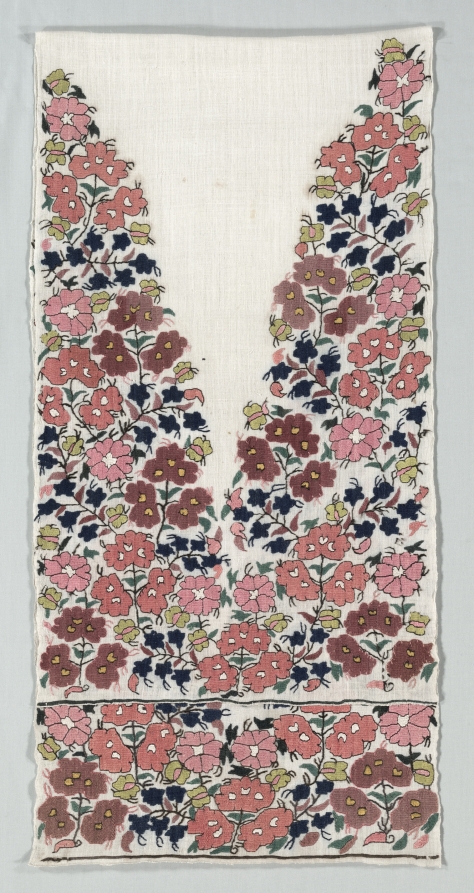
The Scarf as a Loom of Legacy: Silk, Imperial Craft, and the Modern Wardrobe
In the hushed corridors of heritage, where the warp of history meets the weft of craftsmanship, the silk scarf emerges not merely as an accessory, but as a tangible artifact of imperial ambition and artisanal mastery. At the Lauren Fashion Heritage Lab, we examine such objects with the precision of a Savile Row tailor—measuring not just the cloth, but the narrative it carries. The scarf, particularly when rendered in silk, is a paradox: a small, portable luxury that encapsulates centuries of geopolitical power, technological innovation, and aesthetic refinement. This paper explores the materiality of silk within the legacy of imperial weaving, tracing its journey from the looms of dynastic courts to the necks of discerning individuals who understand that true elegance is never accidental—it is inherited.
The Materiality of Silk: A Fabric Forged in Empire
Silk is not a neutral substance. Its production, from the silkworm’s cocoon to the finished textile, demands an exacting discipline that mirrors the hierarchical structures of imperial societies. The materiality of silk—its tensile strength, its lustrous sheen, its ability to hold vibrant dyes—was historically a monopoly of power. In ancient China, the Han Dynasty guarded sericulture as a state secret, punishing disclosure with death. This was not mere paranoia; it was the recognition that silk was a currency of influence, a diplomatic tool, and a symbol of celestial authority. When the Silk Road unfurled across continents, it did so not as a trade route for raw materials, but as a conduit for imperial identity. The scarf, as a discrete form, became a portable emblem of this legacy—a piece of the court that could be worn in the wilderness, a whisper of the emperor’s loom in a foreign market.
The physical properties of silk reinforce this narrative. Unlike wool or cotton, silk fibers are continuous filaments, requiring no spinning. This structural integrity allows for the creation of fabrics that are simultaneously lightweight and durable, fluid yet resilient. In the context of imperial weaving, this meant that scarves could be woven with intricate patterns—dragons, phoenixes, floral motifs—that signified rank, clan, or divine mandate. The Jacquard loom, perfected in 19th-century France, later democratized this complexity, but its origins lie in the Chinese drawloom, which required two artisans to operate: one to select the warp threads, another to pass the weft. This collaborative precision, born in imperial workshops, is the genetic code of every silk scarf that carries a heritage label today.
The Imperial Loom: From Byzantium to Versailles
The legacy of imperial silk weaving is not confined to Asia. The Byzantine Empire, under Justinian, smuggled silkworm eggs from China in hollowed-out bamboo canes, establishing a silk industry that would clothe the Orthodox clergy and the imperial court. The resulting fabrics—heavy with gold thread, embroidered with religious iconography—were not scarves in the modern sense, but they laid the groundwork for the accessory’s evolution. By the time of Louis XIV, the French royal manufactories at Lyon and Gobelins had transformed silk weaving into a state-sponsored art form. The scarf, known as the foulard, became a canvas for the Sun King’s propaganda, with patterns celebrating military victories or botanical discoveries from the colonies. To wear such a scarf was to participate in the imperial project—to wrap oneself in the narrative of conquest and cultivation.
This lineage is critical for understanding the scarf’s contemporary resonance. When a heritage house like Hermès or Liberty London produces a silk scarf, it is not merely selling a square of fabric. It is invoking the looms of the Forbidden City, the workshops of Constantinople, and the ateliers of the Rue du Faubourg Saint-Honoré. The materiality of silk ensures that this invocation is not symbolic but physical. The weight of the silk, the crispness of the hem, the depth of the color—these are the hallmarks of a craft that has been refined over millennia. For the modern connoisseur, a silk scarf is a quiet statement of belonging to a lineage of taste that transcends trends.
The Scarf as a Heritage Artifact: Preservation and Interpretation
At the Lauren Fashion Heritage Lab, we treat each scarf as a primary source. Its condition—fading along the folds, fraying at the edges—tells a story of use, of the body that wore it, of the climate it endured. The dyes, whether natural indigo or synthetic aniline, reveal the technological epoch of its creation. The weave structure, whether plain satin or complex twill, indicates the skill of the weaver and the capacity of the loom. In the context of imperial silk weaving, these details are not trivial. They are the evidence of a global system that moved raw silk from China to Italy, spun it in Lombardy, wove it in France, and sold it in London. The scarf, in its smallness, is a microcosm of this network.
Preserving such artifacts requires a methodology that respects both their material fragility and their cultural weight. We store silk scarves in acid-free tissue, away from light that would accelerate photodegradation. We document their provenance with the rigor of a Savile Row tailor recording a client’s measurements—meticulous, irreverent of shortcuts. But preservation is not merely about halting decay; it is about enabling interpretation. A scarf from the Qing Dynasty, for instance, might feature a five-clawed dragon reserved for the emperor. To understand this is to understand the cosmology of imperial China, where the scarf was not an accessory but a talisman of authority. To wear a replica today is to engage in a dialogue with that authority, to recontextualize it within the framework of personal style.
Conclusion: The Scarf as a Living Legacy
The silk scarf endures because it is a perfect synthesis of form and function, of heritage and innovation. Its materiality—the luster of silk, the precision of the weave—carries the weight of imperial ambition, from the Han Dynasty to the Bourbon court. But it is also a deeply personal object, one that can be tied, draped, or folded to express individuality. In the world of luxury, where authenticity is increasingly prized, the scarf serves as a reminder that the most valuable artifacts are not those locked in vitrines, but those that can be worn, touched, and passed down. At the Lauren Fashion Heritage Lab, we study the scarf not as a relic, but as a living thread in the fabric of human culture—a thread that, like silk itself, is both fragile and unbreakable.
For the discerning wearer, the scarf is not a purchase. It is an inheritance.