The Terracotta Kylix and the Architecture of Restraint: Recasting Attic Lineage for 2026 Old Money Silhouettes
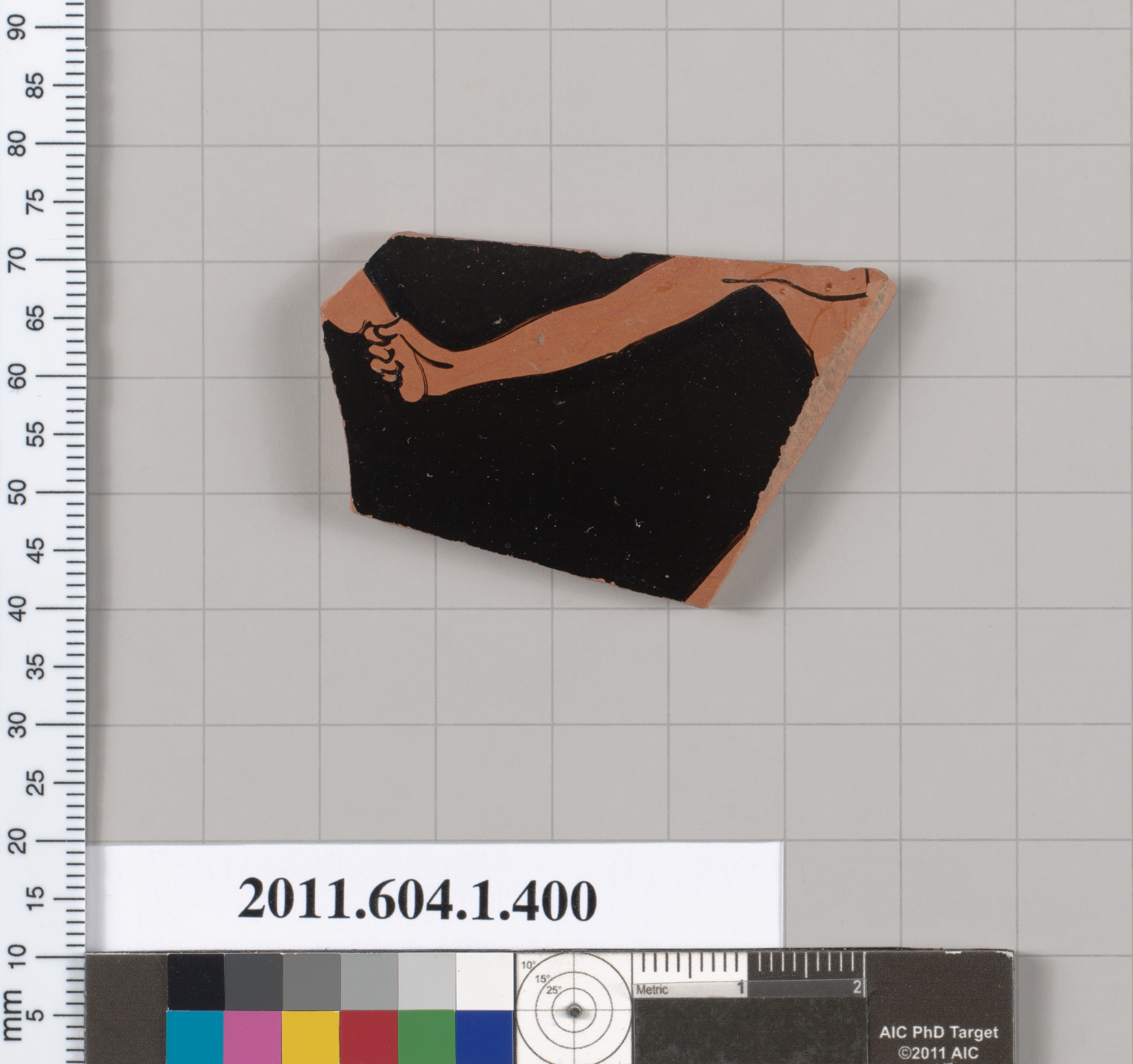
At first glance, a fragmentary Greek kylix—a drinking cup from the Attic tradition—appears to belong to a world utterly remote from the hushed ateliers of Lauren Fashion Heritage Lab. Yet within its broken terracotta rim and the sinuous black-figure decoration that survives, we discern a profound resonance with the philosophical core of our Heritage-Black lineage. This artifact, a shard of communal symposium and ritualized leisure, offers a counterpoint to the dense, celestial exuberance of the Han-dynasty bronze mirror and the Zen-like emptiness of the “Udumbara” temple plaque. Where the Chinese artifacts speak of cosmic fullness and meditative void, the kylix whispers of controlled proportion, earthly balance, and the quiet dignity of the human form in repose. For the 2026 Old Money silhouette, this Greek fragment provides a crucial missing language: the grammar of architectural restraint that elevates heritage from mere decoration to a lived philosophy of understatement.
The Kylix as a Diagram of Silhouette: Symmetry and the Horizontal Line
The kylix’s form is deceptively simple: a shallow bowl, two horizontal handles, and a slender stem rising from a broad, stable foot. This is not a vessel of vertical aspiration—unlike a Gothic spire or a Baroque candelabra. Its primary axis is horizontal, inviting the drinker to recline, to lean, to share. In the context of 2026 Old Money dressing, this horizontal emphasis translates directly into the shoulder line and the jacket silhouette. The terracotta fragment’s preserved rim, painted with a precise band of meander pattern, teaches us that power in attire does not require height or volume. Instead, it demands a clear, unbroken horizontal structure—a broad, tailored shoulder that anchors the body without exaggeration, much as the kylix’s rim defines the vessel’s capacity. The Heritage-Black blazer for 2026 will not be a padded statement of aggression; it will be a terracotta-like frame, its shoulder seam falling with the same clean, unadorned logic as the cup’s lip. The silhouette is not about dominating space, but about containing it with quiet authority.
From Symposium to Sartorial Ritual: The Art of the Fragment
The kylix was not a solitary object; it was an instrument of the symposium, a ritualized gathering of equals. Its broken state—a fragment, a shard—is not a flaw but a text of time. In the 2026 Old Money aesthetic, we reject the tyranny of the pristine. The Heritage-Black garment will embrace the tactile evidence of wear: a subtle fray at the cuff, a slight unevenness in the weave, a patina that speaks of decades, not seasons. This is the “fragment” as a design principle. Just as the kylix’s surviving black-figure scene—perhaps a warrior or a charioteer—gains poignancy from what is missing, so too does the 2026 silhouette find its power in strategic omission. A jacket cut with a slightly asymmetrical closure, a trouser hem that breaks just so, a collar that refuses to sit perfectly flat—these are not errors. They are deliberate fragments, echoes of the Attic potter’s hand, who knew that perfection is a lesser god than truth.
The Black-Figure Line: Drawing the Body in Space
The most striking technical feature of the Attic kylix is its black-figure technique: silhouettes painted in a glossy slip, fired to a deep, lustrous black against the warm terracotta ground. This is not a representation of volume; it is a graphic reduction of form to its essential contour. The human figures, the horses, the decorative bands—they are lines that define space by what they exclude. For the 2026 Heritage-Black collection, this principle becomes a cutting philosophy. The silhouette will not rely on darts or complex tailoring to shape the body. Instead, it will use bold, continuous seam lines—a single, unbroken curve from shoulder to hem, a pant leg that is essentially a black-figure drawing of the leg itself. The fabric, likely a dense wool or a matte silk, will be treated as the terracotta ground: a neutral, warm base upon which the black lines of construction—the seams, the topstitching, the edge binding—become the sole ornament. There will be no embroidery, no pattern, no logo. The architecture of the garment is its only decoration, just as the kylix’s beauty lies in the purity of its painted silhouette against the fired clay.
East Meets West: The Shared Language of “象外之象” in Terracotta
Returning to the internal genetic code, the Chinese aesthetic of “象外之象” (the image beyond the image) finds an unexpected echo in the Greek kylix. The Han mirror and the temple plaque achieve this through cosmic density and Zen emptiness. The kylix achieves it through earthly presence. The terracotta fragment does not point to a celestial realm; it points to the human hand, the shared cup, the moment of pause. Its “image beyond the image” is the gesture of the drinker, the weight of the vessel in the hand, the sound of voices in a room. For the 2026 Old Money silhouette, this translates into a new kind of luxury: the luxury of the unadorned moment. A Heritage-Black coat is not a statement of wealth; it is a vessel for the wearer’s presence. Its beauty is not in its fabric or its cut alone, but in the way it frames the person within—the slight shift of the shoulder as they turn, the fall of the sleeve as they raise a hand. This is the terracotta lesson: the object is not the message; the life it contains is the message.
Conclusion: The 2026 Silhouette as a Symposium of Restraint
The terracotta kylix fragment, for all its ancient origin, is a radical document for the future of Heritage-Black. It teaches us that the most powerful silhouette is not the one that shouts, but the one that holds its shape with quiet, architectural certainty. It reminds us that restraint is not absence—it is the highest form of presence. For 2026, the Old Money silhouette will be defined by this Attic grammar: a horizontal, grounded shoulder; a graphic, black-figure line that draws the body without embellishment; and a fragment-like acceptance of time’s mark. It will be a silhouette that does not aspire to the heavens, but that anchors the wearer in the dignity of the here and now—a symposium of one, where the only ornament is the quiet, enduring truth of the line.