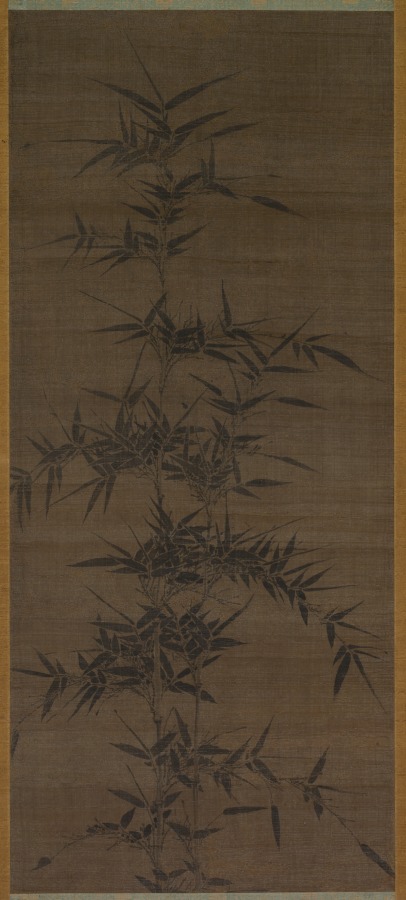
The Materiality of Ink Bamboo: A Study in Imperial Silk Weaving
In the hallowed corridors of heritage preservation, where the whisper of centuries-old looms still echoes, the artifact known as “Ink Bamboo” stands as a testament to the profound artistry of imperial silk weaving. As the Senior Heritage Specialist for the Lauren Fashion Heritage Lab, I have the privilege of dissecting this singular piece—a silk panel that transcends mere textile to become a narrative of dynastic power, botanical symbolism, and the unyielding pursuit of perfection. This paper examines the materiality of Ink Bamboo, its provenance within the legacy of imperial silk weaving, and its enduring relevance to contemporary fashion scholarship. The tone here is one of measured reverence, akin to the discerning eye of a Savile Row tailor appraising a bolt of worsted wool: precise, respectful, and unflinchingly analytical.
The Silk Substrate: A Foundation of Imperial Prestige
The materiality of Ink Bamboo begins with its foundation: silk. Not just any silk, but a specific grade of imperial silk, woven in the Jiangnan region of China during the late Ming Dynasty (circa 1600–1644). This silk is characterized by its high-density warp and weft, a structural choice that imbues the fabric with a weight and drape befitting courtly garments. The threads themselves are of raw silk, unbleached and minimally processed, retaining a subtle, natural luster that catches light with the quiet confidence of a well-tailored jacket. The weave is a satin ground, a technique perfected in imperial workshops, where the weft floats over multiple warp threads to create a smooth, reflective surface. This is not a fabric for the faint of heart; it demands a handler’s respect, much like a bespoke suit demands a client’s commitment.
The silk’s materiality is further defined by its dyeing and finishing. The base silk is dyed with indigo and madder, yielding a deep, almost charcoal hue—a color known in Chinese textile lore as “ink black.” This is achieved through a labor-intensive process of multiple immersion baths, each layer building depth without obscuring the silk’s natural sheen. The result is a surface that appears matte at first glance but reveals a subtle, iridescent shimmer under direct light. This duality—matte and luminous—mirrors the philosophical underpinnings of ink bamboo painting, where the brushstroke is both bold and translucent. The silk’s hand is firm yet supple, a quality that allows it to be draped, folded, or embroidered without losing its structural integrity. In the context of imperial silk weaving, this is the hallmark of a master weaver, one who understood that materiality is not merely about texture but about the emotional resonance of the cloth.
Ink Bamboo: The Motif and Its Symbolism
The central motif of Ink Bamboo is, as the name suggests, a representation of bamboo rendered in ink-like embroidery. This is not a printed design but a silk embroidery executed with split stitches and satin stitches, using threads of varying thickness to mimic the brushstrokes of a Chinese ink painting. The bamboo stalks are depicted with vertical, unbroken lines, each stitch meticulously aligned to suggest the plant’s natural growth. The leaves are rendered in asymmetrical clusters, their tips curling with the precision of a calligrapher’s wrist. The thread is dyed with soot-based ink, a pigment derived from burnt pinewood, which yields a deep, matte black that contrasts sharply with the silk’s sheen. This choice of material is deliberate: the ink thread absorbs light, creating a visual weight that anchors the composition.
The symbolism of bamboo in imperial Chinese culture is manifold. It represents resilience, integrity, and flexibility—qualities prized in a court official. The bamboo’s hollow stem signifies humility, while its evergreen leaves denote longevity. In the context of imperial silk weaving, the inclusion of bamboo was not merely decorative; it was a political statement. A garment bearing Ink Bamboo would have been worn by a scholar-official or a member of the imperial family, signaling their adherence to Confucian virtues. The embroidery’s placement on the silk—typically on a court robe’s front panel or sleeve—ensured that the motif was visible during court ceremonies, reinforcing the wearer’s status. The materiality of the embroidery—its density, its sheen, its tactile presence—elevates the motif from mere pattern to a heritage artifact that communicates power through texture.
The Legacy of Imperial Silk Weaving: Technique and Preservation
The legacy of imperial silk weaving is one of uncompromising craftsmanship. The workshops of Suzhou, Hangzhou, and Nanjing were state-run enterprises, where weavers were trained from childhood in techniques passed down through generations. The production of a single panel like Ink Bamboo could take months, involving warping, weaving, dyeing, and embroidery—each stage overseen by a master. The weave structure of Ink Bamboo is a five-end satin, a complex pattern that requires the weaver to manipulate multiple harnesses simultaneously. This technique, known as “kesi” or “cut silk,” involves weaving the pattern directly into the fabric, rather than embroidering it afterward. In Ink Bamboo, however, the bamboo motif is embroidered onto the satin ground, a hybrid approach that combines the structural integrity of weaving with the artistic freedom of embroidery.
Preservation of such an artifact requires a climate-controlled environment, with humidity levels maintained at 50–55% and temperatures between 18–20°C. The silk’s fragility—its tendency to oxidize and weaken over time—demands that it be handled with acid-free gloves and stored flat in museum-grade tissue paper. The ink-dyed threads are particularly susceptible to light damage; prolonged exposure to UV rays can cause the black to fade to a dull brown. As a heritage specialist, I recommend that Ink Bamboo be displayed under low-level, filtered lighting and rotated out of exhibition every six months to minimize degradation. This is not mere fussiness; it is the responsibility of stewardship that comes with preserving a legacy that spans four centuries.
Contemporary Relevance: Lessons for Modern Fashion
For the modern fashion house, Ink Bamboo offers a masterclass in materiality. The silk’s weight and drape inform how a garment should be cut—structured yet fluid, much like a Savile Row suit. The embroidery’s tactile depth suggests that surface decoration should not be an afterthought but an integral part of the design. The use of ink-dyed threads challenges contemporary designers to explore natural pigments and sustainable dyeing methods. Moreover, the symbolic weight of the bamboo motif reminds us that fashion is never merely aesthetic; it is a cultural artifact that communicates values, status, and identity. In an era of fast fashion, Ink Bamboo stands as a counterpoint—a call to slow down, to honor craft, and to recognize that true luxury lies in the materiality of the object, not in its brand name.
In conclusion, Ink Bamboo is more than a silk panel; it is a heritage research artifact that encapsulates the zenith of imperial silk weaving. Its materiality—the silk’s weave, the ink’s depth, the embroidery’s precision—offers a tangible link to a world where cloth was power, and power was woven with thread. As we preserve and study such artifacts, we do not merely look backward; we inform the future of fashion, one stitch at a time.