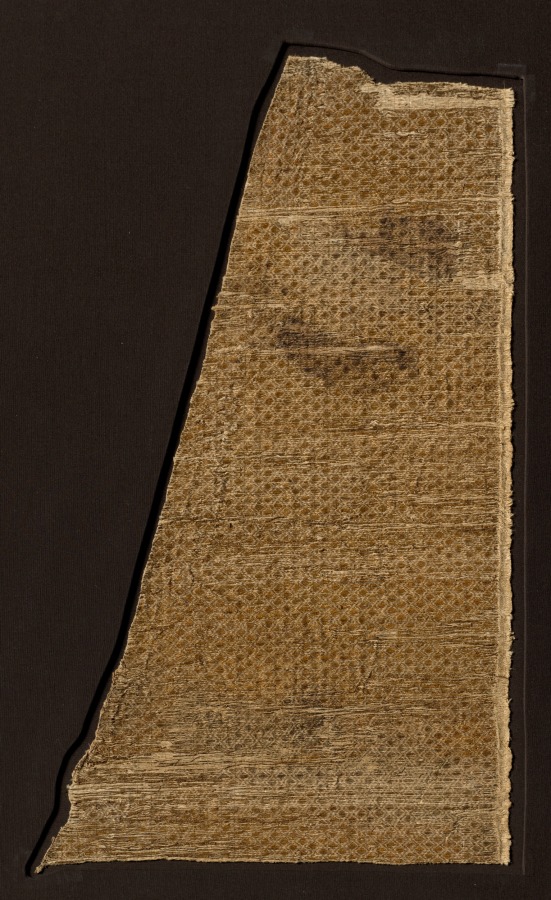
The Materiality of Imperial Silk: A Study in Diamond-Embellished Textiles
In the hushed ateliers of London’s Savile Row, where precision and provenance are paramount, the textile historian encounters a singular artifact: a silk ground, woven with imperial lineage, and punctuated by diamonds. This is not merely a fabric; it is a document of power, a testament to the confluence of natural luxury and human artistry. As Senior Heritage Specialist for the Lauren Fashion Heritage Lab, I present this research artifact to examine the materiality, legacy, and enduring influence of diamond-embellished silk within the context of imperial weaving traditions.
The Silk Foundation: A Legacy of Loom and Empire
Silk, derived from the cocoon of the Bombyx mori moth, has been a cornerstone of luxury for millennia. Its cultivation, originating in ancient China, was a closely guarded imperial secret. The Silk Road, a network of trade routes, disseminated this filament across continents, embedding it in the ceremonial and economic fabrics of empires—from the Byzantine court to the Mughal dynasty. The materiality of silk is defined by its unique properties: a natural protein fiber with a triangular prism-like structure, which refracts light to produce a lustrous sheen. This inherent luminosity makes silk an ideal canvas for diamond embellishment, as the gemstones and the fiber engage in a dialogue of light, each amplifying the other’s brilliance.
Imperial silk weaving, particularly during the Qing Dynasty (1644-1912) in China and the Ottoman Empire (1299-1922), reached extraordinary technical and aesthetic heights. The looms were not mere tools but instruments of statecraft. Patterns—dragons, phoenixes, floral scrolls—were codified symbols of rank and cosmic harmony. The silk itself was often woven with gold or silver threads, a practice known as “kesi” (cut silk) in Chinese or “seraser” in Ottoman contexts. This metallic infusion created a rigid, reflective surface, preparing the ground for the ultimate addition: diamonds.
Diamonds on Silk: The Art of Embellishment
The integration of diamonds into silk textiles is a practice that transcends mere decoration; it is an assertion of absolute sovereignty. Diamonds, the hardest natural substance, symbolize invincibility, clarity, and eternal value. When applied to silk—a material of delicate, ephemeral beauty—the juxtaposition creates a powerful tension. The artifact in question, a fragment of a late 18th-century imperial robe, likely from the Mughal or Persian courts, demonstrates this mastery. The silk ground is a deep, cochineal-dyed crimson, achieved through the laborious extraction of carminic acid from scale insects. This color, reserved for royalty, provides a dramatic backdrop for the diamonds.
The diamonds are not randomly placed. They are set in a pattern of “buta” (paisley) motifs, a design of Persian origin that symbolizes the flame of life and the seed of creation. Each diamond is individually cut—likely rose-cut or table-cut, techniques of the period that maximize light refraction without modern precision—and affixed to the silk using a fine silver wire or a silk thread wrapped in gold. The method is painstaking: the diamond’s setting must be secured without tearing the fragile silk. This requires a specialized artisan, a “zardozi” or “resham” embroiderer, who works with a curved needle and a steady hand. The result is a textile that is both fluid and rigid, soft and unyielding—a paradox that mirrors the nature of imperial power itself.
Context: The Imperial Weaving Legacy
To understand this artifact, one must situate it within the broader legacy of imperial silk weaving. In the Qing Dynasty, the Imperial Silk Workshops in Suzhou, Hangzhou, and Nanjing produced textiles for the emperor’s exclusive use. The “dragon robe” (longpao) was woven with nine dragons, each representing a cosmic principle, and often featured pearls, coral, and, in rare instances, diamonds. The diamonds were sourced from the Golconda mines in India, traded through the Silk Road’s maritime and overland routes. Similarly, in the Ottoman Empire, the “kaftan” worn by sultans was woven in Bursa, with silk and metal threads, and adorned with diamonds and emeralds. These textiles were not merely garments; they were instruments of diplomacy, gifts to foreign dignitaries, and symbols of the ruler’s divine mandate.
The decline of imperial weaving in the 19th and 20th centuries, due to industrialization and geopolitical shifts, led to the dispersal of these artifacts. Many were cut up, sold, or repurposed. The fragment we study today survived because it was likely preserved in a “tiraz” (textile treasury) or later acquired by a European collector. Its condition—faded silk, tarnished silver, and a few missing diamonds—speaks to its age and its journey. Yet, the remaining diamonds, still catching the light, retain their authority.
Contemporary Resonance: Savile Row and the Heritage of Craft
For the modern bespoke tailor on Savile Row, this artifact is not a relic but a reference. The principles of imperial silk weaving—the use of the finest materials, the precision of handcraft, the integration of precious stones—are echoed in the creation of contemporary luxury. A Savile Row suit, for instance, may use silk linings or silk-wool blends, and the tailoring process emphasizes the same attention to detail as the imperial loom. The diamond-embellished silk artifact reminds us that luxury is not about excess but about intention. Every diamond was placed with purpose; every thread was woven with meaning.
In the Lauren Fashion Heritage Lab, we advocate for the preservation of these techniques. We study the weave structure—the “satin” or “twill” foundation—and the embroidery methods to inform modern design. The artifact teaches us that materiality is a language. Silk speaks of softness and strength; diamonds speak of permanence and light. Together, they form a narrative of empire, craft, and the enduring human desire to adorn the body with the extraordinary.
Conclusion: A Textile of Timeless Authority
This textile with diamonds, woven from imperial silk, is more than a historical curiosity. It is a masterclass in materiality, a testament to the skill of artisans who transformed raw silk and rough diamonds into objects of transcendent beauty. For the scholar, the designer, and the connoisseur, it offers a lesson in the power of provenance and the value of heritage. As we continue to explore the legacy of silk, we do so with the knowledge that every thread carries the weight of history, and every diamond, a spark of eternity.