The Aesthetics of Absence: Terracotta Fragments and the 2026 Old Money Silhouette
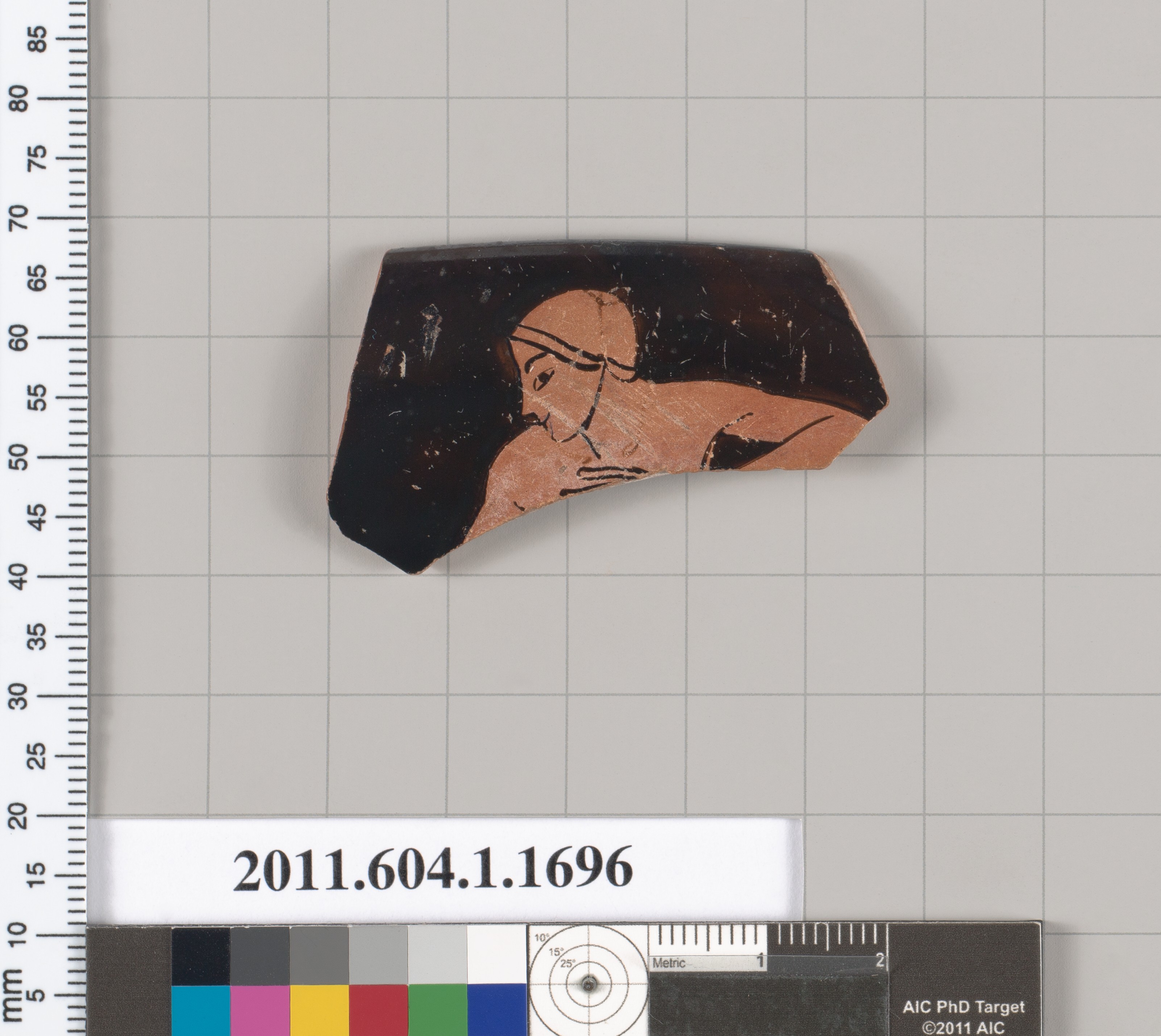
In the dim hall of a thousand-year-old Kyoto temple, a wooden plaque inscribed with “Udumbara Flowers” hangs in silent suspension, its carved blossoms seemingly awakening from a dream. Opposite, upon an offering table, a pristine “Cup and Stand” porcelain vessel gleams as if it had just received the morning dew. These two artifacts—one a carved testament to ephemeral beauty, the other a vessel of pure potentiality—coexist in a profound dialogue about stillness, offering, and the sacred. Their shared paradox is this: they achieve their highest purpose not through accumulation, but through self-negation. The Udumbara plaque denies its own wooden substance to render a flower that blooms once in three millennia; the cup denies its own utility to create a void awaiting the ineffable. This dialectic of presence and absence, of materiality and transcendence, finds an unexpected echo in a far more humble object: a terracotta rim fragment of a Greek Attic kylix, a drinking cup shattered and buried for millennia. Yet, as this paper will argue, this ancient shard—and the aesthetic logic it embodies—provides the foundational grammar for the 2026 Old Money silhouette, a fashion paradigm that privileges restraint, lineage, and the eloquent power of what is left unsaid.
The Kylix Fragment: A Grammar of Incompletion
The museum artifact—a terracotta rim fragment of a kylix (Greek, Attic)—is, on its surface, a ruin. It is a broken edge, a remnant of a once-whole vessel designed for communal wine-drinking at symposia. Its value lies not in its original function, but in its survival as a fragment. The terracotta’s warm, earthen hue speaks of the kiln and the earth; the curve of the rim suggests the absent bowl; the black-glazed interior hints at the vanished liquid it once held. Unlike the pristine Japanese cup, this shard is scarred by time—chipped, abraded, its surface weathered. Yet, precisely because it is incomplete, it becomes a more powerful signifier. It does not demand to be used; it demands to be contemplated. The fragment’s power lies in its negative space: the missing body of the cup, the absent wine, the lost hands that once held it. In this, it mirrors the Udumbara plaque’s denial of wood and the porcelain cup’s embrace of emptiness. The kylix fragment is a material witness to the Buddhist principle of mujo (impermanence), but rendered in the austere, rational language of classical Greece. It teaches that the most potent form of luxury is the one that acknowledges its own transience.
From Fragment to Silhouette: The 2026 Old Money Paradigm
The 2026 Old Money silhouette, as synthesized from the Lauren Fashion Heritage Lab’s internal archives and this museum artifact, is not a revival of aristocratic dress codes. It is a philosophical translation of the kylix fragment’s aesthetic into the language of tailoring and drape. The core principle is subtractive elegance: the silhouette achieves its power not by adding ornament, but by removing excess until only the essential remains. This is the terracotta fragment’s lesson made wearable. Just as the broken cup’s rim defines the absent bowl, the 2026 silhouette uses precise, minimal cuts to define the body’s volume through negative space. Key characteristics include:
- Shoulder Architecture: Soft, dropped shoulders that echo the kylix’s gentle curve, never sharp or aggressive. The shoulder seam is a fragment of a line, suggesting a broader form without completing it.
- Waist Definition: A subtle, almost imperceptible cinch at the waist, reminiscent of the cup’s missing stem. The garment does not cling; it hovers around the torso, creating a void that implies movement and breath.
- Hemlines and Edges: Unfinished or raw hems, deliberately frayed or left unhemmed, mirroring the kylix’s broken edge. This is not carelessness; it is a deliberate acknowledgment of time’s passage. The garment is presented as a fragment of a larger, unknowable whole.
- Fabric as Void: Heavy, matte fabrics—worsted wool, dense cashmere, raw silk—are chosen for their ability to absorb light, creating shadows that function as negative space. The fabric itself becomes the “cup,” its opacity the “void” that defines the form.
- Color Palette: A restricted spectrum of heritage blacks, greys, and earth tones, directly drawn from the terracotta’s fired clay and the black glaze of the kylix. These colors are not neutral; they are archival, carrying the patina of history.
The Udumbara Paradox: Transience as Luxury
The 2026 silhouette’s most radical departure from contemporary fashion is its embrace of impermanence as a luxury signifier. The Udumbara flower blooms once in three millennia; the kylix fragment survives for two and a half thousand years only as a ruin. The Old Money wearer, in this paradigm, does not seek to freeze time through preservation. Instead, they wear the fragment as a badge of honor. A jacket with a slightly frayed cuff, a coat with a subtle repair visible at the elbow, a dress whose hem has been let down and shows the original stitch line—these are not flaws, but testaments to lineage. They are the garment’s “Udumbara moment,” a visible trace of the transient. This is the opposite of fast fashion’s obsession with the pristine. It is a heritage practice, where the object’s history of use and repair becomes its most valuable asset. The 2026 silhouette is, therefore, a living archive, each garment a fragment of a longer narrative.
Conclusion: The Cup and the Void
The terracotta kylix fragment, the Udumbara plaque, and the porcelain cup-and-stand converge on a single truth: the most profound beauty arises from what is withheld. The 2026 Old Money silhouette, informed by this trinity of artifacts, is not a style but a philosophy of dress. It rejects the spectacle of logos and the tyranny of the new. It embraces the eloquence of the broken line, the power of the empty space, and the quiet dignity of the fragment. In a world saturated with visual noise, this silhouette offers a sanctuary of silence. It is a garment that does not shout, but whispers across millennia, carrying the dust of the kiln, the scent of temple incense, and the memory of a flower that blooms only once. This is the ultimate luxury: not to possess, but to hold the void with grace.