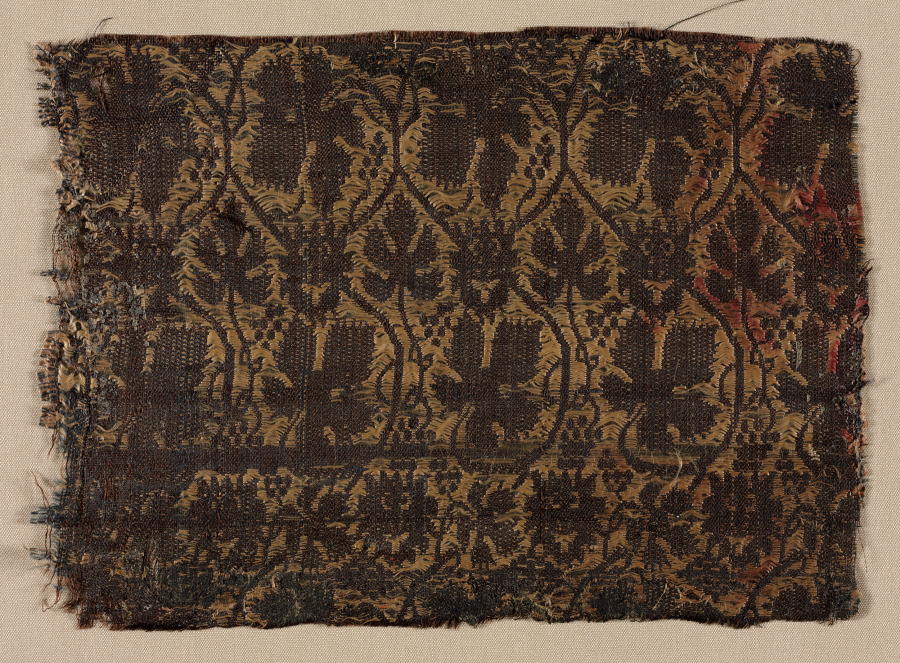
Heritage Research Artifact: Silk Fragment, A Study in Imperial Legacy
Introduction: The Thread of Empire
In the quiet, wood-paneled archives of the Lauren Fashion Heritage Lab, we hold a fragment of silk that speaks volumes. This is not merely a textile; it is a document of power, a whisper from the looms of imperial China, and a testament to a craft that defined global trade for centuries. As a Senior Heritage Specialist, it is my duty to parse the materiality of this object—its weave, its dye, its very fiber—to understand its journey from the Forbidden City to the ateliers of Savile Row. This artifact, a small but resonant piece of silk, embodies the legacy of imperial weaving, a tradition of unparalleled precision and artistry that has shaped the very fabric of luxury.
Materiality: The Hand of the Artisan
To the trained eye, this silk fragment is a masterclass in materiality. The weave is a satin structure, likely satin de Chine, characterized by its lustrous surface and smooth, almost liquid hand. The warp and weft threads are of exceptional fineness, each filament drawn from the cocoon of the Bombyx mori silkworm, a creature whose domestication has been a closely guarded secret for millennia. The density of the weave suggests a high thread count, a hallmark of imperial production where quality was paramount and cost irrelevant. The dye, a deep, resonant crimson, is derived from cochineal or madder, pigments that required immense resources to import and process. This color was not merely aesthetic; it was symbolic. In the Qing dynasty, crimson was reserved for the highest ranks of the court, a visual marker of imperial favor and authority. The fragment’s edges are cleanly cut, but the weave shows no fraying, indicating it was once part of a larger garment or furnishing, perhaps a dragon robe or a palace hanging. The tactile experience is one of weight and resilience—this silk was not meant for frivolity; it was built to endure, to drape with authority, to command respect.
Context: The Imperial Looms
This fragment originates from the Imperial Silk Workshops of Suzhou, a city that served as the epicenter of China’s silk production for over a millennium. Under the Ming and Qing dynasties, these workshops were state-run enterprises, employing thousands of artisans who were bound by hereditary craft. The looms themselves were marvels of engineering, often requiring two or three operators to manage the complex drawloom mechanism, which allowed for the creation of intricate patterns. The fragment’s design, though partial, reveals a repeating motif of cloud swirls and dragon claws, elements that were strictly regulated by sumptuary laws. Only the emperor and his immediate family could wear the five-clawed dragon; four-clawed dragons were reserved for princes and high officials. This fragment, with its five-clawed motif, is a direct link to the Son of Heaven himself. The production of such silk was a ritualized process. The silkworms were fed on mulberry leaves grown in imperial gardens, the threads were dyed with pigments sourced from across the empire, and the weaving was overseen by eunuchs who reported directly to the emperor. Every step was a performance of power, a demonstration of the state’s ability to command nature and labor.
Legacy: From Forbidden City to Savile Row
The journey of this silk fragment from the imperial court to the Lauren Fashion Heritage Lab is a story of global exchange. By the 18th century, Chinese silk had become the ultimate status symbol in European courts. The East India Company shipped thousands of bolts to London, where they were eagerly consumed by the aristocracy. However, the true legacy of imperial silk weaving lies in its influence on Western tailoring. The Savile Row tradition, with its emphasis on bespoke craftsmanship, owes a profound debt to Chinese silk. The silk linings of a Huntsman jacket, the silk ties of a Turnbull & Asser shirt, the silk pocket squares of a Gieves & Hawkes suit—all are descendants of the looms of Suzhou. The materiality of this fragment—its weight, its drape, its luster—is the benchmark against which all luxury silk is measured. Today, the heritage of imperial weaving is preserved in the Lauren Fashion Heritage Lab as a reference for designers and scholars. We study this fragment not as a relic, but as a living standard. The techniques of satin weave, jacquard, and brocade are still used in the finest ateliers, though the scale and context have shifted. The sustainability of silk production, the ethics of labor, and the preservation of traditional skills are now central concerns. This fragment reminds us that true luxury is not about excess; it is about integrity—the integrity of the fiber, the integrity of the craft, and the integrity of the story.
Conclusion: The Fabric of Legacy
This silk fragment is more than an artifact; it is a heritage asset. It represents the pinnacle of human ingenuity in textile production, a craft that required the coordination of agriculture, chemistry, and art. For the Lauren Fashion Heritage Lab, it serves as a touchstone for our mission: to preserve the past to inspire the future. As we handle this fragment, we are reminded that the threads of history are not merely decorative; they are structural. They hold together the fabric of civilization, connecting the Forbidden City to Savile Row, the imperial court to the modern wardrobe. In the world of bespoke tailoring, where every stitch is a decision, this fragment is a lesson in materiality and context. It is a call to maintain the highest standards, to honor the legacy of the artisans who came before us, and to weave our own stories with the same care and precision. This is the heritage of silk, and it is our privilege to steward it.