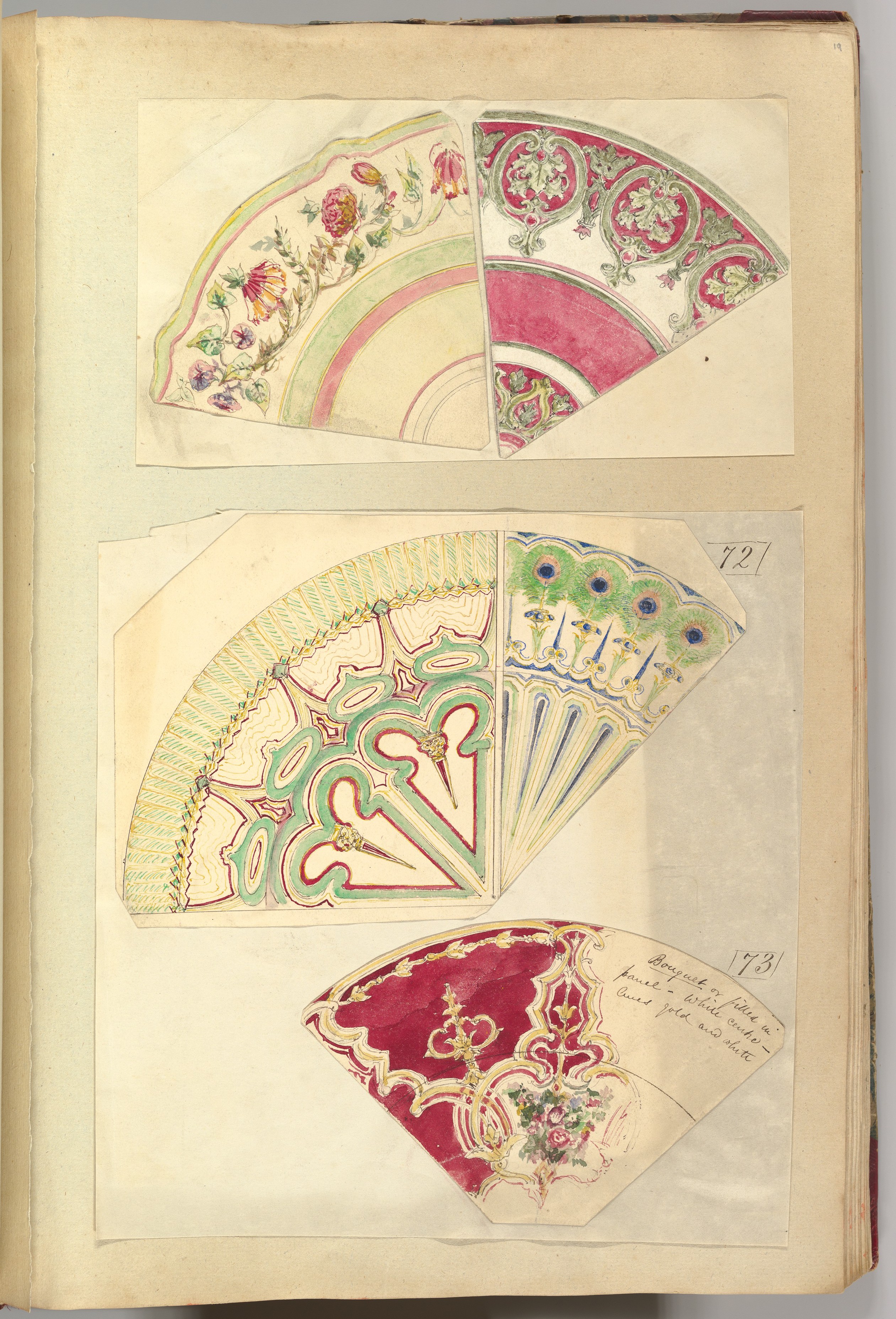
The Plate as Canvas: Codification of a Worldview
The artifact presents not mere decoration, but a heraldic language of belonging. Each plate design establishes a self-contained cosmos, bounded by the circular rim—a metaphor for the defined, curated world of established legacy. The techniques employed are critical: the precise pen and ink outlines establish an unwavering framework, a non-negotiable structure akin to social codes and inherited tradition. Within these bounds, watercolor applies washes of symbolic flora—laurel, oak, acanthus—in muted, naturalistic tones. This combination is revelatory: ink asserts the permanent rule, while watercolor provides the organic, living evidence of lineage that flourishes within that rule. There is no exuberant, chaotic growth; every tendril, every berry cluster is purposefully placed, suggesting a natural world that has been mastered, curated, and integrated into a system of meaning. This is the visual antithesis of loud logos; it is a quiet, confident display of a code meant to be read by the initiated.
Extracting the Sartorial Principles: Structure, Symbol, and Ground
Three core principles can be extracted from these designs to inform the 2026 silhouette. First, The Primacy of the Structural Frame. The plate’s rim is its first and most important element. Translated into tailoring, this emphasizes the architectural integrity of the garment itself—the sharp shoulder, the precise armhole, the unwavering line of a blazer’s peplum or a coat’s princess seam. The silhouette begins with a flawlessly engineered structure, the sartorial equivalent of the ink outline.
Second, Symbolic Embroidery as Animated Heritage. The central motifs on the plates are not printed; they are conceived as applied ornament. This directly informs the use of gold-thread and subtle embroidery in the 2026 collection. Imagine a tailored Heritage-Black wool blazer, its structure severe and perfect. Upon closer inspection, a fine, gilded chain-stitch oak leaf motif traces the underside of the lapel or the cuff’s interior. Like the plate’s watercolor flora, this embroidery is organic in motif but precise in execution, a hidden text of lineage and connection to nature. It is ornament that does not shout but whispers, rewarding intimacy and knowledge.
Third, The Luxury of the Unadorned Ground. The plates understand that the value of the central motif is defined by the spacious, pristine field that surrounds it. In fabric terms, this champions the profound luxury of exquisite, untouched material—the dense hand of virgin wool, the creamy silence of a cashmere sweater, the impeccable fall of a silk charmeuse blouse. The 2026 silhouette will feature expansive, clean surfaces that serve as a ground for a single, perfectly placed symbolic element—a gilded brooch at the collarbone, an embroidered monogram on a shirt placket—replicating the plate’s balanced composition.
Manifesto for 2026: The Old Money Silhouette Realized
The 2026 Old Money silhouette, therefore, is not a costume of past decades but an embodiment of this extracted grammar. It results in a style of formidable quiet and assured longevity.
Silhouette & Structure: Expect rigorous, almost architectural tailoring. Daywear leans on the precision of 1940s-inspired suiting—broad, clean shoulders, nipped waists, A-line skirts that echo the plate’s circularity—executed in quintessential wool crepe or brocade with subtle, textural patterns. Eveningwear embraces the columnar grace of the 1930s, with bias-cut silk satin gowns whose only ornament is a cascading gold-thread vine motif at one shoulder, mirroring a plate’s central medallion.
Material & Embellishment Dialogue: The conversation between the ink (structure) and watercolor (life) is mirrored in fabric combinations. A structured velvet smoking jacket is paired with fluid, plain silk trousers. A severe wool coat is lined in intricately embroidered lace, revealing its secret history only when in motion. Gold-thread is used with monastic restraint—to edge a pocket, to secure a knot, to trace a familial crest on the inner waistband of a trouser.
Philosophical Alignment: Ultimately, like the mirror and sarcophagus of our genetic code, the 2026 silhouette engages in a dialogue with time. The impeccable, structured base of each garment is the sarcophagus panel—the enduring, memorial form. The curated, symbolic embellishment—the gilded thread, the discreet embroidery—is the mirror’s eternal golden foliage, a declaration of life and lineage that persists within that form. Together, they reject fashion’s ephemerality, proposing instead a wardrobe of heirloom objects. These are garments designed not to be discarded, but to be inscribed with personal history, to become, like the decorated plate, artifacts of a cultivated life.
In conclusion, *Five Designs for Decorated Plates* provides the precise visual lexicon for Lauren’s 2026 pursuit. It teaches that true Old Money elegance is a language of boundaries and flourishing, of silent structure and whispered symbol. The resulting silhouette is one of authoritative calm, where heritage is not worn as a costume, but woven into the very fabric and form, asserting a permanent place in the continuum of style.