← BACK TO ARCHIVES
Heritage-Black
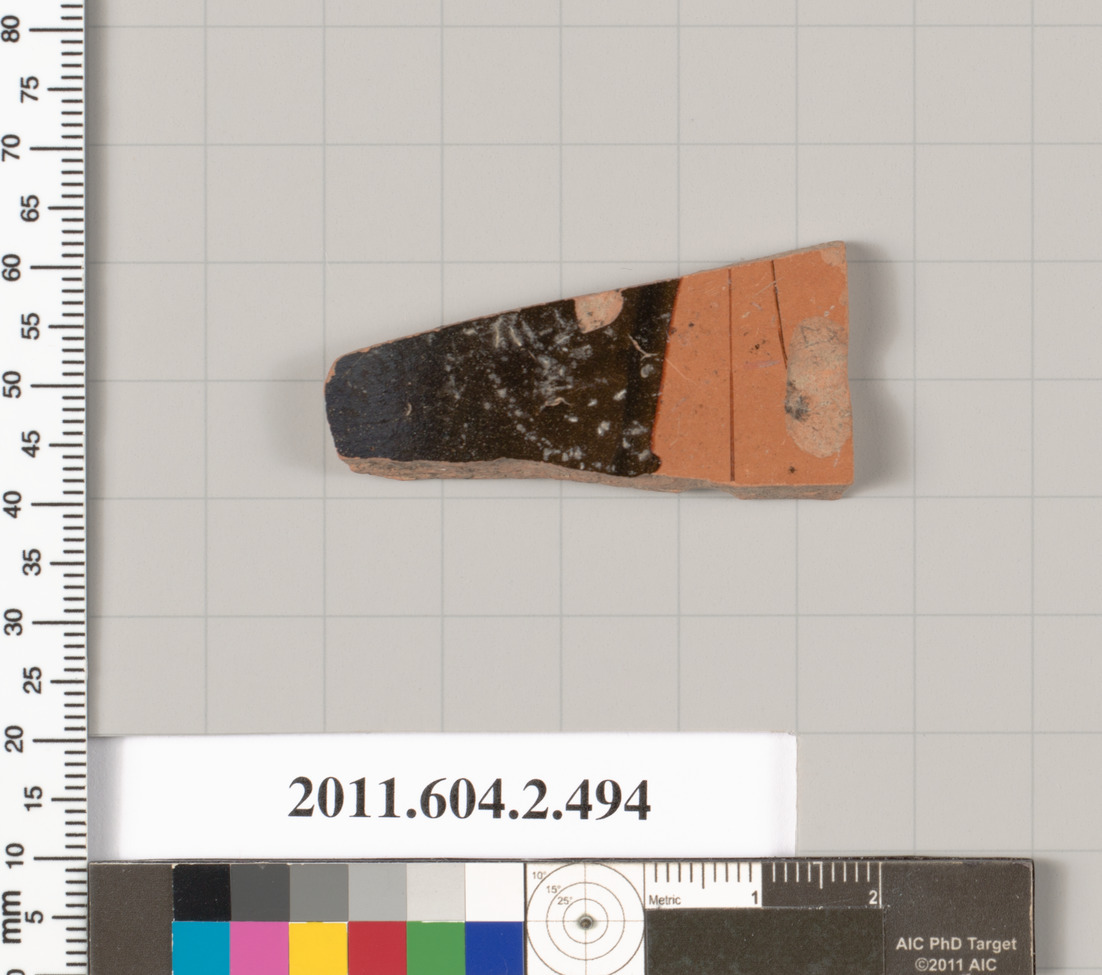
Heritage Synthesis: Terracotta fragment of a column-krater (bowl for mixing wine and water)
Curated on Jul 04, 2026 // Node: LDN-01
From Terracotta Fragment to Tailored Legacy: The Column-Krater as a Blueprint for 2026 Old Money Silhouettes
The visual artifact under consideration—a terracotta fragment of an Attic column-krater, dating to circa 500 BCE—appears, at first glance, an unlikely muse for the refined, understated world of Old Money fashion. This vessel, designed for the ritual mixing of wine and water in ancient Greek symposia, is a relic of civic and social ceremony. Yet, within its fractured geometry, its disciplined curvature, and its narrative of containment and release, lies a profound architectural grammar that directly informs the silhouette philosophy for Lauren Fashion’s 2026 Old Money collection. This paper argues that the column-krater’s structural principles—specifically its vertical axis, its modulated volume, and its tension between containment and flow—offer a material and conceptual lexicon for reimagining the heritage wardrobe as a form of wearable architecture, one that privileges lineage, restraint, and quiet authority over transient trends.
I. The Vertical Axis: The Column as a Silhouette of Authority
The defining feature of the column-krater is its name-giving element: the columnar handles that rise vertically from the shoulder of the vessel, echoing the Doric and Ionic orders of Greek temples. These handles are not merely functional; they are structural declarations of upward aspiration. In the fragment, the surviving handle stub and the fluted curve of the neck suggest a rigorous verticality that anchors the entire composition. This vertical axis is the foundational principle for the 2026 Old Money silhouette.
In tailoring, this translates directly into the columnar coat and the elongated jacket. The Old Money aesthetic has long favored the “power shoulder” and the clean, unbroken line from shoulder to hem. The column-krater’s verticality, however, refines this into something more subtle: a silhouette that does not assert but *ascends*. The 2026 collection will feature double-breasted overcoats in heavy wool and cashmere blends, cut with a suppressed waist but a pronounced vertical seam structure. The lapels, like the krater’s fluted neck, will be narrow and continuous, drawing the eye upward. The shoulder, rather than being aggressively padded, will be softly structured—a nod to the krater’s rounded, volumetric shoulder—creating a line that is both authoritative and fluid. This is not the sharp, confrontational power dressing of the 1980s; it is the quiet, inherited authority of a family estate, where form is a matter of discipline, not display.
II. Modulated Volume: The Krater’s Belly and the Art of Containment
The column-krater’s body is a study in controlled expansion. Its widest point, the belly, swells generously to hold the liquid, then tapers elegantly to a narrow foot. This modulation of volume—from narrow neck to expansive body to narrow base—creates a dynamic tension between containment and release. The vessel holds, but it does not explode. This principle is critical for the 2026 Old Money silhouette, which must convey a sense of *reserve*.
The fragment’s curvature suggests a garment that does not cling but *envelops*. For women’s wear, this inspires the A-line coat and the wide-leg trouser. The coat, cut in a dense, matte wool (perhaps a heritage black or deep charcoal), will fall from a fitted shoulder to a gently flared hem, mimicking the krater’s swelling belly. The volume is not excessive; it is *measured*. The trousers, similarly, will be cut with a high waist and a generous leg that tapers subtly at the ankle, echoing the krater’s foot. The effect is one of contained power—a silhouette that moves with the wearer but never loses its architectural integrity. For men, this translates into the double-pleated trouser and the three-roll-two jacket, where the fabric is allowed to drape with a slight fullness through the chest and thigh, but is always reined in by a clean waistline and a precise hem. The volume is a statement of ease, but the containment is a statement of control.
III. The Narrative of Containment: From Symposium to Sartorial Ritual
The column-krater was not merely a container; it was a *ritual* object. The symposium was a structured social ceremony, and the krater stood at its center, mediating the flow of wine and water, of conversation and philosophy. The vessel’s form, therefore, is inseparable from its function as a facilitator of social order. This concept of *ritual containment* is central to the Old Money wardrobe.
The 2026 silhouette must function as a kind of “sartorial krater”—a vessel that contains and structures the wearer’s presence within the social sphere. The structured blazer and the tailored vest become the modern equivalents of the krater’s body and handles. The blazer’s internal canvas and shoulder pads provide the “vertical axis” of authority, while its lapels and pockets create the “modulated volume” for personal expression (a pocket square, a vintage watch). The vest, worn as a standalone piece or under a jacket, creates a secondary layer of containment, echoing the krater’s internal cavity. The overall effect is a silhouette that is *complete*—a self-contained system of form and function, much like the krater itself.
Furthermore, the terracotta’s materiality—its raw, unglazed earthiness—informs the color palette and texture of the collection. Terracotta is a material of permanence and humility; it is fired from the earth and endures. The 2026 Old Money palette will move away from stark blacks and navies toward deep, muted earth tones: burnt umber, clay, slate, and the titular Heritage-Black (a black that reads as a deep, charcoal-infused shadow, not a flat void). Textures will be tactile but restrained: the nub of a heavy tweed, the nap of a brushed wool, the subtle sheen of a silk-cashmere blend. These materials, like the terracotta, do not shout; they *endure*.
IV. The Fragment as a Design Philosophy: Imperfection and Legacy
Finally, the fragment itself—its broken edge, its missing handle, its weathered surface—offers a profound lesson for the 2026 silhouette. The Old Money aesthetic is not about pristine newness; it is about *inheritance*. A fragment speaks to a history that is incomplete, a story that continues. The 2026 collection will embrace this through deliberate design details: a slightly raw hem on a cashmere scarf, a visible seam on a tailored coat, a subtle asymmetry in a jacket’s closure. These are not flaws; they are *narratives*. They suggest a garment that has been lived in, passed down, and adapted. The silhouette, therefore, is not a perfect, static form but a *living fragment*—a piece of a larger sartorial lineage that the wearer continues to write.
In conclusion, the terracotta column-krater fragment is not a decorative reference but a structural and philosophical blueprint for the 2026 Old Money silhouette. Its vertical axis informs the columnar coat; its modulated volume inspires the A-line and the wide-leg; its ritual function redefines the tailored garment as a vessel of social order; and its fragmentary nature celebrates imperfection as a marker of legacy. The result is a wardrobe that is not merely fashionable but *monumental*—a quiet, enduring architecture for the modern inheritor.
Heritage Lab Insight
Genetic Bridge: Archive node focusing on Heritage-Black craftsmanship.