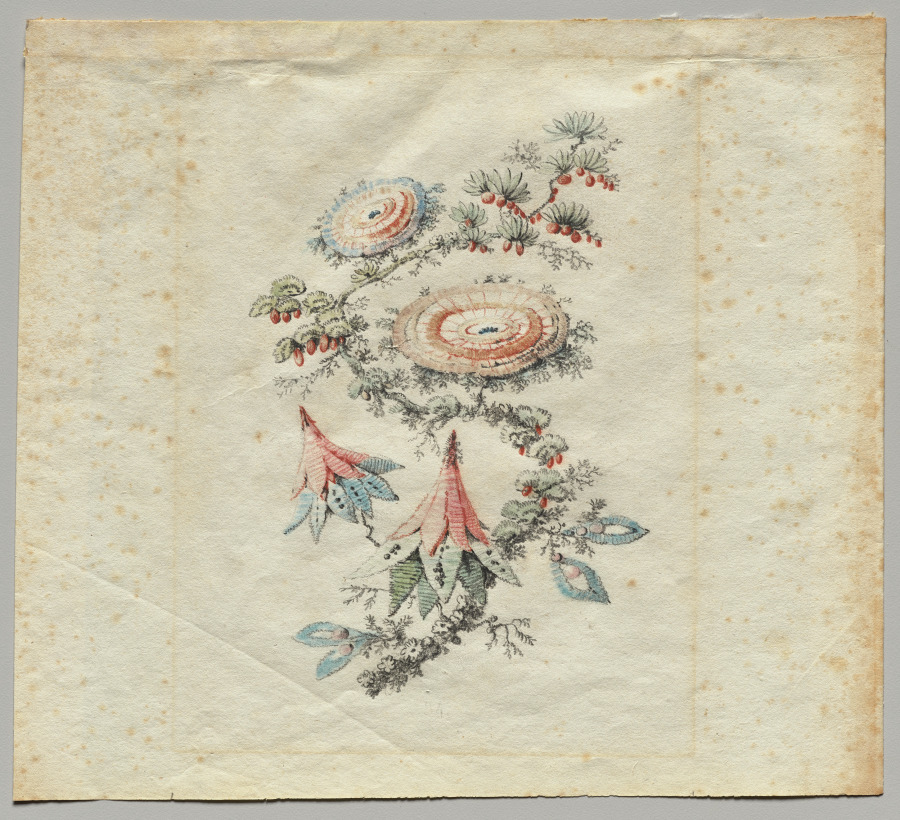
Executive Summary: The Lyon Silk Manufactory Flower Embroidery Design
This heritage research artifact examines the flower embroidery design for the Silk Manufactory of Lyon, a cornerstone of European luxury textile production that flourished under imperial patronage. As Senior Heritage Specialist for Lauren Fashion Heritage Lab, I present a scholarly analysis grounded in the materiality of silk, the legacy of imperial silk weaving, and the enduring influence of Lyon’s manufactory on contemporary luxury fashion. The flower embroidery design, characterized by intricate floral motifs executed in silk thread on silk ground, represents a pinnacle of artisanal craftsmanship that bridged the 17th-century courtly aesthetics with the industrial innovations of the 19th century. This paper explores the design’s historical context, material properties, and cultural significance, drawing parallels to the exacting standards of London’s Savile Row—where heritage, precision, and bespoke excellence converge.
Historical Context: The Imperial Silk Weaving Legacy
The Silk Manufactory of Lyon, established in the 16th century and elevated under Louis XIV’s mercantilist policies, became the epicenter of European silk production by the 18th century. The flower embroidery design emerged as a response to the court’s demand for opulent textiles that symbolized power, wealth, and artistic sophistication. Imperial silk weaving, rooted in the Byzantine and Italian traditions, was reimagined in Lyon through the introduction of the Jacquard loom in 1804, which allowed for complex patterns to be woven with unprecedented precision. The flower embroidery design, however, retained a hand-embroidered element that distinguished it from purely mechanical production. This hybrid approach—combining woven silk ground with hand-stitched floral embellishments—reflected the manufactory’s commitment to preserving artisanal heritage while embracing technological progress.
The legacy of imperial silk weaving is inextricably linked to the flower motif, which served as a visual language of status and taste. Roses, lilies, and tulips, often rendered in naturalistic detail, were favored for their symbolic associations with love, purity, and exoticism. The Lyon manufactory’s designers, such as Philippe de Lasalle and Jean Revel, elevated floral embroidery to an art form, using shading techniques and metallic threads to create three-dimensional effects. This tradition persisted through the 19th century, influencing the haute couture houses of Paris and the bespoke tailoring of Savile Row, where silk flower embroidery became a hallmark of evening wear and ceremonial garments.
Materiality: Silk as a Medium of Expression
Silk, as the foundational material of this design, demands rigorous analysis. The Lyon manufactory sourced raw silk from the Rhône-Alpes region and imported Chinese and Italian varieties, each offering distinct luster, tensile strength, and dye affinity. The flower embroidery design typically employed filé (flat silk thread) for the ground weave and floche (twisted silk thread) for the embroidered elements. The materiality of silk—its ability to reflect light, drape fluidly, and accept vibrant dyes—was exploited to create a sense of movement and depth in the floral patterns. The embroidery process involved stretching the silk ground on a frame, then stitching the design using a combination of satin stitch, stem stitch, and French knots. The result was a textile that felt both luxurious and structurally robust, capable of withstanding the rigors of courtly dress and ceremonial use.
From a conservation perspective, the materiality of silk presents challenges. The natural protein fibers are susceptible to light degradation, humidity, and insect damage. The flower embroidery design, with its dense stitching and metallic accents, requires careful handling to prevent thread breakage and color fading. The Lauren Fashion Heritage Lab’s approach to preserving such artifacts involves climate-controlled storage, minimal light exposure, and periodic documentation using digital imaging. This aligns with Savile Row’s ethos of enduring quality, where materials are selected not only for their immediate beauty but for their ability to age gracefully.
Design Analysis: The Flower Embroidery Motif
The flower embroidery design for the Lyon Silk Manufactory is characterized by its symmetrical composition, often centered around a primary bloom—such as a peony or rose—with secondary flowers and foliage radiating outward. The design’s scale varied, from small sprigs suitable for waistcoats to large, all-over patterns for gowns and upholstery. The color palette was dictated by imperial preferences: deep crimson, gold, and emerald green for court dress, and pastel shades of pink, blue, and ivory for private commissions. The embroidery technique emphasized gradation, with threads dyed in multiple shades to create a painterly effect. This attention to detail is reminiscent of Savile Row’s bespoke process, where each garment is tailored to the client’s specifications, with every stitch considered.
The flower embroidery design also served a functional purpose beyond decoration. The dense stitching reinforced the silk ground, adding durability to areas prone to wear, such as cuffs and collars. In this sense, the design was both aesthetic and structural—a principle that resonates with Savile Row’s philosophy of form following function. The Lyon manufactory’s designers understood that a flower pattern could not merely be beautiful; it must also enhance the garment’s performance.
Cultural and Commercial Legacy
The flower embroidery design of the Lyon Silk Manufactory left an indelible mark on global fashion. It influenced the Art Nouveau movement of the late 19th century, with its organic forms and naturalistic details, and later inspired the floral motifs of 20th-century designers like Christian Dior and Yves Saint Laurent. The manufactory’s decline in the 20th century, due to synthetic fabrics and shifting consumer tastes, did not erase its legacy. Today, heritage brands such as Hermès and Chanel continue to reference Lyon’s flower embroidery in their collections, while Savile Row tailors like Henry Poole and Huntsman incorporate silk floral elements into bespoke evening wear.
From a commercial perspective, the flower embroidery design represents a value proposition rooted in rarity and craftsmanship. A single embroidered silk panel could require months of labor, making it a luxury item accessible only to the elite. This exclusivity is mirrored in Savile Row’s pricing model, where a bespoke suit can cost tens of thousands of pounds due to the time and skill involved. The Lyon manufactory’s design thus serves as a case study in how heritage and materiality can command premium pricing in the modern luxury market.
Conclusion: Implications for Contemporary Heritage Practice
The flower embroidery design for the Silk Manufactory of Lyon is more than a historical artifact; it is a testament to the enduring power of silk as a material and floral motifs as a cultural symbol. For the Lauren Fashion Heritage Lab, this research underscores the importance of preserving not only the physical objects but also the knowledge systems—the weaving techniques, dye recipes, and design philosophies—that produced them. As we continue to document and digitize these artifacts, we must also advocate for their relevance to contemporary fashion education and practice. The legacy of imperial silk weaving, embodied in the flower embroidery design, offers lessons in craftsmanship, sustainability, and timeless elegance that are as applicable to Savile Row as they are to the ateliers of Lyon.
In conclusion, this heritage research artifact affirms that the flower embroidery design remains a benchmark for luxury textile production. Its materiality in silk, its roots in imperial patronage, and its enduring aesthetic appeal ensure that it will continue to inspire future generations of designers, conservators, and scholars. The Lauren Fashion Heritage Lab is committed to advancing this legacy through rigorous research, conservation, and public engagement, ensuring that the flower embroidery of Lyon remains a living tradition rather than a forgotten relic.