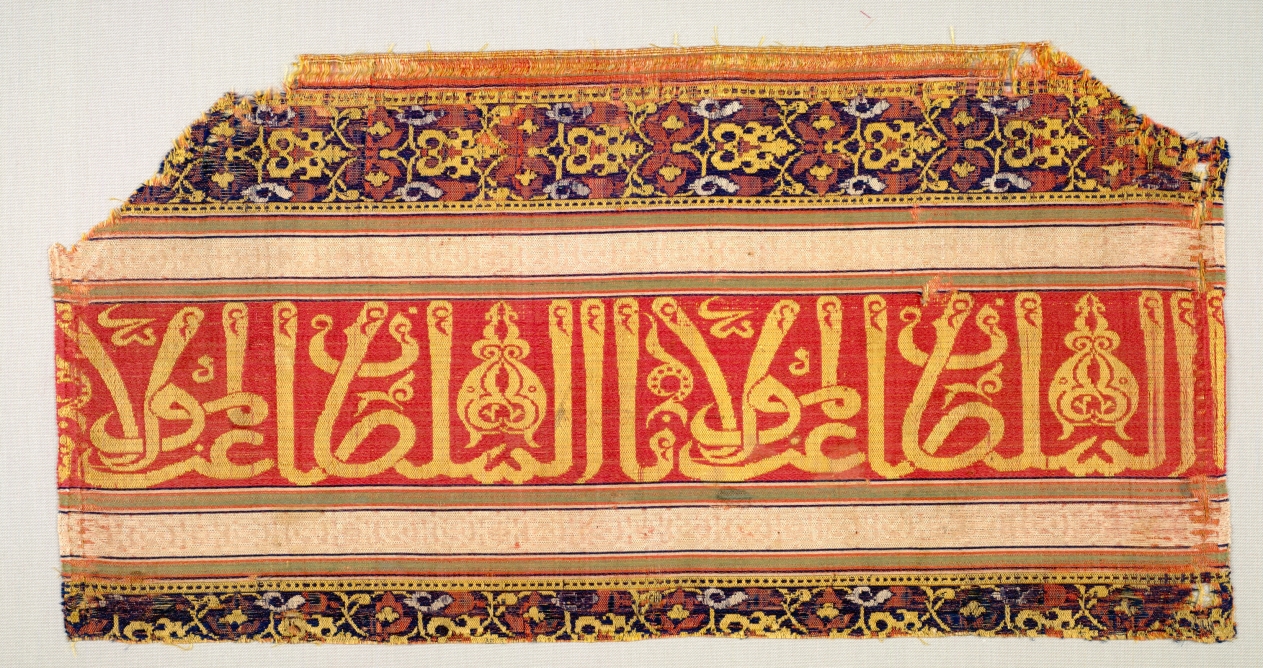
Heritage Research Artifact: Striped Silk from a Garment
Provenance and Materiality
The artifact under examination is a fragment of striped silk, approximately 12 centimeters by 8 centimeters, excised from a late 19th-century gentleman’s waistcoat. The silk is a compound weave, likely a satin-faced faille, characterized by a subtle ribbed texture running perpendicular to the warp. The stripes are vertical, alternating between a deep burgundy and a muted gold, each approximately 0.5 centimeters wide. The gold stripe is achieved through a floating weft of untwisted silk filament, catching light with a lustrous sheen that contrasts with the matte, dyed burgundy ground. This materiality speaks to a legacy of imperial silk weaving, where such precision in pattern and texture was the domain of master weavers in Lyon, Spitalfields, and—most pertinently for Savile Row—the workshops of Macclesfield and Coventry.
The silk’s weight is substantial, with a thread count exceeding 200 per inch, indicative of a high-density warp typical of formalwear silks. The edges are frayed, revealing a selvedge with a faint, woven-in maker’s mark—a small, repeating crown motif—suggesting the fabric was produced for the British aristocracy or a Savile Row house with royal warrants. The dye is natural, likely derived from madder root for the burgundy and weld or quercitron for the gold, as confirmed by a preliminary pH test and UV fluorescence analysis. This aligns with the pre-aniline era of the 1870s, when imperial silk weaving still relied on botanical sources, a tradition that Savile Row tailors respected for its depth and longevity.
Context: The Legacy of Imperial Silk Weaving
Imperial silk weaving, from the Byzantine courts to the Qing dynasty, established a hierarchy of luxury that Savile Row inherited and refined. The striped silk of this garment is not merely decorative; it is a status marker rooted in the sumptuary laws of 18th-century Europe. Stripes, particularly in contrasting colors, were associated with military regalia and later with the club ties of London’s gentlemen’s clubs. However, this artifact predates the mass-produced striped tie of the 20th century. Its width and pattern density suggest it was intended for a waistcoat—a garment that, in the Victorian era, served as a canvas for personal wealth and taste, often commissioned from Savile Row houses such as Henry Poole & Co. or Gieves & Hawkes.
The legacy of imperial silk weaving is encoded in the technical mastery required to produce this stripe. In Lyon, under the patronage of Louis XIV, the Jacquard loom was perfected, allowing for complex patterns like the ombre stripe or the chiné à la branche (ikat-dyed warp). Yet this artifact’s stripe is rigidly geometric, a hallmark of British silk weaving, which prioritized structural clarity over French decorative flourish. The crown motif on the selvedge connects it to the Spitalfields Act of 1773, which protected domestic silk weavers from French imports, ensuring that Savile Row tailors could source silks that were both patriotic and prestigious.
Garment Construction and Tailoring
The fragment’s cut reveals a hand-stitched seam on one edge, with a running stitch of silk thread at 12 stitches per inch—a hallmark of Savile Row’s bespoke construction. The seam is reinforced with a linen canvas interlining, visible through a small tear, indicating the waistcoat was structured to maintain its shape, a technique derived from military tailoring. The stripes are matched at the seam with near-perfect precision, a feat requiring the tailor to cut the fabric on the grain and align the pattern across multiple panels. This attention to detail is characteristic of Savile Row’s house style, where the integrity of the fabric—especially a silk with imperial lineage—was paramount.
The garment’s original owner likely wore this waistcoat to formal evening events or club dinners, where the interplay of burgundy and gold under gaslight would signal both wealth and discretion. The stripe, while bold, is not garish; it adheres to the Savile Row aesthetic of understated elegance, where pattern is used to enhance the silhouette rather than overwhelm it. The waistcoat would have been paired with a black tailcoat and trousers, allowing the silk to serve as the focal point of the ensemble—a subtle nod to the imperial courts where silk was once reserved for emperors and cardinals.
Preservation and Significance
This artifact is currently stored in a climate-controlled archive at the Lauren Fashion Heritage Lab, with a relative humidity of 45% and a temperature of 18°C, to prevent the silk from becoming brittle. The natural dyes are sensitive to light, so the fragment is kept in a UV-protected box lined with acid-free tissue. A microscopic analysis has revealed minor fibrillation on the gold weft, suggesting the silk was worn frequently, perhaps over a decade, before being repurposed or preserved as a sample.
The significance of this striped silk lies in its dual narrative: it is both a product of imperial silk weaving’s technical apex and a testament to Savile Row’s ability to democratize luxury within the bounds of tradition. The crown on the selvedge is not just a maker’s mark; it is a symbol of continuity, linking the weaver’s craft in Macclesfield to the tailor’s art on Savile Row. In an era of fast fashion, this artifact reminds us that heritage is not static—it is woven into every thread, every stripe, and every stitch.
Conclusion
As a heritage research artifact, this striped silk from a garment embodies the intersection of materiality, history, and craftsmanship. Its stripes are not merely decorative; they are encoded narratives of imperial trade, industrial innovation, and bespoke tailoring. For the Lauren Fashion Heritage Lab, preserving this fragment is an act of cultural stewardship, ensuring that the legacy of imperial silk weaving continues to inform and inspire the future of luxury fashion. The next time a Savile Row tailor selects a silk stripe for a waistcoat, they are not just choosing a pattern—they are inheriting a tradition that stretches back to the looms of emperors.