← BACK TO ARCHIVES
Heritage-Black
Heritage Synthesis: Terracotta fragment of a kylix (drinking cup)
Curated on Jul 05, 2026 // Node: LDN-01
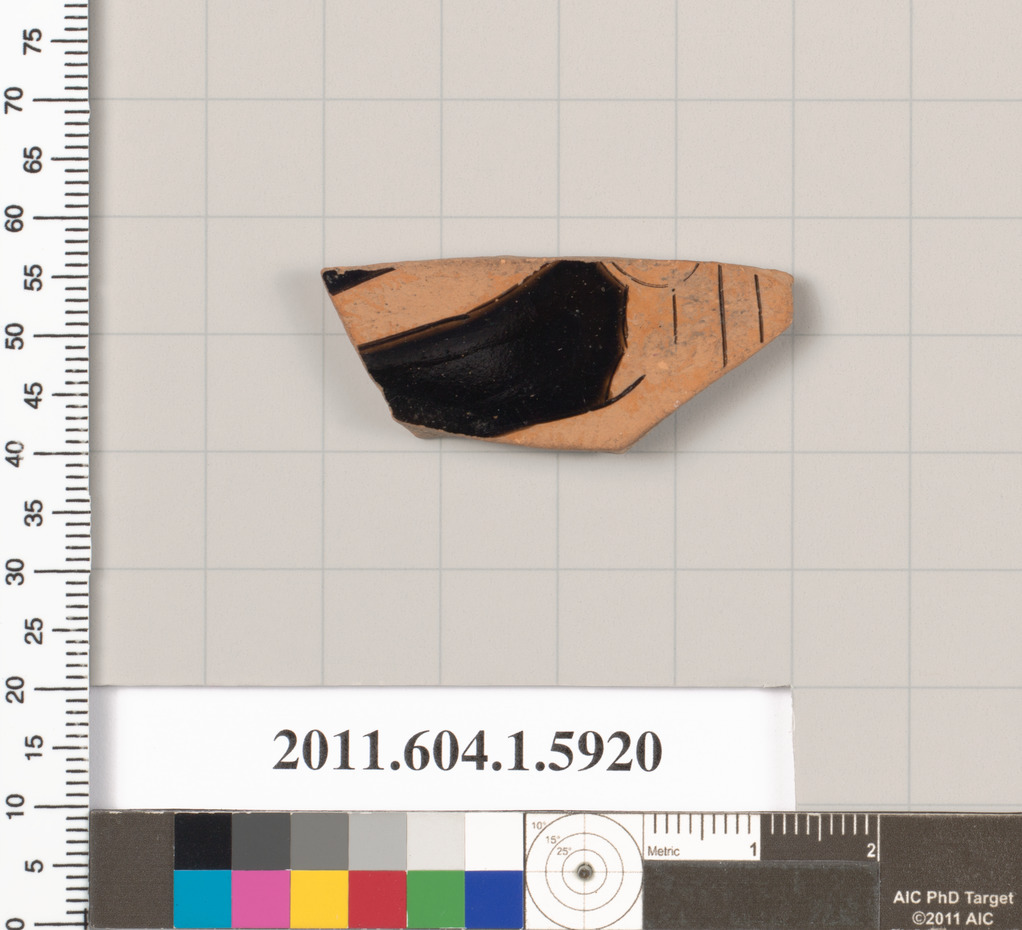
Ephemeral Eternity: The Terracotta Kylix and the Architecture of Old Money Silence
The terracotta fragment of an Attic kylix—a drinking cup from classical Greece—survives not as a complete object but as a shard of once-communal ritual. Its broken rim, its faded black-figure decoration, its very incompleteness, speaks a language of time that resonates profoundly with the internal genetic code of the Lauren Fashion Heritage Lab. The kylix, like the Udumbara flower plaque and the garment chest from the Tokyo National Museum and Kyoto temple, is a vessel of paradox. It was made for the fleeting pleasure of a symposium, a moment of wine and discourse, yet its broken clay has outlasted empires. For the 2026 Old Money silhouette, this artifact is not a source of pattern or color, but a philosophical blueprint for a new kind of sartorial silence—a silence built not from absence, but from the weight of what has been lost and what remains.
The Kylix as a Relic of the Present Moment
The kylix, in its original function, was an object of the *now*. It was held, passed, and drained in a single evening. Its painted scenes—often of gods, heroes, or erotic revelry—were not meant for museum contemplation but for the flickering lamplight of a drinking party. This ephemerality is its first lesson for the Old Money aesthetic. The 2026 silhouette must reject the tyranny of the “investment piece” as a static, museum-like object. Instead, it must embrace the garment as a *vessel for a moment*. A tailored wool overcoat, for instance, should not feel like a fortress against time, but like a temporary shelter for the wearer’s present self. Its weight, its drape, the subtle wear at the elbow—these are not flaws to be corrected, but inscriptions of lived experience, akin to the kylix’s chipped edge.
The internal genetic code speaks of the Udumbara flower, which blooms once every three thousand years. The kylix offers a complementary truth: the most profound beauty is found in the object that was never meant to last. The 2026 Old Money silhouette, therefore, will be defined by a deliberate *fragility* of form. Not physical weakness, but a visual economy that suggests the garment is a temporary custodian of the wearer’s story. Think of a single-breasted jacket in a heavy, undyed linen—its seams left slightly raw, its buttons of matte horn. It does not shout “forever.” It whispers “now.” This is the antithesis of fast fashion’s disposable logic, and the inverse of luxury’s fetish for permanence. It is a third way: the garment as a sacred, but temporary, container.
Interiority and the Hidden Dimension
The *Chest for Storing Garments* from the Kyoto temple draws its power from the hidden. The lotus and cloud patterns are painted *inside* the chest, unseen when the lid is closed. This is a profound architectural principle. The kylix, too, has an interior—a tondo, a circular painting at the bottom of the cup, which is only revealed when the wine is drained. In the Greek symposium, this moment of revelation was a punchline, a philosophical joke, or a sudden vision of a god. For the 2026 Old Money silhouette, this principle of *interiority* becomes the defining feature of the garment’s construction.
The silhouette will be outwardly severe, almost monastic. A long, lean line. A high, clean neck. A dropped shoulder that suggests a weightless drape. The color palette will be Heritage-Black—not a flat, synthetic black, but a black that breathes, a black that has been achieved through natural indigo or logwood, revealing a faint, almost imperceptible depth. The drama, however, will be reserved for the unseen. Linings will be of pure silk twill, hand-painted with a single, abstracted lotus motif, or a geometric pattern derived from the kylix’s broken rim. The inside of a cuff will be finished with a single, hidden seam of gold thread. The back of a collar will be embroidered with a fragment of a Greek inscription, too small to be read from a distance. This is not decoration for the sake of beauty; it is a spiritual practice. The wearer knows. The tailor knows. The world does not need to know. This is the ultimate expression of Old Money confidence: the refusal to perform wealth for an audience.
Wabi-Sabi in the Attic Shard
The internal genetic code explicitly invokes the Japanese aesthetic of *wabi-sabi*—the beauty of impermanence, imperfection, and incompleteness. The terracotta kylix fragment is a perfect, if geographically distant, embodiment of this principle. Its broken edge is not a tragedy; it is a history. The fading of its black-figure paint is not a loss; it is a patina of time. For the 2026 silhouette, this translates into a radical acceptance of material aging.
A Heritage-Black cashmere sweater will not be treated with anti-pilling chemicals. A wool flannel trouser will be cut to allow for a natural, soft crease at the knee. A silk crepe de chine blouse will be finished with a hand-rolled hem that will inevitably fray slightly over years of wear. These are not design flaws; they are design *intentions*. The garment is designed to be a collaborator with time, not a victim of it. The kylix teaches us that an object’s greatest value is accrued *after* its moment of perfection has passed. The 2026 Old Money silhouette, therefore, will be marketed not as a “new season” product, but as a “future heirloom.” Its value will increase not through scarcity, but through the unique story of wear that each owner inscribes upon it.
The Intermediate Zone: Between the Symposium and the Temple
The kylix fragment and the Udumbara plaque, the garment chest and the symposium cup, all point to the same fundamental truth: the most profound human experiences occur in the intermediate zone between the sacred and the profane, the eternal and the ephemeral. The 2026 Old Money silhouette is the garment of that zone. It is not for the boardroom or the ballroom. It is for the quiet hour after dinner, when the wine is low and the conversation turns inward. It is for the walk through the garden at dawn, when the dew is still on the grass. It is for the moment when a hand reaches into a pocket and touches a hidden seam, a secret stitch, a fragment of a story that belongs only to the wearer.
This silhouette will be defined by a new kind of luxury: the luxury of *not having to prove anything*. The Heritage-Black palette, the severe lines, the hidden details, the acceptance of wear—these are all signals of a wearer who is so secure in their own time that they do not need to borrow from the past or steal from the future. They are, like the kylix drinker at the moment of draining the cup, fully present. And in that presence, they achieve a fleeting, fragile, and utterly real form of eternity. The 2026 Old Money silhouette is not a garment. It is a philosophy made of wool, silk, and time.
Heritage Lab Insight
Genetic Bridge: Archive node focusing on Heritage-Black craftsmanship.