← BACK TO ARCHIVES
Silk
Heritage Synthesis: Chasuble with Orphrey Band
Curated on Jul 05, 2026 // Node: LDN-01
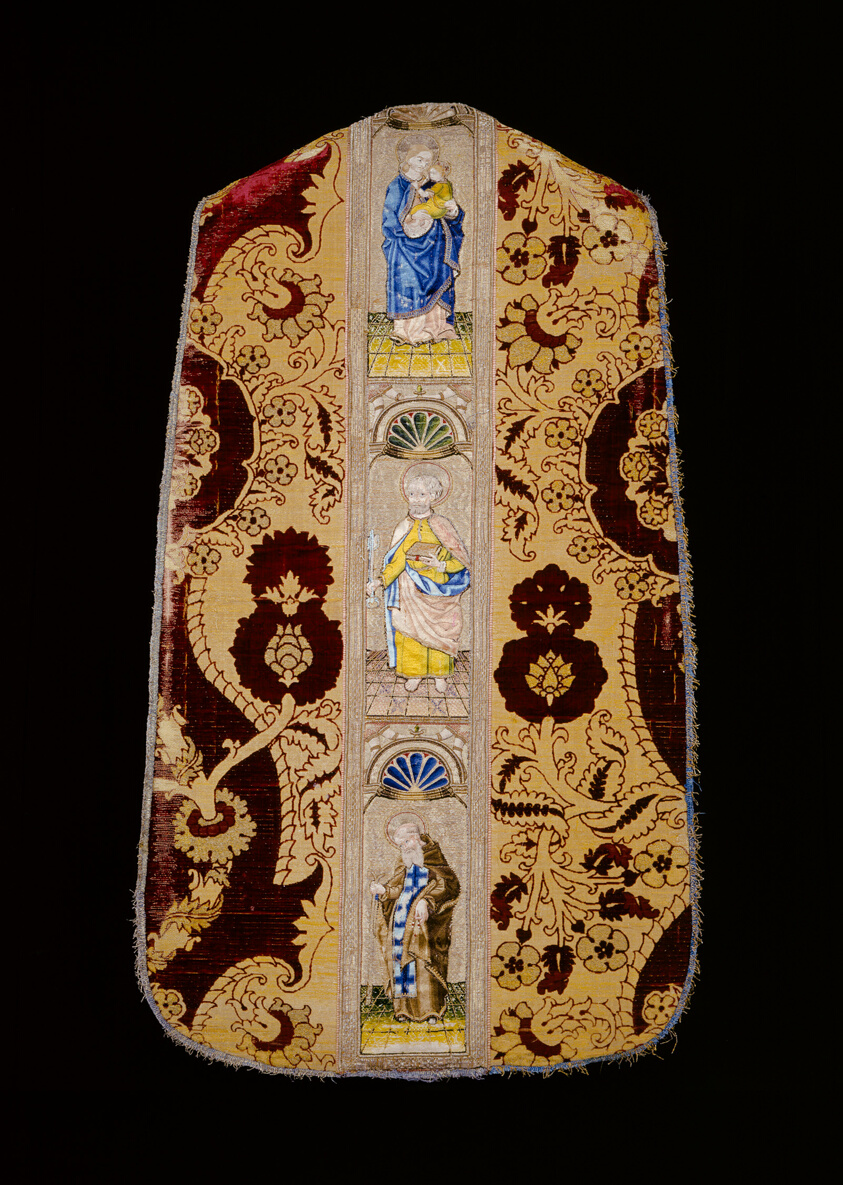
The Chasuble with Orphrey Band: A Study in Material Hierarchy and Devotional Craft
In the hushed ateliers of London’s Savile Row, where cloth is cut with the precision of a surgeon’s scalpel and the hand-stitch is revered as a signature of mastery, we understand that true luxury is not merely seen—it is felt. It is the weight of a silk faille lining, the crisp resistance of a worsted wool, the whisper of a lining against a jacket’s construction. The artifact before us, a chasuble with an orphrey band, demands this same rigorous attention. It is not a garment of the street, but a garment of the sacred; yet its construction speaks a language every tailor knows: the language of material integrity, of structure and drape, of the profound relationship between the hand that makes and the body that wears.
This chasuble, a masterpiece of late medieval or early Renaissance ecclesiastical textile art, is a study in deliberate material hierarchy. The body of the garment is a tour de force of silk craftsmanship. The base is a plain weave silk, a foundation of quiet strength. Upon this, the artisan has introduced a complexity that borders on the architectural: silk facing wefts and twill interlacings of secondary binding warps. This is not a simple fabric; it is a constructed surface, a ground prepared for a more spectacular intervention. The true glory lies in the pile-on-pile voided velvet, a technique that elevates the chasuble from a vestment to a statement of divine opulence. Here, gilt-metal-strip-wrapped silk facing wefts are manipulated to form weft loops, both cut and uncut. The result is a play of light and shadow, of texture and reflection, that shifts with every movement of the celebrant. The voided areas—where the pile is absent—create a deliberate negative space, a counterpoint to the shimmering, raised patterns. This is not decoration for its own sake; it is a dialogue between the earthly and the celestial, the plain and the ornate.
The orphrey band, a vertical strip of embroidered linen that adorns the front of the chasuble, serves as a contrasting yet complementary element. Where the body of the garment is a symphony of woven silk and metal, the orphrey is a canvas for the embroiderer’s art. The ground is linen, plain weave—a humble, sturdy base that speaks to the functional necessity of the band. It must bear the weight of its own intricate decoration. The embroidery itself is a compendium of techniques: fishbone, herringbone, satin, split, and stem stitches. The use of silk, linen, and gilt-metal-strip-wrapped silk threads creates a rich, multi-textural surface. Laid work and couching provide broad areas of colour and metallic shimmer, while padded couching introduces a sculptural, almost three-dimensional quality to the figures and motifs. The entire band is edged with a woven fringe, a final, deliberate framing device that separates the sacred narrative from the velvet field.
From a Savile Row perspective, the construction of this chasuble reveals a profound understanding of drape and weight. The silk velvet, with its dense pile and metallic content, has a substantial, almost liquid fall. It is not a fabric that floats; it is a fabric that settles, that conforms to the shoulders and falls in deep, vertical folds. The orphrey band, being of linen and heavily embroidered, is inherently stiffer. It acts as a structural spine, a vertical anchor that prevents the velvet from collapsing into formless folds. The interplay between the supple, fluid body and the rigid, linear band is a masterclass in tailoring principles: the balance of soft and hard, of movement and structure. The embroiderer has understood that the band must not only be beautiful but must also function as a counterweight, a stabiliser for the entire garment.
The materiality of the chasuble also speaks to a specific historical moment. The use of gilt-metal-strip-wrapped silk is a hallmark of the highest ecclesiastical and secular luxury. This is not a fabric for daily wear; it is a fabric for the most solemn and significant occasions. The metal thread, likely silver-gilt, would have been painstakingly wound around a silk core, a process that required immense skill and patience. The resulting thread is both flexible and lustrous, capable of catching the candlelight of a cathedral and reflecting it back with a warm, golden glow. The pile-on-pile velvet technique, with its cut and uncut loops, creates a depth of field that is almost painterly. The voided areas, where the ground weave is exposed, provide a necessary visual rest, a moment of calm amidst the shimmering complexity.
In the context of heritage research, this chasuble is not merely a religious artifact; it is a document of material culture. It records the skills of the silk weaver, the velvet maker, the embroiderer, and the tailor. It tells a story of trade routes, of the importation of silk from the East, of the refinement of metalworking techniques in European centres of production. It is a testament to the belief that the most sacred of garments deserve the most extraordinary of materials. For the scholar of fashion and textiles, it offers a case study in how material hierarchy—the deliberate selection and juxtaposition of fabrics—creates meaning. The humble linen of the orphrey band is elevated by its proximity to the opulent silk velvet. The silk velvet, in turn, is given narrative context by the embroidered figures on the band.
Ultimately, this chasuble with orphrey band is a garment of profound elegance and technical mastery. It embodies the fluid elegance of classic silk craftsmanship, but it is an elegance that is earned through rigorous construction. It is a reminder that the most beautiful garments are those that are not only seen but also understood—understood in terms of their materials, their making, and their purpose. In the language of Savile Row, it is a garment that has been *built*, not simply sewn. And in that building, it achieves a timeless, sacred grace.
Heritage Lab Insight
Lab Insight: AIC Silk Archive Node #62598.