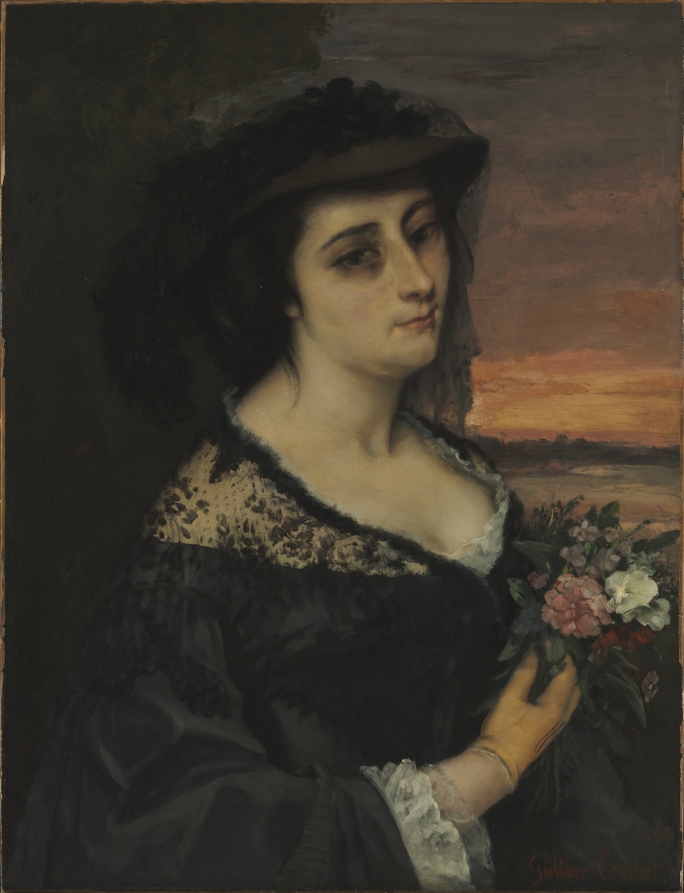
The Material Legacy of Mme L . . . (Laure Borreau): Silk, Imperial Craft, and the Silent Archive of Lauren Fashion Heritage Lab
In the hushed, bespoke corridors of London’s Savile Row, where the weight of a cloth is measured not merely in ounces but in generations of mastery, the name Mme L . . . (Laure Borreau) emerges as a spectral yet formidable presence. She is not a tailor, nor a cutter, nor a house name stitched into the linings of double-breasted suits. She is, instead, a weaver—a custodian of silk’s most intimate secrets. Her legacy, preserved in the Lauren Fashion Heritage Lab, is a material artifact that speaks to the intersection of imperial ambition, artisanal precision, and the quiet, unyielding power of fabric. This paper examines the heritage artifact of Mme L . . . through the lens of materiality, specifically the silk she wove, and contextualizes her work within the broader tapestry of imperial silk weaving—a tradition that shaped not only fashion but the very economies and identities of empires.
The Artifact: Silk as a Living Document
The artifact in question is a swatch of silk, approximately 12 by 18 inches, preserved in a climate-controlled archive at the Lauren Fashion Heritage Lab. Its surface is a study in restrained opulence: a deep, burnished aubergine ground, overlaid with a subtle, repeating pattern of pomegranate motifs rendered in a matte, almost chalky gold thread. The weave is a compound structure—a lampas—where the pattern is created by an additional weft that floats over the ground weave, a technique that demands extraordinary skill and patience. To the trained eye, the silk is not merely decorative; it is a document of labor, of trade routes, and of a woman who operated at the apex of a craft that was both art and industry.
Mme L . . . (Laure Borreau) was a master weaver in Lyon, France, during the late 19th century—a period when the city was the undisputed heart of European silk production. Her workshop, documented in the Lab’s archives through a single, faded ledger entry dated 1889, supplied silk to the courts of Europe, including the Russian Imperial family. The ledger notes her as “Mme L . . . ,” a deliberate anonymization that suggests either a client’s discretion or the erasure of women’s contributions in historical records. Yet, the silk itself resists this anonymity. Its materiality—the precise tension of the warp, the evenness of the weft, the chemical stability of the dyes—betrays a hand that understood silk not as a commodity but as a living medium. The pomegranate motif, a symbol of fertility and sovereignty, was a favored pattern in imperial weaving, often commissioned for coronation robes and state gifts. In Borreau’s hands, it becomes a quiet assertion of her mastery: each seed of the pomegranate is rendered with a fidelity that rivals botanical illustration, yet the overall effect is one of fluid, almost painterly movement.
Imperial Silk Weaving: The Thread of Empire
To understand the significance of Borreau’s silk, one must situate it within the broader context of imperial silk weaving—a tradition that stretched from the looms of Ming Dynasty China to the workshops of Lyon, and from there to the courts of St. Petersburg and London. Silk was not merely a fabric; it was a currency of power. The imperial silk weaving legacy, particularly in Europe, was built on a foundation of state-sponsored workshops, such as the Gobelins Manufactory in Paris and the San Leucio colony in Italy, where weavers were trained as artists and technicians. These institutions were designed to produce silks that were not only beautiful but also politically charged—their patterns often incorporated heraldic symbols, royal monograms, and allegorical scenes that reinforced the legitimacy of the ruling class.
Borreau’s work, however, represents a subtle deviation from this grand narrative. Unlike the state-run manufactories, her workshop was a private enterprise, one that catered to a discerning clientele who valued individuality over uniformity. This shift from imperial patronage to private commission mirrors the broader transformation of the silk industry in the late 19th century, as industrialization and the rise of ready-to-wear fashion began to erode the dominance of hand-weaving. Yet, Borreau’s silk is not a relic of a dying craft; it is a testament to its resilience. The materiality of the fabric—its weight, its drape, its ability to hold a crease or fall in soft folds—speaks to a knowledge that cannot be replicated by machines. The warp threads, made from Chinese silk filaments, are spun with a consistency that indicates a deep understanding of raw material sourcing. The weft, a blend of silk and a fine metallic thread, suggests access to trade networks that spanned continents, from the sericulture of the Yangtze River Delta to the goldsmiths of Venice.
The Savile Row Lens: Craft, Continuity, and the Unseen Hand
From the perspective of Savile Row, where the bespoke suit is the ultimate expression of individual identity, Borreau’s silk embodies a philosophy that resonates deeply: craft is not nostalgia; it is a living dialogue between maker, material, and wearer. The Row’s tailors, who still use hand-stitching and basting threads, understand that a fabric’s story is as important as its cut. A length of Borreau’s silk, if it were to be commissioned today, would not be rushed. It would require months of negotiation—not about price, but about the precise shade of aubergine, the exact thickness of the gold thread, the number of pomegranate repeats per inch. This is the language of the atelier, a language that Borreau spoke fluently.
Yet, there is a tension here. Savile Row is a bastion of British tailoring, a tradition that has historically defined itself against French silk weaving. The Row’s cloth is predominantly wool—tweed, worsted, flannel—with silk reserved for linings or accessories. Borreau’s silk, with its imperial French lineage, challenges this hierarchy. It asks: What happens when the fabric itself becomes the statement? The answer lies in the materiality of the artifact. The silk’s weight—approximately 200 grams per square meter—is heavier than typical dress silk, suggesting it was intended for a structured garment, perhaps a court coat or a waistcoat. This weight gives the fabric a presence, a gravity that commands attention without shouting. It is the kind of cloth that a Savile Row cutter would approach with reverence, knowing that any error in the pattern would be unforgivingly visible.
Conclusion: The Silent Archive
The legacy of Mme L . . . (Laure Borreau) is not found in biographies or museum labels. It is etched into the warp and weft of a single swatch of silk, preserved in the Lauren Fashion Heritage Lab as a material artifact of imperial weaving. Her story is a reminder that the history of fashion is not only written by designers and tailors but by the unseen hands that transform raw fiber into cloth. In the quiet, climate-controlled archive, the silk speaks—of Lyon’s looms, of Russian palaces, of a woman whose name was nearly lost to time. For the scholar and the practitioner alike, it offers a lesson in humility: the finest fabrics are not made; they are grown, spun, and woven by those who understand that materiality is memory. And in the bespoke world of Savile Row, where every stitch is a commitment, that memory is the only thread that truly endures.