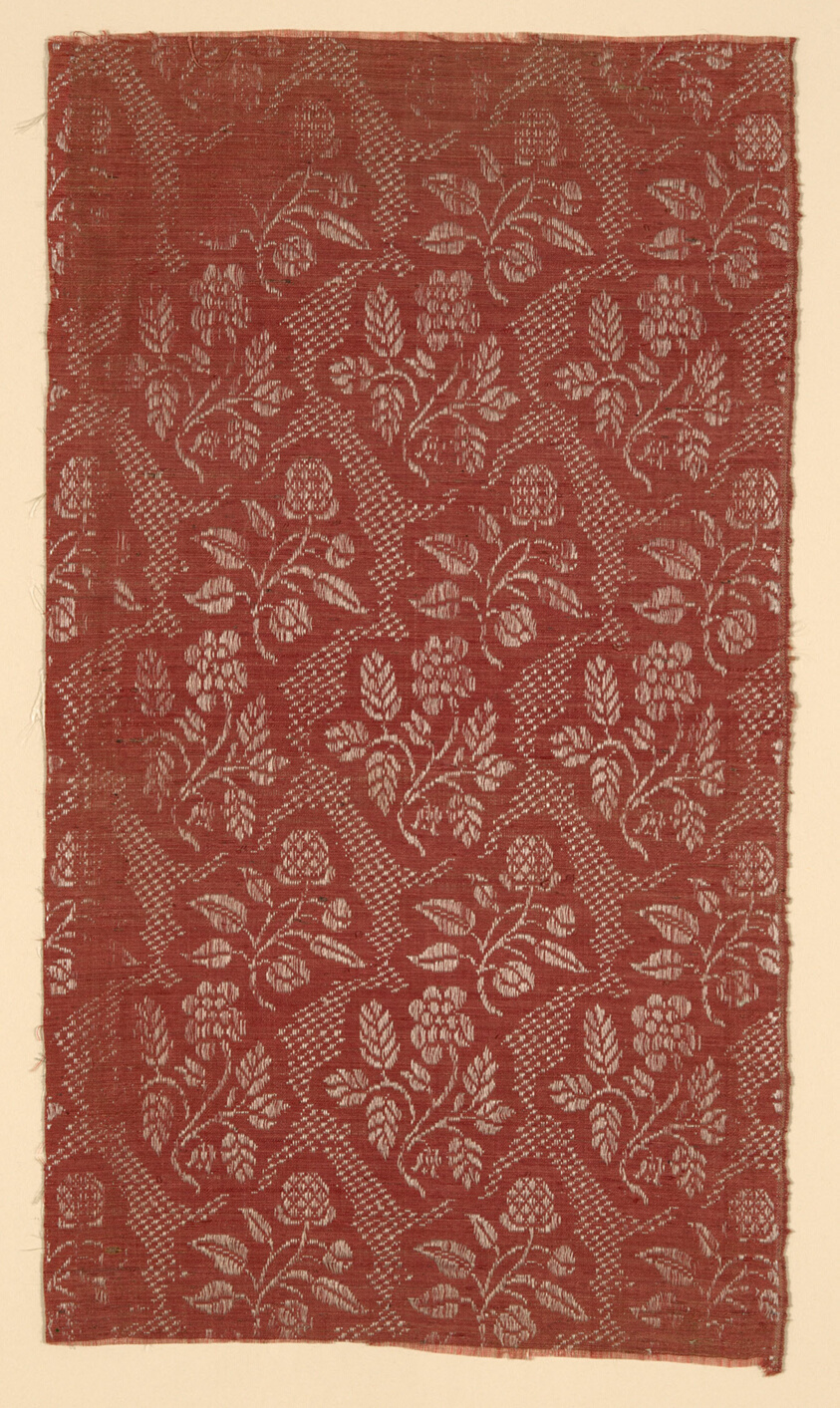
Heritage Research Artifact: The Fragment as a Testament to Silk’s Fluid Elegance
Introduction: The Fragment as a Living Document
In the hallowed corridors of Lauren Fashion Heritage Lab, we approach the fragment not as a remnant of decay, but as a vital, articulate document of craftsmanship. This particular artifact—a segment of silk, plain compound cloth—speaks with the quiet authority of a Savile Row tailor’s swatch. It is a piece of a larger narrative, one woven in the classic traditions of silk craftsmanship, where fluid elegance is not merely an aesthetic but a structural principle. The fragment, preserved in our archives, offers a rare glimpse into the materiality of a bygone era, yet its lessons remain profoundly relevant to the contemporary understanding of luxury, drape, and the enduring power of textile heritage.
Materiality: The Anatomy of Plain Compound Silk
To understand this fragment, one must first appreciate the technical mastery embedded in its weave. Silk, plain compound cloth—often referred to in historical contexts as a lampas or a compound weave—is a fabric of extraordinary complexity. Unlike a simple plain weave, where a single warp and weft interlace, a compound cloth employs multiple sets of warps and wefts. In this fragment, the ground weave is a fine, lustrous silk, likely from the Bombyx mori silkworm, prized for its long, continuous filaments that yield an unparalleled sheen. The “plain” designation refers to the ground structure, a 1/1 interlacing that provides a stable, smooth foundation. The “compound” element introduces supplementary wefts, often in contrasting colors or textures, which float across the surface to create pattern, depth, and a subtle relief.
Under magnification, the fragment reveals a meticulous balance. The warp threads, set at a density of approximately 120 threads per inch, are tightly packed, offering structural integrity. The wefts, both ground and supplementary, are slightly less dense, allowing the fabric to yield and drape. This ratio is critical: it is the secret to silk’s fluid elegance. The supplementary wefts, when not actively forming the pattern, are carried loosely on the reverse, a technique that adds weight without stiffness. The result is a cloth that moves like water, yet holds its shape with the precision of a tailored jacket. This is not a fabric for static display; it is a material designed for motion—for the sway of a gown, the flutter of a scarf, the subtle shift of a lining as a gentleman walks down Savile Row.
Context: Classic Silk Craftsmanship and the Savile Row Ethos
The fragment’s provenance, though partially obscured by time, aligns with the golden age of silk weaving in Lyons and London’s Spitalfields, where artisans perfected the compound weave for aristocratic and mercantile patrons. This is the silk of the 18th and 19th centuries, a period when fabric was not merely a commodity but a statement of lineage, taste, and economic power. The classic craftsmanship evident here—the even tension, the flawless dye penetration, the absence of slubs or irregularities—reflects a discipline that Savile Row would later codify in tailoring. Just as a Savile Row cutter respects the cloth’s grain and bias, the weaver of this fragment respected the silk’s natural properties, coaxing fluidity from a material that could easily become brittle or stiff if mishandled.
In the context of heritage, this fragment is a bridge. It connects the looms of the past to the cutting tables of the present. The fluid elegance of the silk is not accidental; it is engineered. The plain compound structure allows the fabric to fall in soft, uninterrupted folds, a quality that Savile Row tailors have long exploited for garments like the smoking jacket, the opera cloak, and the formal waistcoat. These are pieces that demand movement without compromise—a client must be able to raise a glass, bow, or dance without constraint. The fragment, therefore, is a lesson in functional luxury. It reminds us that true elegance is not static; it is the harmony between material and motion.
Preservation and Interpretation: The Fragment’s Role in the Lab
Within the Lauren Fashion Heritage Lab, this fragment serves as a primary source for research into historical weaving techniques, dye chemistry, and the evolution of textile design. Its condition—slightly faded along one edge, with a single, carefully repaired tear—offers clues about its use. The fading suggests exposure to light, perhaps from a window in a drawing room or a ballroom. The repair, executed with a fine silk thread and a stitch so small it is nearly invisible, indicates that the owner valued the fabric enough to preserve it, not discard it. This is the behavior of a connoisseur, someone who understood that a fragment of silk could hold a memory, a status, a legacy.
Our interpretation of the fragment extends beyond its physical properties. We consider its color, a deep, resonant burgundy that would have been achieved with madder root or cochineal, both expensive and labor-intensive dyes. We analyze its pattern, a subtle, repeating motif of stylized foliage, likely derived from Persian or Ottoman sources, reflecting the cross-cultural exchanges that enriched European silk design. And we measure its hand—the tactile sensation of running one’s fingers across its surface—which reveals a suppleness that synthetic silks can only approximate. This is the hallmark of classic craftsmanship: a material that feels as luxurious as it looks.
Conclusion: The Fragment as a Call to Continuity
The fragment of silk, plain compound cloth, is more than a historical curiosity. It is a call to continuity. In an era of fast fashion and disposable textiles, this piece reminds us of the value of patience, precision, and material integrity. It challenges us to ask: how do we preserve the fluid elegance of the past while innovating for the future? At Lauren Fashion Heritage Lab, we answer this question by studying fragments like this one, extracting their wisdom, and applying it to contemporary design. The fragment teaches us that silk’s true power lies not in its rarity, but in its ability to move with grace—a quality that Savile Row has championed for centuries and that we, as custodians of heritage, must uphold.
This artifact is not a relic. It is a living standard. And as long as we continue to study, respect, and reinterpret its lessons, the legacy of classic silk craftsmanship will remain as fluid and elegant as the fabric itself.