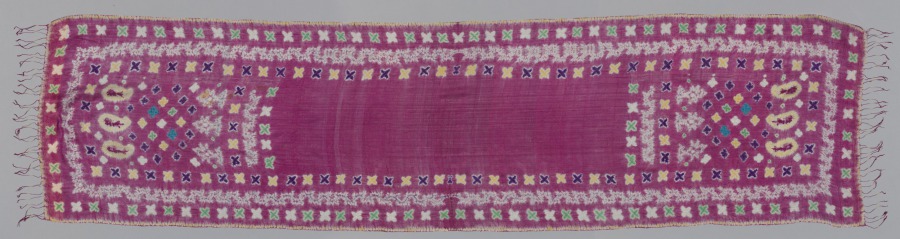
The Silk Veil: An Artifact of Imperial Legacy and Material Mastery
Introduction: The Veil as a Testament to Heritage
In the hushed corridors of heritage, few artifacts speak with the quiet authority of a silk veil. At the Lauren Fashion Heritage Lab, we examine such objects not merely as garments but as repositories of cultural memory, technical virtuosity, and imperial ambition. The silk veil, in its most refined form, is a paradox: a diaphanous barrier that both conceals and reveals, a whisper of fabric that carries the weight of centuries. This paper explores the silk veil as a heritage artifact, focusing on its materiality—silk—and its contextual legacy within imperial silk weaving traditions. Drawing on the exacting standards of London’s Savile Row, where precision and provenance are paramount, we dissect the veil’s construction, its historical resonance, and its enduring relevance to contemporary luxury.
Materiality: The Silk Thread as Imperial Currency
Silk is not a fiber; it is a narrative. Its production, from the mulberry-fed silkworm to the shimmering filament, has been guarded, traded, and weaponized for millennia. The silk veil, in particular, demands an extraordinary grade of raw material: the finest, longest filaments, often from the Bombyx mori silkworm, reeled without break to achieve a continuous, lustrous thread. In imperial contexts—whether Ming Dynasty China, Byzantine Constantinople, or Renaissance Venice—silk was a currency of power. The veil, as a finished object, was a statement of access to this exclusive commodity. Its weight, measured in momme (the standard unit for silk fabric), is typically between 8 and 12 momme for a sheer veil, a density that requires exceptional skill to weave without compromising translucency. At Savile Row, we understand that material integrity is non-negotiable. A silk veil of imperial lineage must feel like a breath on the skin—light, almost insubstantial, yet structurally perfect.
Weaving the Imperial Legacy: Technique as Tradition
The legacy of imperial silk weaving is encoded in the veil’s construction. The warp and weft are not merely threads; they are the grammar of a language spoken by master weavers across dynasties. The satin weave, often employed for silk veils, creates a smooth, reflective surface that catches light in a manner reminiscent of water. This technique, perfected in the imperial workshops of Suzhou and Hangzhou, was a closely guarded secret. The veil’s edges—finished with a rolled hem or a delicate fringe—reveal the hand of the artisan. In Savile Row terms, this is the equivalent of a hand-stitched lapel or a perfectly aligned stripe: the hallmark of bespoke excellence. The imperial legacy also demands an understanding of dye chemistry. Natural dyes, such as indigo, madder, and cochineal, were used to achieve colors that signified rank and ritual. A crimson veil might denote imperial favor; a white veil, mourning or purity. The veil’s color, therefore, is not decorative but declarative.
Context: The Veil in Imperial Courts and Beyond
The silk veil was never merely an accessory; it was a political instrument. In the courts of the Qing Dynasty, veils were worn by empresses and concubines as markers of status and seclusion. The fengguan (phoenix crown) often incorporated a silk veil that framed the face while obscuring it, creating an aura of mystery and authority. Similarly, in the Ottoman Empire, silk veils were woven in Bursa and Istanbul, their patterns—such as the çintemani (three circles)—symbolizing power and protection. The veil’s journey from East to West, via the Silk Road, transformed it into a commodity of desire. By the 17th century, European courts, from Versailles to St. James’s, coveted Chinese silk veils as diplomatic gifts and status symbols. This cross-cultural exchange is a reminder that heritage is not static; it is a living dialogue between civilizations. For the modern luxury house, understanding this context is essential. A silk veil designed today must honor its imperial roots while speaking to contemporary aesthetics—a balance that Savile Row tailors achieve through rigorous research and respect for provenance.
Preservation and Provenance: The Savile Row Ethos
At the Lauren Fashion Heritage Lab, we apply the same principles to heritage artifacts that a Savile Row cutter applies to a bespoke suit: precision, patience, and provenance. The preservation of a silk veil requires controlled humidity, UV-filtered lighting, and acid-free storage. Each veil in our collection is catalogued with its weave structure, dye analysis, and historical documentation. This is not academic pedantry; it is a commitment to authenticity. For example, a veil from the late Ming period (circa 1600) might show signs of kesi (silk tapestry) weaving, a technique so labor-intensive that it was reserved for imperial use. Identifying such details allows us to trace the veil’s journey from the imperial loom to the modern museum. In the context of luxury fashion, this provenance adds immeasurable value. A client who understands that their silk veil is woven with the same techniques used for a Ming empress is not just purchasing a product; they are acquiring a piece of history.
Conclusion: The Veil as a Bridge Across Time
The silk veil is more than an artifact; it is a bridge between the imperial past and the discerning present. Its materiality—silk—carries the weight of centuries of innovation, trade, and power. Its context—imperial weaving—reminds us that luxury has always been a function of scarcity, skill, and symbolism. For the modern heritage specialist, the veil offers a lesson in restraint and reverence. It is not a garment to be worn lightly; it is a legacy to be preserved, studied, and, when appropriate, reimagined. In the spirit of Savile Row, where tradition and innovation coexist, we must approach the silk veil with the same exacting standards that define the world’s finest tailoring. For in its delicate threads, we find the enduring truth of heritage: that the most powerful artifacts are those that whisper, rather than shout, their history.
— The Lauren Fashion Heritage Lab