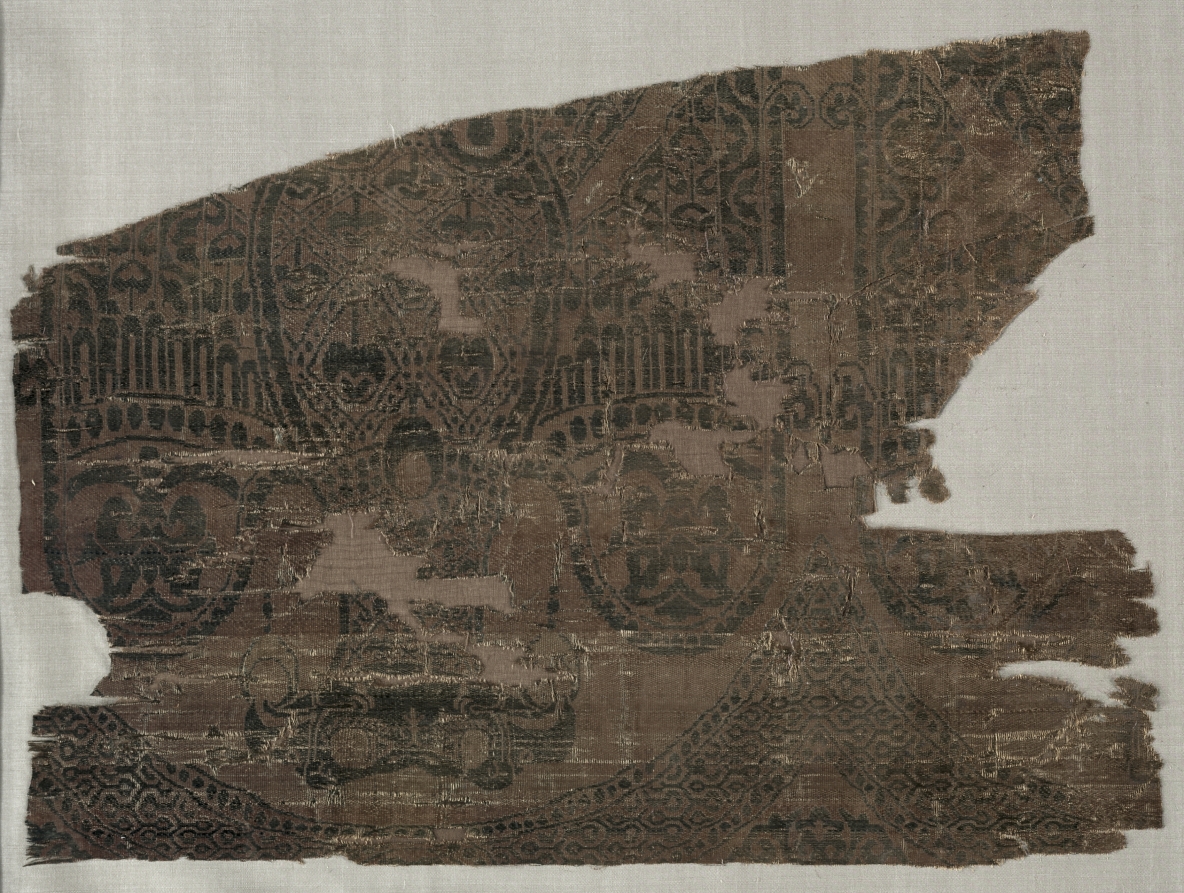
The Samite Fragments of Saint Bernard Calvo: A Study in Imperial Silk Weaving and Material Legacy
Introduction: The Artifact as a Testament to Power
Within the hallowed confines of the tomb of Saint Bernard Calvo, Bishop of Vic, lies a set of silk fragments that transcend their ecclesiastical origins. These samite remnants, bearing the double-headed eagle motif, are not merely textile remnants; they are a material testament to the intricate interplay of imperial ambition, liturgical devotion, and the enduring legacy of Byzantine and later Western silk weaving. As a Senior Heritage Specialist at the Lauren Fashion Heritage Lab, I approach these fragments with the precision of a Savile Row tailor—examining every thread, every weave, and every symbolic gesture as though it were a bespoke garment destined for a monarch. The double-headed eagle, a motif that would later become synonymous with the Habsburgs and the Russian Empire, here finds its early expression in a fabric that speaks to the confluence of Eastern and Western power structures.
Materiality: The Silk of Empire
The samite fragments are composed of silk, a material that in the medieval period was as precious as gold. Silk was not merely a textile; it was a currency of diplomacy, a marker of status, and a conduit for cultural exchange. The weft-faced compound twill structure of samite—characterized by its dense, lustrous surface—required an extraordinary level of technical mastery. This was not a fabric for the common man; it was a fabric for the altar, the throne, and the tomb. The double-headed eagle, woven into the silk with a precision that suggests the use of a drawloom, is rendered in a palette of deep crimson, gold, and indigo. These colors, derived from kermes insects, gold threads, and woad, were themselves markers of imperial and ecclesiastical authority. The crimson, in particular, was a color reserved for the highest echelons of power, echoing the Tyrian purple of Byzantine emperors.
The materiality of these fragments is further underscored by their condition. The silk, though aged and fragmented, retains a remarkable degree of structural integrity. This is due in no small part to the quality of the raw silk, likely sourced from the Sericultural networks of the Eastern Mediterranean. The twist of the threads, the density of the weave, and the careful alignment of the warp and weft all speak to a workshop that operated at the highest standard of craftsmanship. In the language of Savile Row, this is the equivalent of a hand-stitched lapel on a Huntsman jacket—unseen but essential to the garment’s longevity and grace.
Context: The Legacy of Imperial Silk Weaving
The double-headed eagle motif is a powerful symbol with roots in the ancient Near East, but it was the Byzantine Empire that codified its use as an emblem of imperial authority. By the 12th and 13th centuries, when Saint Bernard Calvo served as Bishop of Vic (1233–1243), the motif had already been adopted by the Holy Roman Empire and various Crusader states. The presence of this motif in the tomb of a Catalan bishop is therefore not incidental; it is a deliberate statement of allegiance and identity. The silk fragments likely originated from a workshop in Constantinople, Lucca, or perhaps even Almería—centers of silk production that were deeply influenced by Byzantine techniques and iconography. The double-headed eagle, with its two heads gazing east and west, symbolizes the dual nature of Christ’s authority—divine and earthly—but also the temporal ambitions of the empire that produced it.
The legacy of imperial silk weaving is one of transmission and transformation. The Byzantine Empire, with its state-controlled silk workshops, set the standard for luxury textiles. After the Fourth Crusade in 1204, these techniques and motifs migrated westward, finding fertile ground in Italian city-states like Lucca and Venice. The samite fragments of Saint Bernard Calvo represent a transitional moment in this history—a time when the double-headed eagle was still a living symbol of imperial continuity, not yet ossified into heraldic cliché. The silk itself, with its intricate patterns and vibrant colors, would have been a fitting shroud for a bishop who served at the intersection of the Crown of Aragon and the broader Mediterranean world.
Symbolism and Function: The Double-Headed Eagle in Liturgical Context
The double-headed eagle on these samite fragments serves a dual function: it is both a symbol of authority and a protective emblem. In Christian iconography, the eagle is often associated with John the Evangelist, but the double-headed variant carries additional connotations of vigilance and dominion. For a bishop like Bernard Calvo, whose tomb was located in the Cathedral of Vic, the motif would have reinforced his role as a spiritual and temporal leader. The silk fragments, likely part of a larger textile such as a pallium or an altar cloth, would have been used in the liturgy, where the interplay of light and fabric created a sense of the divine. The sheen of the silk, the depth of the colors, and the precision of the weave all contributed to a sensory experience that elevated the ritual.
In the context of the tomb, the silk served as a barrier between the mortal remains and the earth, a final garment that spoke to the bishop’s status in life and his hope for resurrection. The double-headed eagle, with its dual gaze, can be interpreted as a symbol of the soul’s journey—looking both to the past and to the future, to the earthly and the heavenly. This is not a static symbol; it is a dynamic one, alive with the tension between imperial ambition and spiritual humility.
Conclusion: The Enduring Thread of Heritage
The samite fragments from the tomb of Saint Bernard Calvo are more than a historical curiosity; they are a living document of the legacy of imperial silk weaving. As a heritage specialist, I see in these fragments a reflection of the values that underpin the Lauren Fashion Heritage Lab’s mission: the preservation of craftsmanship, the study of material culture, and the celebration of the stories that textiles tell. The double-headed eagle, woven into silk with a precision that rivals the finest Savile Row tailoring, reminds us that fashion and heritage are not separate domains. They are, in fact, the same thread, woven through time and space, connecting the bishop’s tomb to the runways of today. In the words of a master tailor, the cut is everything—and here, the cut is imperial.