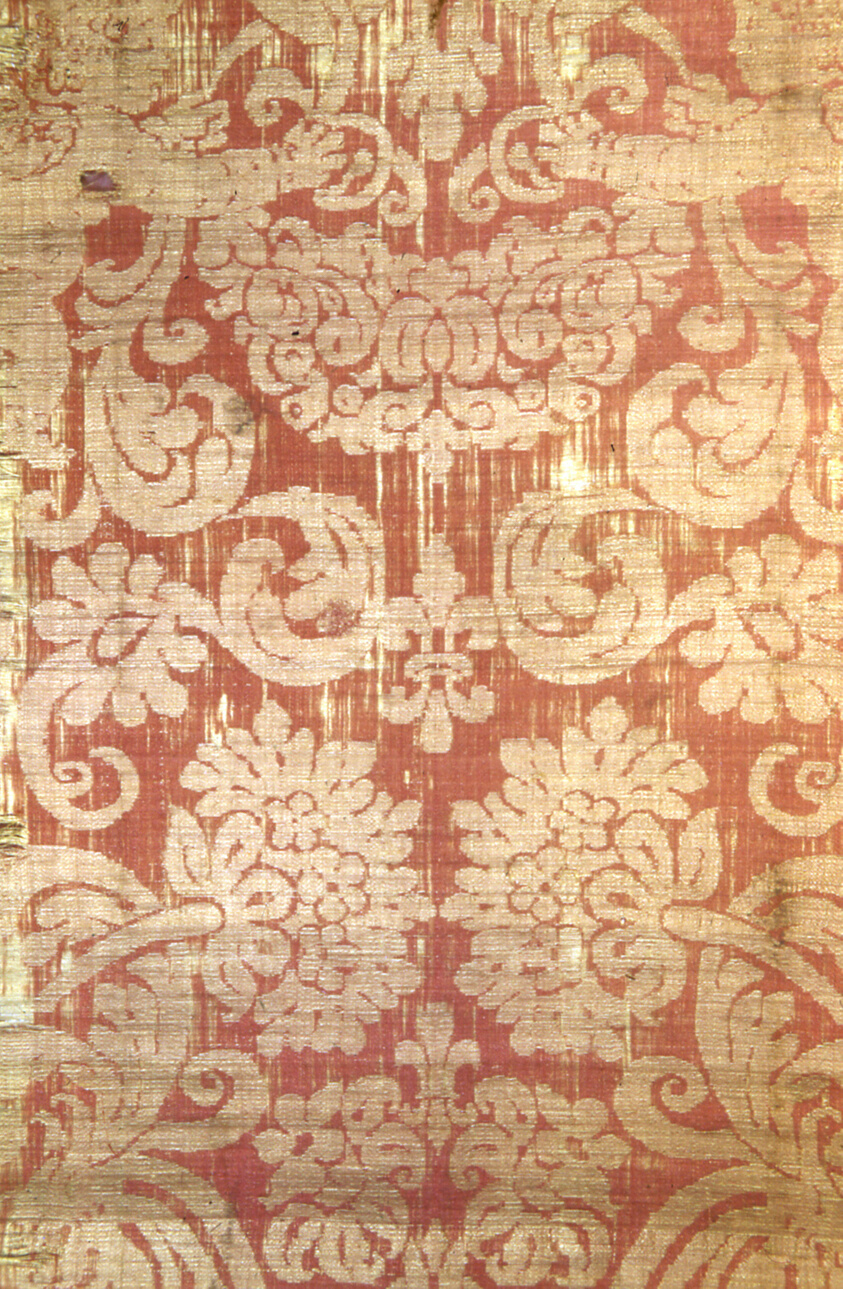
The Panel: A Study in Materiality and the Enduring Language of Silk
Introduction: The Object as Archive
Within the hallowed ateliers of Savile Row, where the language of cloth is spoken with a precision that borders on the liturgical, the panel holds a unique position. It is not merely a remnant, a scrap, or a sample. It is a concentrated statement of intent, a frozen moment of potential. The artifact under examination—a panel of silk, woven in a 4:1 satin damask structure—represents a profound dialogue between the hand of the craftsman, the logic of the loom, and the fluid, almost sentient, nature of the fibre itself. To study this panel is to decode a heritage of luxury, where materiality is not a passive quality but an active agent in the creation of form and meaning.
This paper will dissect the panel’s material DNA, exploring its weave structure, its tactile and visual properties, and its place within the broader context of classic silk craftsmanship. The objective is not merely to describe, but to articulate the inherent elegance and technical mastery that such a panel embodies, and to understand why it remains a cornerstone of the finest bespoke and luxury fashion.
The Weave: A Grammar of Light and Structure
The foundation of this panel’s character lies in its weave: a 4:1 satin damask. To the uninitiated, this may appear a technical footnote. To the heritage specialist, it is the entire narrative. The satin weave, with its characteristic long floats of warp yarn over four weft threads, creates a surface of unparalleled smoothness and luminosity. Unlike a plain weave, which interlaces every thread, the satin structure suppresses the weft, allowing the warp—the vertical, load-bearing yarns—to dominate the face of the cloth. This produces a mirror-like sheen, a liquid depth that catches and reflects light in a way that feels almost aqueous.
The 4:1 ratio is critical. It is a point of equilibrium. A higher ratio, such as 5:1 or 8:1, would yield an even glossier surface but at the cost of structural integrity, making the fabric prone to snagging and wear. A lower ratio, like 3:1, would sacrifice some of that lustre for increased durability. The 4:1 satin is the master tailor’s choice: it offers the maximum visual drama—the “fluid elegance” of the brief—while retaining the resilience required for a garment that must drape, move, and endure. It is a negotiation between the ethereal and the practical, a hallmark of true craftsmanship.
The addition of the damask technique elevates this from a simple satin to a woven narrative. Damask is a figured weave, where the pattern is created by a contrast between the satin face and a reverse satin (or sateen) ground. In this panel, the design—likely a restrained, geometric motif or a classic floral arabesque—is not printed or embroidered onto the surface. It is woven into the very structure of the cloth. The light plays differently on the raised, lustrous areas of the pattern versus the matte, recessed ground. This creates a subtle, tonal interplay, a quiet opulence that reveals itself only upon closer inspection. This is not a fabric that shouts; it whispers, and that whisper is the voice of heritage.
Materiality: The Soul of Silk
Silk is not a textile; it is a substance. Its provenance—the cocoon of the Bombyx mori silkworm—grants it a unique molecular structure. The fibroin protein filaments are triangular in cross-section, acting as natural prisms that refract light. This is the source of silk’s characteristic “scintillation,” its ability to shimmer with an inner glow. The sericin gum, which coats the raw fibre, is carefully removed in a process called degumming, revealing the soft, tactile handle that is the hallmark of fine silk.
In this panel, the materiality of silk manifests in three distinct ways. First, drape. The long floats of the satin weave, combined with the intrinsic suppleness of the silk filament, allow the panel to fall in soft, uninterrupted folds. It does not crease harshly; it flows. This fluidity is the essence of elegance, the quality that allows a garment to move with the body rather than against it. Second, temperature regulation. Silk is a natural insulator, cool in summer and warm in winter. This panel, therefore, is not merely decorative; it is functional, a fabric for all seasons. Third, resilience. Despite its delicate appearance, silk is one of the strongest natural fibres. The 4:1 satin structure, while luxurious, is engineered to withstand the stresses of tailoring—the cutting, the stitching, the pressing. It is a fabric that respects the tailor’s art.
Context: The Savile Row Ethos and Fluid Elegance
To place this panel within its proper context is to understand the philosophy of Savile Row. The Row is not a place for trends; it is a repository of timeless principles. The classic silk craftsmanship that produced this panel is rooted in a tradition that values substance over spectacle. The fluid elegance of the satin damask is not an accident of design; it is a deliberate outcome of a process that prioritises the intrinsic qualities of the material.
In the hands of a master cutter, this panel would become a lining for a dinner jacket, a scarf, or a waistcoat panel. Its role is to provide a moment of quiet revelation—a flash of lustre when the jacket is removed, a whisper of pattern against the skin. The fluidity of the silk ensures that the garment remains light and unencumbered, while the damask pattern offers a subtle signature of taste. This is elegance that does not demand attention but commands respect.
The term “fluid elegance” is often misused in contemporary fashion, reduced to a descriptor for loose silhouettes. In the context of this panel, it is a technical and aesthetic reality. The fluidity is a function of the weave and the fibre; the elegance is a function of the restraint and precision with which that fluidity is harnessed. The panel is a testament to the fact that true luxury is not about excess, but about the perfect balance of material, structure, and intention.
Conclusion: The Panel as a Living Document
This heritage research artifact—a simple panel of silk, 4:1 satin damask—is far more than a piece of cloth. It is a living document of centuries of textile innovation, a physical embodiment of the Savile Row ethos, and a masterclass in the materiality of elegance. Its weave speaks of a dialogue between strength and sheen; its fibre speaks of nature’s genius; its context speaks of a tradition that refuses to compromise.
As we preserve and study such artifacts, we are not merely cataloguing the past. We are learning the grammar of a language that can still inform the future of luxury fashion. The panel reminds us that the most profound expressions of style are not shouted, but woven. And in that quiet, luminous weave, we find the enduring soul of classic silk craftsmanship.