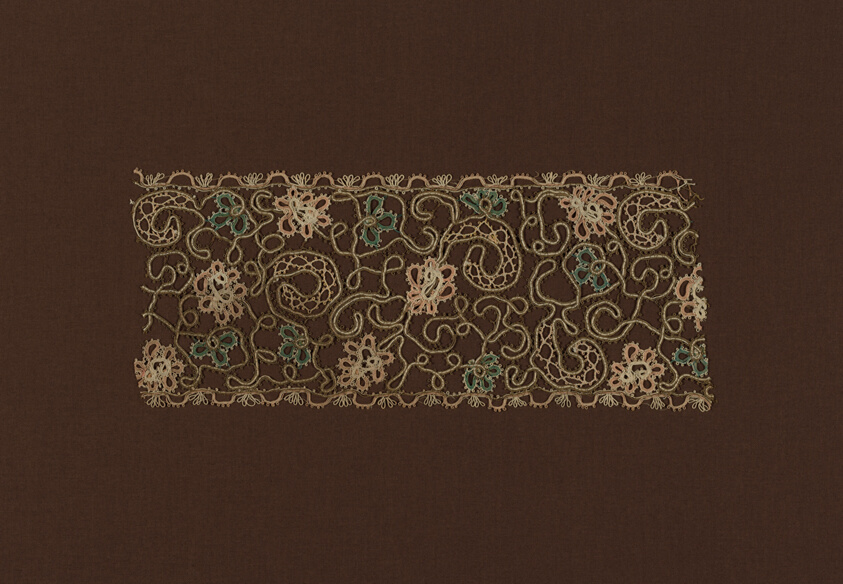
On the Material Confluence of Braid: An Examination of Cordage and Lace in the Service of Elegance
The pursuit of sartorial excellence, much like the construction of a formidable reputation, is an exercise in the considered accumulation of detail. It is in the unspoken language of the finishing—the line of a lapel, the roll of a collar, the discretion of a buttonhole—that true distinction is communicated. Among these silent articulations of quality, the application of braid, particularly in its most refined silk iterations, occupies a rarefied position. It is not mere ornamentation; it is structural poetry, a testament to a heritage of material intelligence and fluid elegance.
I. On the Hierarchy of Materials: Silk, Hemp, and Linen
The foundation of any superior braid lies in an uncompromising hierarchy of materials. Pure silk, the undisputed sovereign of textile fibres, represents the apex. Its inherent properties—a luminous sheen, a formidable tensile strength belied by its ethereal weight, and a singular capacity to accept and retain the most profound of dyes—render it the ideal candidate for braids of the highest order. A braid constructed solely of silk cord possesses a fluidity and a visual depth that is immediately, if subtly, apparent to the discerning eye. It drapes with authority, follows a contour with loyalty, and maintains its composure under duress.
However, the craftsman’s repertoire extends beyond this pure expression. The use of silk-wrapped-hemp and silk-wrapped-linen cords introduces a fascinating dialogue between opulence and integrity. Here, the robust, unyielding character of hemp or the crisp, dry substance of linen is sheathed in a mantle of silk. This is not a compromise, but a strategic alliance. The core provides architectural rigidity, memory, and resilience, while the silk sheath bestows the requisite lustre and tactility. The resulting cord is a study in balanced character: it possesses the soul of a workhorse clad in the raiment of aristocracy. Its application is a matter of strategic deployment, chosen where a pure silk braid might prove too pliant, or where a subtle textural contrast is desired beneath the commanding gloss.
II. The Discipline of the Bobbin: On Straight Lace
To this material conversation, we must introduce the precise discipline of the bobbin. Bobbin-made straight lace, when executed in silk, represents a zenith of controlled intricacy. Unlike the free-flowing nature of cord braiding, bobbin lace is an exercise in geometric precision and planned emptiness. It constructs pattern through a calculated architecture of threads, creating openwork motifs of exceptional clarity and regularity.
When rendered in silk, this technique transcends craft and approaches alchemy. The lace retains its structural honesty—every twist, every crossover is visible and accountable—yet the material imbues it with a softness, a luminosity that tempers its mathematical rigour. The result is a braid or edging of extraordinary sophistication: firm yet delicate, ornate yet restrained. It functions as a frame, a punctuation, a breath of air along a hem or cuff. Its presence speaks of a patience and a technical mastery that are the very antithesis of the hurried and the mass-produced.
III. A Confluence of Context: Craftsmanship and Fluid Elegance
The true merit of these elements—silken cords and bobbin lace—is realized only in their considered application, guided by the twin pillars of classic silk craftsmanship and the pursuit of fluid elegance. Classic silk craftsmanship is a doctrine of respect: for the material’s origin, its handling, and its ultimate purpose. It understands that silk must be worked with assurance, not force; that tension must be consistent, not aggressive. This craftsmanship ensures that a braid lies flat, that its edges are true, and that its pattern, whether woven or laced, is immaculately realized.
Fluid elegance, then, is the aesthetic principle governing its use. It is an elegance that moves; it is an adornment that serves, rather than overwhelms, the garment’s form. A silk braid applied to the edge of a smoking jacket’s shawl collar does not stiffen it, but rather emphasizes its graceful curve. Bobbin lace inset into the cuffs of a silk blouse provides a filigree detail that catches the light with movement, not a static, heavy embellishment. The fluidity is in the drape, the fall, and the dynamic interaction with the wearer’s form. This is not the rigid, heraldic braid of military uniform, but the living, breathing trim of the cultivated wardrobe.
IV. Conclusion: The Silent Articulation of Distinction
In final analysis, the heritage research artifact of the braid—in its manifestations of silk and silk-wrapped cord, complemented by the precision of bobbin lace—stands as a profound metaphor for bespoke philosophy itself. It represents the marriage of robust internal construction (the hemp, the linen core, the lace’s structure) with flawless external presentation (the silk sheath, the luminous finish). It is detail with purpose.
To commission or to appreciate a garment employing such elements is to engage with a continuum of expertise. It is to understand that elegance is often found in the subsidiary clause, not the declarative statement. The braid, in this exalted form, is that perfectly chosen word, that impeccably placed comma in the narrative of personal style. It does not shout; it articulates. And in that quiet, confident articulation, echoing the principles of Savile Row’s finest houses, lies the true, and enduring, power of heritage.