The Terracotta Fragment and the Architecture of Mortality: Re-Sourcing the 2026 Old Money Silhouette
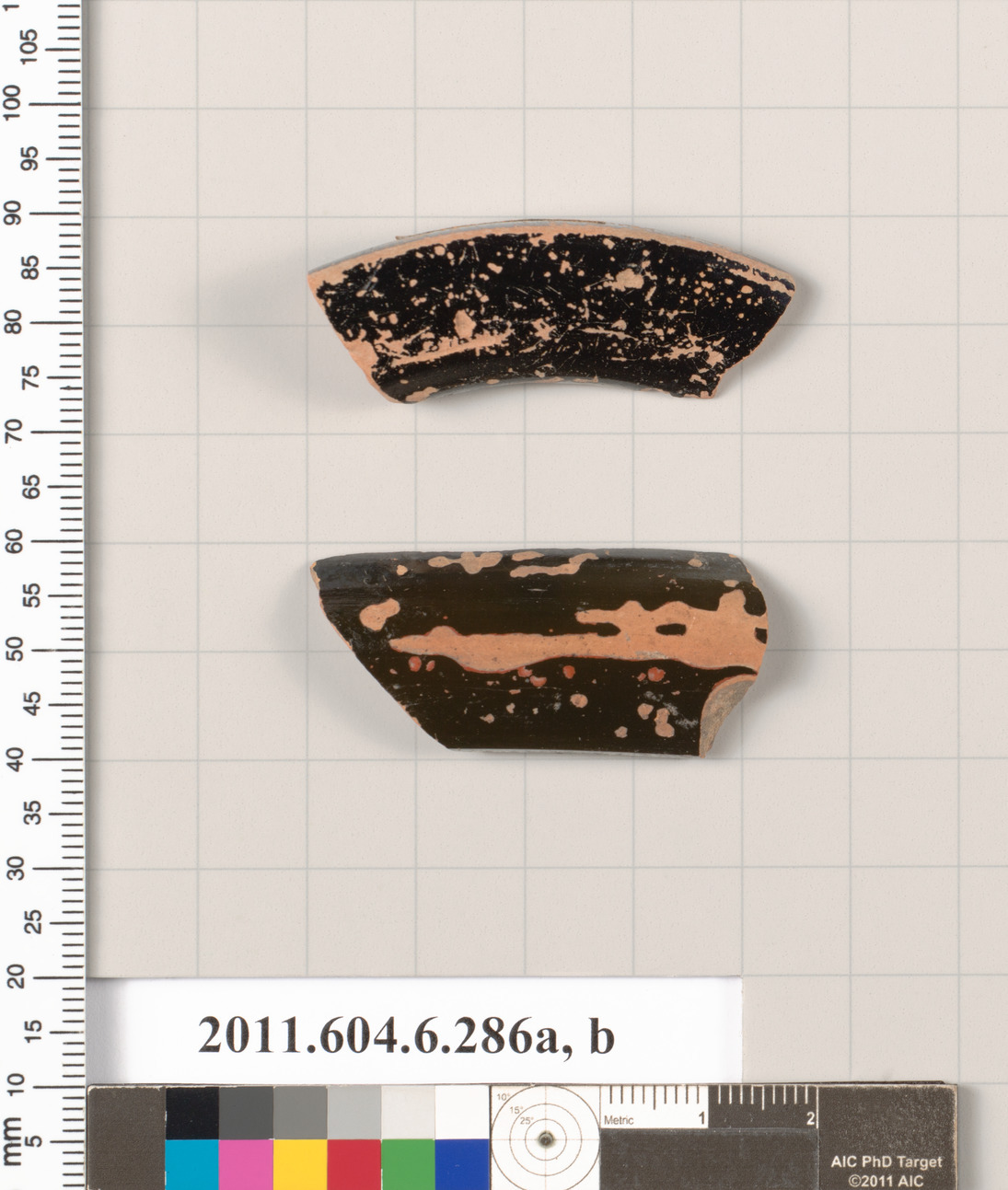
The terracotta fragments—anonymous, broken, bearing the faint ochre and umber of Attic earth—arrive at the Lauren Fashion Heritage Lab not as archaeological trophies but as material philosophy. They are the residue of vessels that once held oil, wine, or the ashes of the dead. Their undetermined shapes resist easy classification; they are neither whole nor legible. Yet in their very incompleteness, they speak directly to the dual aesthetic paradigms outlined in our internal genetic code: the static stillness of Socratic death and the dynamic tension of the hunt. For the 2026 Old Money silhouette, these fragments offer a radical reorientation—not toward the polished surface of inherited wealth, but toward the heritage of decay that underpins all true luxury.
Fragment as Form: The Terracotta’s Challenge to Wholeness
Unlike the pristine marble of neoclassical sculpture or the gilded frames of Baroque hunting scenes, the terracotta fragment refuses completion. Its edges are jagged, its surface pitted by millennia of burial. This is not the death of Socrates, which is rendered as a contemplative still life—a cup, a book, a body arranged for philosophical viewing. Nor is it the hunt, which freezes the explosive instant before the arrow strikes. The fragment is the aftermath of both: the cup already shattered, the hunt already concluded, the body already dust. It is the object as ruin, and in this ruin, it offers a new grammar for the Old Money wardrobe.
The 2026 silhouette, as I propose, must abandon the illusion of seamless continuity that has defined traditional luxury tailoring. Instead, it should embrace what I term “fragmentary wholeness”—a construction that acknowledges its own mortality. This is achieved through deliberate asymmetry, raw-edge seams, and the strategic placement of unfinished hems that recall the broken rims of these terracotta shards. The jacket, for instance, might be cut with one shoulder slightly dropped, the lapel on that side unfinished, as if the garment itself has been excavated from a tomb. The fabric—a heavy, matte heritage-black wool—absorbs light rather than reflecting it, mimicking the porous, light-eating surface of ancient pottery.
The Static and the Dynamic: Two Silhouette Strategies
Drawing from the internal code’s dialectic, the 2026 collection can be structured around two complementary silhouette families. The first, “Socratic Tailoring,” channels the stillness of the death chamber. Garments here are voluminous yet weighted, with long, unbroken lines that fall from the shoulder like the drapery of a philosopher’s himation. The trousers are wide, almost columnar, pooling at the ankle in a way that suggests gravity’s final claim. The color palette is monochromatic: charcoal, ash, and the deep umber of fired clay. Details are minimal—a single pocket, a single button—each placed with the precision of a funerary offering. The effect is one of monumental stillness, as if the wearer has stepped out of a frieze.
The second family, “Hunting Silhouette,” inverts this logic. Here, the terracotta fragment’s jagged edges become the organizing principle. Jackets are cut with exaggerated lapels that flare outward like the wings of a hunting falcon. Trousers are tapered and cropped, revealing the ankle and the shoe—a nod to the dynamic tension of the chase. The fabric, a heavy cavalry twill in a rich, terracotta rust, is treated with a subtle, irregular slub that mimics the texture of ancient pottery. Seams are left raw, and pockets are placed at asymmetrical angles, as if the garment has been torn by brambles. The silhouette is forward-leaning, kinetic, yet held in check by the weight of the material—a frozen moment of pursuit.
Mortality as Material: The Heritage-Black Imperative
The terracotta fragment’s most profound lesson is that luxury is not about preservation but about acceptance of loss. The Old Money aesthetic has long been associated with inheritance, continuity, and the denial of decay. But the fragment teaches us that true heritage is the acknowledgment of what has been broken. The 2026 silhouette must therefore be constructed with an awareness of its own eventual ruin. This is not nihilism; it is aesthetic maturity.
I propose that the heritage-black category be redefined not as a color but as a philosophical stance. It is the black of the Attic soil that held the fragments for centuries. It is the black of the void between the shards. In practice, this means using double-faced wools that reveal a contrasting, unfinished interior when the garment is turned. It means visible mending—stitches that do not hide the repair but celebrate it, like the kintsugi of pottery. It means linings of raw silk that fray at the edges, a reminder that even the most carefully constructed garment will one day return to the earth.
Conclusion: The Fragment as Future
The terracotta fragments are not relics of a dead past. They are blueprints for a living future. In their brokenness, they offer a way out of the sterile perfection that has come to define contemporary luxury. The 2026 Old Money silhouette, informed by these shards, will be neither static nor dynamic in isolation, but rather a dialectical synthesis of both. It will be a silhouette that holds the memory of the hunt and the stillness of the tomb in equal measure. It will be a garment that does not hide its mortality but wears it as a badge of honor. For in the end, as the fragments remind us, the only true luxury is the courage to be incomplete.