The Dialectics of Surface and Void: Greek Terracotta Eye-Cups and the Architecture of Old Money Restraint in 2026
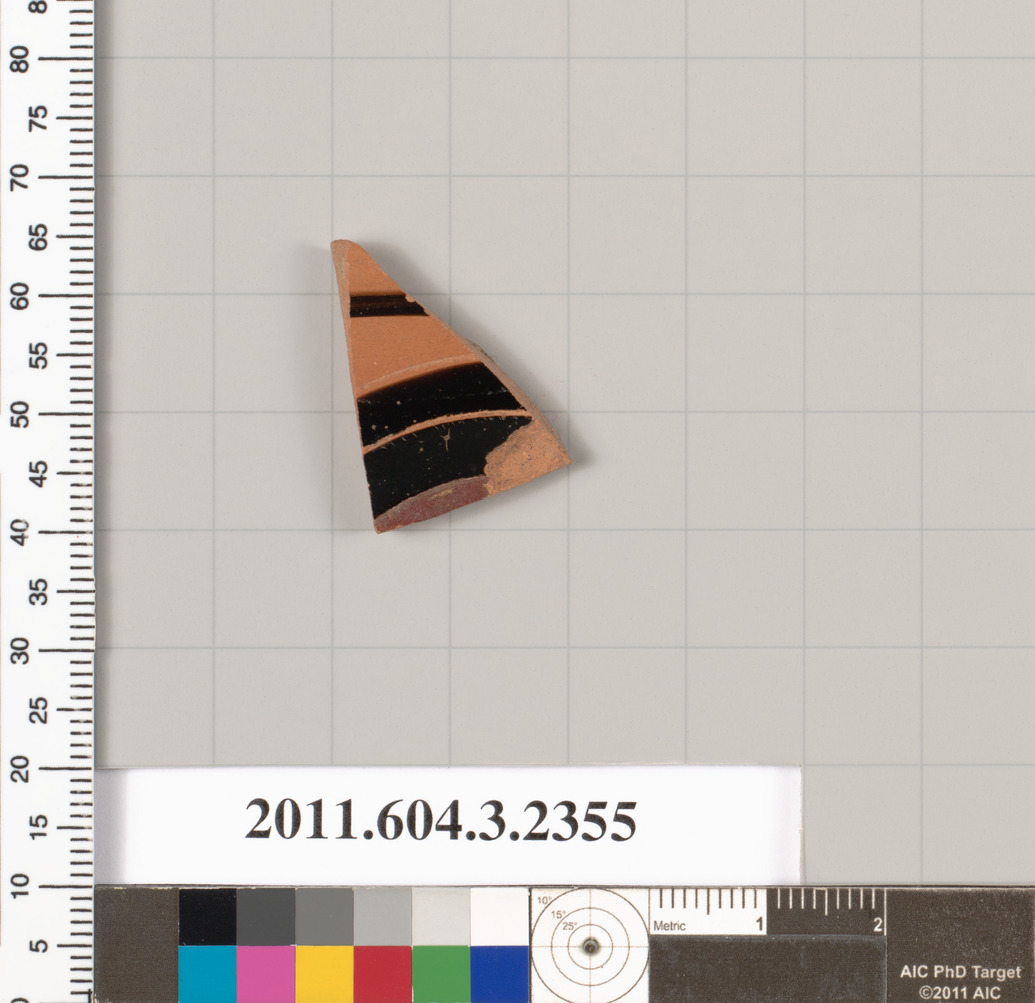
The Lauren Fashion Heritage Lab has long maintained that the most profound design innovations emerge not from novelty, but from the disciplined reinterpretation of archetypal forms. Our internal archives, rich with the genetic code of Eastern aesthetics—the “优昙钵华” temple plaque’s meditative emptiness and the Han-dynasty bronze mirror’s kinetic fullness—provide a philosophical foundation for understanding material culture. Yet, when we turn our gaze westward to a seemingly unrelated artifact—a Terracotta fragment of a kylix: eye-cup (drinking cup) from Attic Greece—we discover a parallel logic of restraint, surface tension, and symbolic economy that directly informs the 2026 Old Money silhouette. This fragment, with its iconic apotropaic eyes and terracotta warmth, is not merely a drinking vessel; it is a treatise on how to project power through controlled presence, a principle that the Old Money aesthetic codifies into fabric and form.
The Eye-Cup as a Technology of Gaze and Status
The Attic eye-cup, produced in the 6th century BCE, served a dual function: it was a practical vessel for symposia and a talismanic object. The large, staring eyes painted on the exterior were believed to ward off evil, but they also performed a social function. When the drinker raised the kylix to his lips, the eyes appeared to stare back at the observer, creating a reciprocal gaze that transformed the act of drinking into a performance of presence. The terracotta medium—fired earth, humble yet enduring—was elevated through precise black-figure painting into a surface of immense graphic power. The eyes are not naturalistic; they are simplified, almost geometric, reducing the human face to its most essential signifiers: the iris, the pupil, the brow. This is a deliberate economy of expression, a refusal to over-narrate. The cup’s power lies in what it withholds—the rest of the face, the context, the story—leaving only a concentrated symbol.
This principle of selective revelation is the bedrock of the 2026 Old Money silhouette. Unlike the logomania of previous decades, or the hyper-saturated streetwear that broadcasts status through volume and logo repetition, the Old Money aesthetic operates through subtle, almost invisible, codes of quality. The terracotta eye-cup teaches us that a single, well-placed detail—a mother-of-pearl button on a cashmere cardigan, a hand-stitched lapel on a wool blazer, the precise drape of a silk trouser—can communicate more than a chest full of embroidery. The “eye” on the cup is the equivalent of a discreetly placed monogram or a signature cut that only the initiated recognize. It is a mark of belonging, not a shout for attention.
Surface as a Field of Tension: From Terracotta to Heritage-Black Wool
The terracotta fragment’s materiality is crucial. The clay body, fired to a warm, earthy orange-red, provides a rich ground for the black slip. This is not a flat, uniform surface; it is a field of tension between the matte, porous clay and the glossy, vitrified black. The eyes, painted in black slip, seem to float above the terracotta ground, creating a subtle optical vibration. This interplay of matte and sheen, of absorbent and reflective, is directly translatable to the fabrics of the 2026 Old Money wardrobe. Consider a Heritage-Black wool overcoat: its surface is not a monolithic black. It is a deep, almost charcoal black, woven with a subtle twill or herringbone that catches light differently at different angles. The texture is the “terracotta ground”—the foundation that gives depth. The “eye” is the single, polished horn button or the silk grosgrain trim on the lapel—a small, glossy interruption that draws the eye without shouting. The effect is one of quiet luxury, of a garment that reveals its quality only upon close inspection.
Furthermore, the eye-cup’s form—a shallow bowl on a stem—creates a specific silhouette of containment. The cup holds liquid, but its shape also frames the gaze. The 2026 Old Money silhouette operates on a similar principle of structured containment. Jackets are cut with a defined shoulder and a suppressed waist, creating a “vessel” for the body. Trousers are straight or slightly tapered, never excessively wide. The silhouette is not about revealing the body’s contours, but about enclosing them within a disciplined form. This is the antithesis of the deconstructed, oversized shapes that dominated previous seasons. The Old Money aesthetic, informed by the terracotta kylix, understands that power resides in controlled volume. The garment becomes a container for presence, much like the cup contains the wine. The wearer does not spill into the space; they occupy it with precision.
The Dialectic of Emptiness and Fullness: A Transcultural Synthesis
Returning to our internal genetic code, the terracotta eye-cup finds a surprising resonance with the Han-dynasty bronze mirror. The mirror, with its 满工布局 (full-field composition) of chariots, beasts, and immortals, is a study in kinetic fullness. The eye-cup, with its isolated, staring eyes against a plain terracotta ground, is a study in static emptiness. Yet both achieve the same goal: they direct the viewer’s attention to a single, potent focal point. The mirror’s dense imagery creates a centrifugal force, pulling the eye inward to the central boss. The cup’s sparse imagery creates a centripetal force, pushing the eye outward to the rim and the drinker’s face. This is the dialectic of “象外之象” (image beyond image) and “计白当黑” (treating emptiness as substance).
For the 2026 Old Money silhouette, this dialectic resolves into a strategy of negative space. A perfectly tailored jacket is not just about the fabric that is present; it is about the void between the body and the cloth, the precise millimeter of ease that allows for movement without distortion. A silk blouse is not just about the drape; it is about the empty space at the neckline, the absence of a necklace, that allows the skin and the fabric to speak. This is the ultimate sign of confidence: the willingness to leave things out. The terracotta eye-cup, with its bold, isolated eyes, demonstrates that less is not merely more—less is the only way to make the essential visible. The 2026 Old Money wardrobe, therefore, is not about accumulation. It is about curation through omission. Each garment is a fragment, like the terracotta shard, that implies a whole. The viewer is invited to complete the picture, to sense the lineage, the craftsmanship, the history that the garment embodies but does not declare.
In conclusion, the Greek terracotta eye-cup, a humble drinking vessel from a symposium, becomes a powerful heuristic for the 2026 Old Money silhouette. Its economy of graphic language, its tension between matte and glossy surfaces, and its architecture of containment all point toward a fashion that values restraint as the highest form of expression. When we synthesize this with our Eastern heritage of emptiness and fullness, we arrive at a design philosophy that is both timeless and urgently contemporary: the Old Money aesthetic is not about showing what you have, but about revealing what you are through the disciplined, almost archaeological, selection of what you choose to wear. The fragment is not a loss; it is a lens. And through it, we see the future of quiet power.