The Materiality of Prestige: Deconstructing the “Portrait of a Gentleman” as a Heritage Artifact
Introduction: The Intersection of Craft and Identity
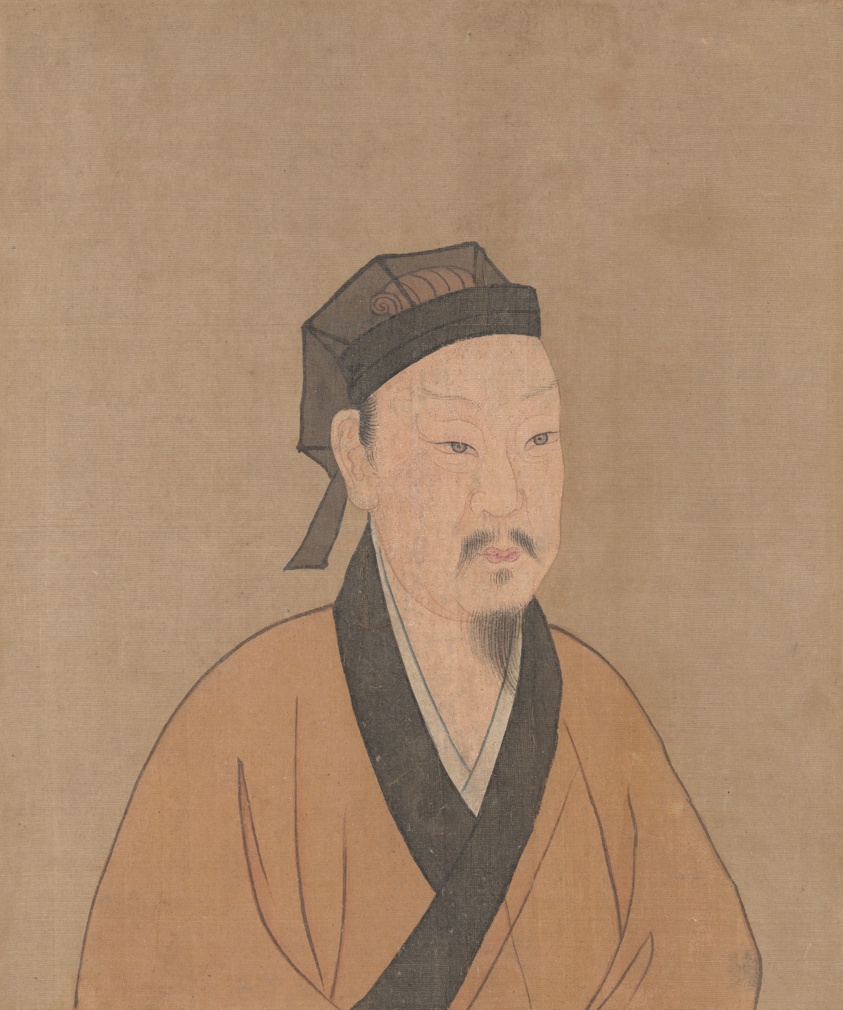
In the lexicon of heritage, few materials command the reverence of silk. At Lauren Fashion Heritage Lab, we examine artifacts not merely as objects, but as repositories of cultural intelligence. The “Portrait of a Gentleman”—an album leaf executed in ink and colors on silk—offers a profound case study in the symbiosis of materiality and identity. This piece, likely originating from the Ming or early Qing dynasty, transcends its function as a portrait. It is a declaration of status, a testament to the artisan’s mastery, and a dialogue between the sitter’s persona and the medium that immortalizes him. For scholars and practitioners of luxury fashion, this artifact illuminates the enduring principles of elegance: restraint, precision, and the silent eloquence of fine materials.
The tone of this analysis is informed by the ethos of London’s Savile Row—a district where tailoring is not a transaction but a ritual, where cloth is chosen for its drape, weight, and lineage. Here, silk is not a fabric; it is a narrative. The “Portrait of a Gentleman” speaks the same language. Its silk support is not incidental; it is the foundation upon which the subject’s dignity is constructed. To understand this artifact, we must first appreciate the materiality of silk as a medium of power and permanence.
Silk as a Conduit of Status and Skill
Silk has long been the textile of empires. In Chinese court culture, it was a currency of prestige, reserved for the elite and imbued with symbolic weight. The “Portrait of a Gentleman” leverages this legacy. The album leaf format—intimate, portable, yet meticulously crafted—suggests a private commission, perhaps for a scholar-official or a merchant of refined taste. The choice of silk as the ground for ink and color is deliberate. Unlike paper, silk possesses a luminosity that enhances the vibrancy of pigments while demanding exceptional skill from the artist. Each brushstroke must account for the fabric’s weave, its absorbency, and its tendency to fray. This is not a medium for the novice; it is a canvas for the virtuoso.
From a Savile Row perspective, silk’s role here parallels that of a fine worsted wool or a cashmere blend in a bespoke suit. It is the substrate that elevates the garment—or in this case, the portrait—from the ordinary to the extraordinary. The “Portrait of a Gentleman” exhibits the hallmarks of classic silk craftsmanship: a tight, even weave that allows for precise line work, and a subtle sheen that catches light without overwhelming the composition. The artist has employed a restrained palette—ochres, indigos, and muted crimsons—that harmonizes with the silk’s natural luster. This restraint is a signature of elegance, much like a Savile Row tailor’s preference for a notch lapel over a peaked one: the detail is present, but it never shouts.
Fluid Elegance: The Aesthetic of Controlled Movement
The phrase “fluid elegance” is often overused in heritage discourse, yet it is the precise descriptor for this artifact. The “Portrait of a Gentleman” captures its subject in a moment of poised stillness. His robes fall in soft, undulating folds, rendered with ink washes that mimic the drape of actual silk. The artist has not merely painted fabric; he has translated the behavior of silk—its weight, its pliancy, its capacity to hold shape—into two dimensions. This is a lesson in material empathy. The sitter’s posture is upright, his gaze direct, yet the lines of his clothing suggest a relaxed authority. It is the same balance that a Savile Row cutter achieves when constructing a jacket: the shoulders are structured, but the waist is soft; the lapels are crisp, but the sleeves allow for movement.
This fluidity is not accidental. It is the result of generations of technical refinement. The artist likely used a combination of gongbi (meticulous brushwork) and xieyi (freehand sketching) to achieve the portrait’s dual nature: precise in its rendering of the face and hands, but expressive in its treatment of textiles. The silk support amplifies this duality. Where the ink is applied thinly, the fabric’s weave becomes visible, adding texture. Where the color is dense, the silk recedes, allowing the pigment to dominate. This interplay between material and medium is the essence of heritage craftsmanship. It is the same principle that governs the selection of a silk lining for a bespoke overcoat: the lining must be seen and felt, but it must never compete with the outer fabric.
The Gentleman as a Brand: Lessons in Heritage Positioning
In the context of luxury fashion, the “Portrait of a Gentleman” functions as a proto-brand artifact. The sitter’s identity is not merely recorded; it is curated. His clothing, his posture, and the very material of the portrait communicate a set of values: refinement, education, and social standing. This is the same logic that underpins a heritage house’s logo or a signature fabric. The portrait is a visual shorthand for a legacy. For Lauren Fashion Heritage Lab, this artifact underscores the importance of materiality in brand storytelling. A silk album leaf is not just a painting; it is a statement of permanence. It says, “This man matters, and so does the craft that preserves his image.”
Savile Row understands this instinctively. A bespoke suit is not a garment; it is a biography. The client’s measurements, the cloth’s provenance, the tailor’s hand—all are encoded in the finished piece. Similarly, the “Portrait of a Gentleman” encodes the sitter’s biography through the language of silk. The choice of an album leaf—a format often used for poetry or calligraphy—suggests that the gentleman was a patron of the arts, a man of letters. The absence of overt symbols of wealth, such as gold leaf or elaborate jewelry, signals a preference for understatement. This is the quiet confidence of a heritage brand that does not need to shout its lineage.
Conclusion: Preserving the Dialogue Between Craft and Legacy
As a heritage research artifact, the “Portrait of a Gentleman” offers more than aesthetic pleasure. It is a pedagogical tool for understanding how materiality shapes perception. The silk support, the fluid elegance of the brushwork, and the restrained portrayal of the sitter converge to create an object that is both intimate and monumental. For the modern luxury industry, this artifact is a reminder that heritage is not static. It is a living dialogue between past and present, between craft and commerce. At Lauren Fashion Heritage Lab, we study such artifacts to extract principles that inform contemporary design: the value of material integrity, the power of subtlety, and the enduring appeal of objects that are made to last.
In the spirit of Savile Row, we conclude with a maxim: “The cloth does not lie.” The silk of the “Portrait of a Gentleman” tells the truth of its time—a truth of skill, status, and the quiet pursuit of perfection. It is a truth that transcends centuries, and one that every heritage practitioner must learn to read.