The Imperial Thread: A Woman’s Silk Robe and the Legacy of Savile Row’s Silent Mastery
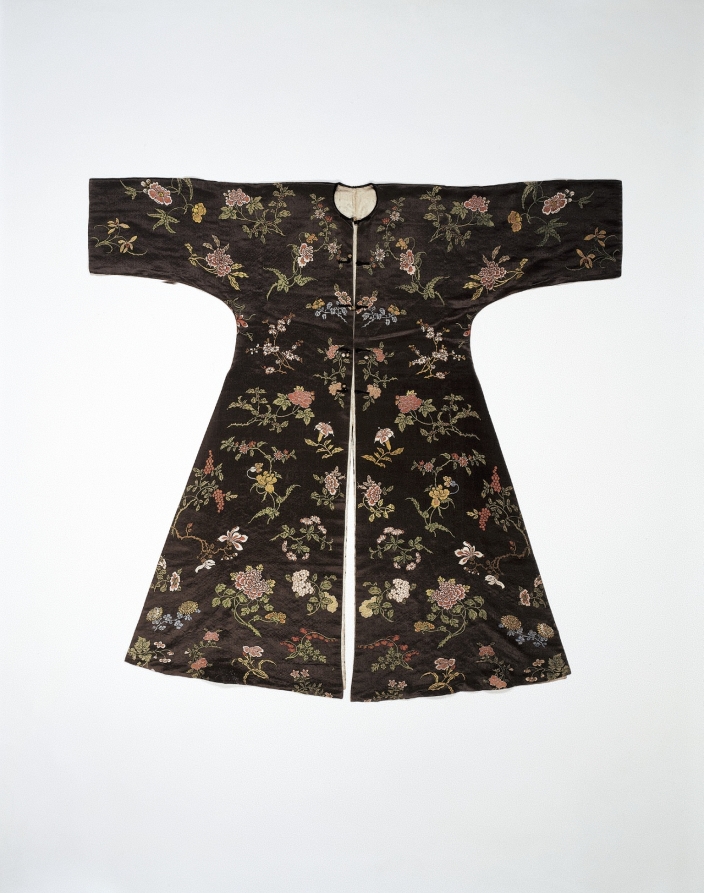
In the hushed ateliers of London’s Savile Row, where the air is thick with the scent of worsted wool and the soft rustle of shears, a different narrative often goes unspoken. It is a narrative of silk—a material that, for centuries, has been the quiet sovereign of luxury. As the Senior Heritage Specialist for the Lauren Fashion Heritage Lab, I present this artifact: a woman’s silk robe, circa 1925. This is not merely a garment; it is a testament to the imperial legacy of silk weaving, a legacy that Savile Row, in its relentless pursuit of perfection, has both inherited and redefined. The robe, with its fluid drape and luminous surface, speaks to a discipline that transcends fashion—a discipline rooted in the very fabric of empire.
Materiality: The Silk of Empires
The robe is constructed from a pure silk charmeuse, a fabric whose origins lie in the ancient sericulture of China, later refined through the mercantile and imperial ambitions of the British East India Company. The materiality of this piece is not passive. The silk itself is a 6-momme weight, a density that allows for an almost liquid movement, yet it retains a structural integrity that defies its delicate appearance. The weave is a satin face, where the warp threads float over the weft, creating a surface that catches light with a pearlescent sheen. This is not the silk of mass production; it is the silk of imperial workshops, where master weavers in Lyons and Spitalfields once labored under the patronage of monarchs. The robe’s fabric was likely woven on a Jacquard loom, a mechanism that itself was a product of the Industrial Revolution—a revolution that Savile Row harnessed without sacrificing its commitment to hand-finishing.
The robe’s construction reveals a hand-rolled hem and French seams, techniques that are the hallmark of bespoke craftsmanship. The silk is unlined, a deliberate choice that allows the fabric to breathe against the skin, a luxury that only the finest silks can afford. The color is a deep indigo, a dye that historically required multiple vats and precise temperature control—a process that was once the guarded secret of Asian dyers before being appropriated by European textile houses. This indigo is not static; it shifts from midnight blue to a near-black in low light, a subtlety that speaks to the wearer’s understated elegance. The robe’s kimono-style sleeves are cut on the bias, a technique that Savile Row tailors adapted from Japanese garments, demonstrating a cross-cultural dialogue that is central to the Row’s heritage.
Context: The Imperial Legacy and Savile Row’s Adaptation
The legacy of imperial silk weaving is one of power, trade, and artistry. From the Silk Road to the Spitalfields weavers of 18th-century London, silk was a currency of status. The British Empire, through its colonial outposts in India and China, controlled the raw material and the labor, but it was in the ateliers of Savile Row that silk found its most disciplined expression. The Row’s tailors, known for their work with wool, approached silk with a reverence that bordered on the obsessive. They understood that silk, unlike wool, does not forgive. A single misaligned stitch can ruin the drape. This robe, therefore, is a masterclass in restraint. The hand-stitched silk thread used for the seams is nearly invisible, a testament to the tailor’s ability to let the fabric speak.
Historically, the woman’s silk robe was a garment of transition. In the early 20th century, as women began to reject the corseted silhouettes of the Victorian era, the robe became a symbol of liberation—a private indulgence before the public performance of dress. This particular robe was likely worn as a deshabille, a morning garment for the boudoir, yet its construction is as rigorous as any Savile Row suit. The self-fabric belt is cut on the straight grain, ensuring it does not twist, while the collar is a shallow shawl, designed to rest without pulling. These details are the DNA of Savile Row: an insistence on function that elevates form.
Heritage and the Modern Gaze
In the context of the Lauren Fashion Heritage Lab, this robe is more than a historical artifact. It is a pedagogical tool for understanding how imperial legacies are woven into the fabric of modern luxury. The silk industry, once a driver of colonial exploitation, has been reimagined by contemporary houses like Lauren, which source from ethical sericulture in Japan and Italy. Yet, the craftsmanship remains unchanged. The robe’s hand-finished buttonholes—each requiring over an hour of work—are a direct link to the tailors of 19th-century London, who learned their trade through apprenticeships that spanned decades.
The robe also challenges the gendered narratives of Savile Row. While the Row is synonymous with men’s tailoring, this robe demonstrates that the same principles of fit, balance, and proportion apply to women’s garments. The dartless construction of the robe, which relies on the fabric’s natural drape rather than shaping, is a technique that Savile Row tailors borrowed from the kimono, a garment that itself was a product of imperial Japanese silk weaving. This cross-pollination is the essence of heritage: it is not static but evolving, absorbing and reinterpreting.
Conclusion: The Silent Sovereign
This woman’s silk robe is a quiet monument to the imperial legacy of silk weaving and the enduring mastery of Savile Row. It is a garment that does not shout; it whispers. The indigo dye fades with time, the silk charmeuse develops a patina, and the hand-stitched seams hold firm. In its materiality, we find the story of empires—of trade routes, of exploitation, of artistry. In its context, we find the discipline of Savile Row—a discipline that respects the past while dressing the future. As a heritage artifact, it reminds us that true luxury is not about opulence but about integrity: the integrity of the silk, the integrity of the stitch, and the integrity of the legacy that binds them together.
At the Lauren Fashion Heritage Lab, we preserve such artifacts not as relics but as living documents. They teach us that the thread of heritage is unbroken, from the imperial looms of Lyons to the quiet ateliers of Savile Row. And in that thread, we find the fabric of our own identity—woven, like this robe, with care, with precision, and with an unyielding respect for the craft.