← BACK TO ARCHIVES
Heritage-Black
Heritage Synthesis: Terracotta rim fragment of a skyphos (deep drinking cup)
Curated on Jul 09, 2026 // Node: LDN-01
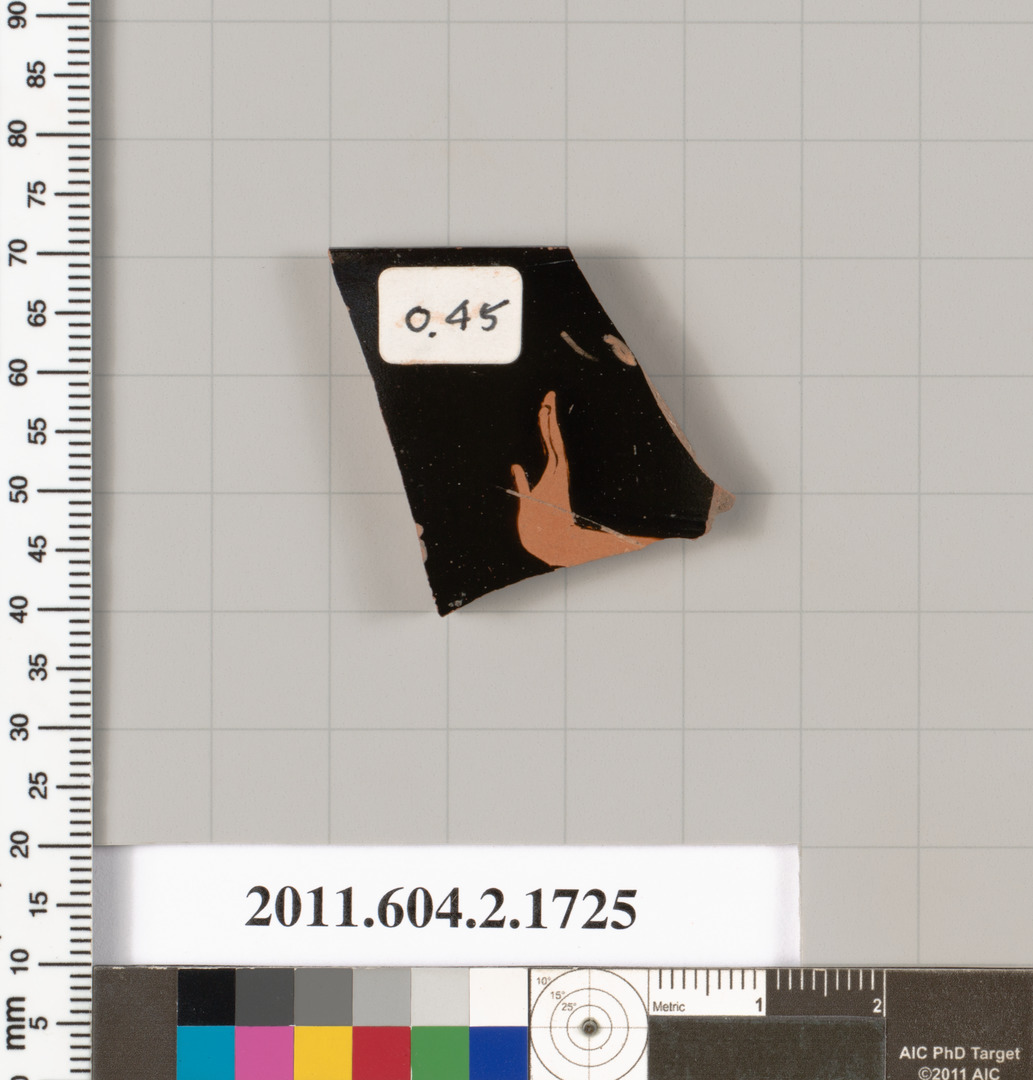
The Terracotta Fragment and the Architecture of Restraint: A Heritage-Black Analysis for 2026 Old Money Silhouettes
The Lauren Fashion Heritage Lab, in its ongoing synthesis of internal archives with global museum artifacts, has identified a profound resonance between a seemingly humble object—a Greek Attic terracotta rim fragment of a *skyphos* (deep drinking cup)—and the emerging silhouette language of the 2026 Old Money aesthetic. This fragment, a shard of fired clay bearing the patina of millennia, is not merely an archaeological curiosity. It is a condensed treatise on the principles of *containment*, *proportion*, and *material honesty* that define the most enduring expressions of aristocratic restraint. When read through the lens of the Lab’s internal genetic code—which posits that all artifacts, from Renaissance portraits to Shang bronzes, are “vessels” for meaning—this terracotta shard reveals the foundational logic for a new, rigorously understated luxury.
I. The *Skyphos* as a Vessel of Social Gravity
The *skyphos* was the everyday drinking cup of Classical Athens, a vessel for wine at symposia—those elite, male-only gatherings that were the crucible of Greek philosophy, politics, and social bonding. Unlike the more ornate *kylix*, the *skyphos* was robust, utilitarian, and deeply embedded in the rituals of civic life. Its terracotta materiality, as evidenced by the fragment, is unpretentious: a warm, iron-rich orange-brown, often left unglazed or with a simple black slip. This is not the precious metal of a royal goblet, but the earth itself, fired into permanence.
For the 2026 Old Money silhouette, this fragment teaches a crucial lesson: **true status is not declared through novelty but through the weight of tradition and the integrity of material.** The *skyphos*’s form—a deep, stable bowl with two horizontal handles—is a study in functional elegance. Its rim, the only surviving element, is a clean, unadorned curve. There is no superfluous decoration, no chasing of effect. The beauty lies entirely in the *gestalt*: the perfect ratio of depth to diameter, the tactile smoothness of the fired edge, the subtle variation in color from the kiln’s heat.
This directly informs the 2026 Old Money silhouette’s core principle: **the primacy of the line over the embellishment.** Just as the *skyphos*’s rim defines the vessel’s opening and its capacity, the silhouette of a garment—its shoulder, its waist, its hem—must define the wearer’s presence. The fragment suggests a move away from deconstruction or aggressive asymmetry, and toward a renewed focus on clean, architectural lines. The 2026 coat, for instance, will not rely on epaulets or elaborate closures. Instead, its power will derive from the precise drop of the shoulder seam, the exact width of the lapel, the unbroken fall of the fabric from shoulder to hem. This is the “heritage-black” of form: a darkness that is not absence, but a concentration of meaning.
II. The Fragment as a Microcosm of “Container” Logic
The Lab’s internal genetic code emphasizes the concept of the “vessel” (*容器*) as a carrier of both physical substance and spiritual meaning. The Shang bronze *wine vessel* (壶) held ritual liquor and cosmic order; the portrait of Saint Philip Neri held divine grace within a human face. The *skyphos* fragment, though broken, is no different. It is a fragment of a container that once held wine—the liquid of social bonding, of philosophical discourse, of Dionysian release tempered by Apollonian order.
For the 2026 Old Money silhouette, this “container” logic manifests in the **garment as a second skin that both reveals and conceals.** The silhouette must not merely clothe the body; it must *contain* it, shaping the wearer’s presence into a statement of controlled power. This is the antithesis of the “loud luxury” of logos and exaggerated shapes. The 2026 silhouette, inspired by the *skyphos*, will be a vessel for the self.
Consider the implications for tailoring. The jacket of a 2026 Old Money suit will not be a tight, constricting shell, nor a loose, shapeless sack. It will be a *container* with a precise internal volume—a “negative space” that allows the body to move with ease while maintaining a crisp, defined outer boundary. This echoes the *skyphos*’s interior: deep enough to hold a substantial portion of wine, yet shaped to fit comfortably in the hand. The garment’s lining, often overlooked, becomes a site of quiet luxury—perhaps a silk in a deep, archival black, visible only when the jacket is removed. This is the “inner light” of Saint Philip’s portrait, but translated into the tactile language of cloth.
III. Material Honesty and the Patina of Time
The terracotta fragment’s most compelling quality is its *age*. The chipped rim, the slight wear, the mineral deposits from centuries in the earth—these are not flaws but *witness marks*. They tell a story of use, of hands that held it, of wine that stained it, of a symposium that ended millennia ago. In the language of luxury, this is the ultimate signifier: **the patina of authentic history cannot be manufactured.**
For the 2026 Old Money silhouette, this translates into a radical embrace of **material honesty and subtle imperfection.** The trend toward “perfect” synthetic fabrics and flawless, machine-made finishes will be rejected in favor of natural fibers that age gracefully: heavy wool herringbone that develops a soft sheen with wear; linen that crumples in a way that suggests a life well-lived; cashmere that pills slightly, revealing its soft, downy core. The “heritage-black” of the silhouette is not a flat, dead black, but a complex, tonal black that shifts in different lights—like the terracotta’s warm orange-brown or the black slip’s subtle gloss.
This principle extends to construction details. A hand-stitched buttonhole, a slightly uneven pick-stitch on a lapel, a lining that is slightly mismatched in pattern—these become the sartorial equivalents of the *skyphos*’s chipped rim. They are not mistakes, but markers of human touch and time. The 2026 Old Money silhouette will therefore privilege **bespoke and made-to-measure** over off-the-rack perfection. The garment’s “patina” is its story, and its story begins with the hands that made it.
IV. The Silhouette of the Symposium: Horizontal Integration
Finally, the *skyphos* fragment speaks to the **social dimension of the silhouette**. The symposium was a horizontal gathering of equals (within the elite class), where wine was shared from a common krater. The *skyphos* was an individual vessel, but one that participated in a collective ritual. The 2026 Old Money silhouette must similarly function as a **social signal of belonging, not of exclusion.**
This means a silhouette that is *recognizable* to those in the know, but *invisible* to the uninitiated. It is not about logos or brand names, but about a shared vocabulary of cut, proportion, and material. The 2026 silhouette will be a “dialect” of luxury, spoken fluently by those who understand that a perfectly cut double-breasted jacket, in a heavy wool flannel, with a soft shoulder and a suppressed waist, is worth more than any printed monogram. It is the *skyphos* at the symposium: unassuming, yet essential to the ritual.
In conclusion, the terracotta *skyphos* fragment is not a decorative inspiration, but a **structural and philosophical blueprint** for the 2026 Old Money silhouette. It teaches us that luxury is not about abundance, but about *containment*; not about novelty, but about *tradition*; not about perfection, but about *patina*. The heritage-black of this silhouette is the color of the earth from which the *skyphos* was fired—a grounding, ancient, and deeply human hue. It is the color of a vessel that has held meaning for millennia, and will continue to do so, if we only learn to read its silent, eloquent form.
Heritage Lab Insight
Genetic Bridge: Archive node focusing on Heritage-Black craftsmanship.