The Hermeneutics of Emptiness: Terracotta Fragments and the 2026 Old Money Silhouette
Introduction: The Archaeology of Absence
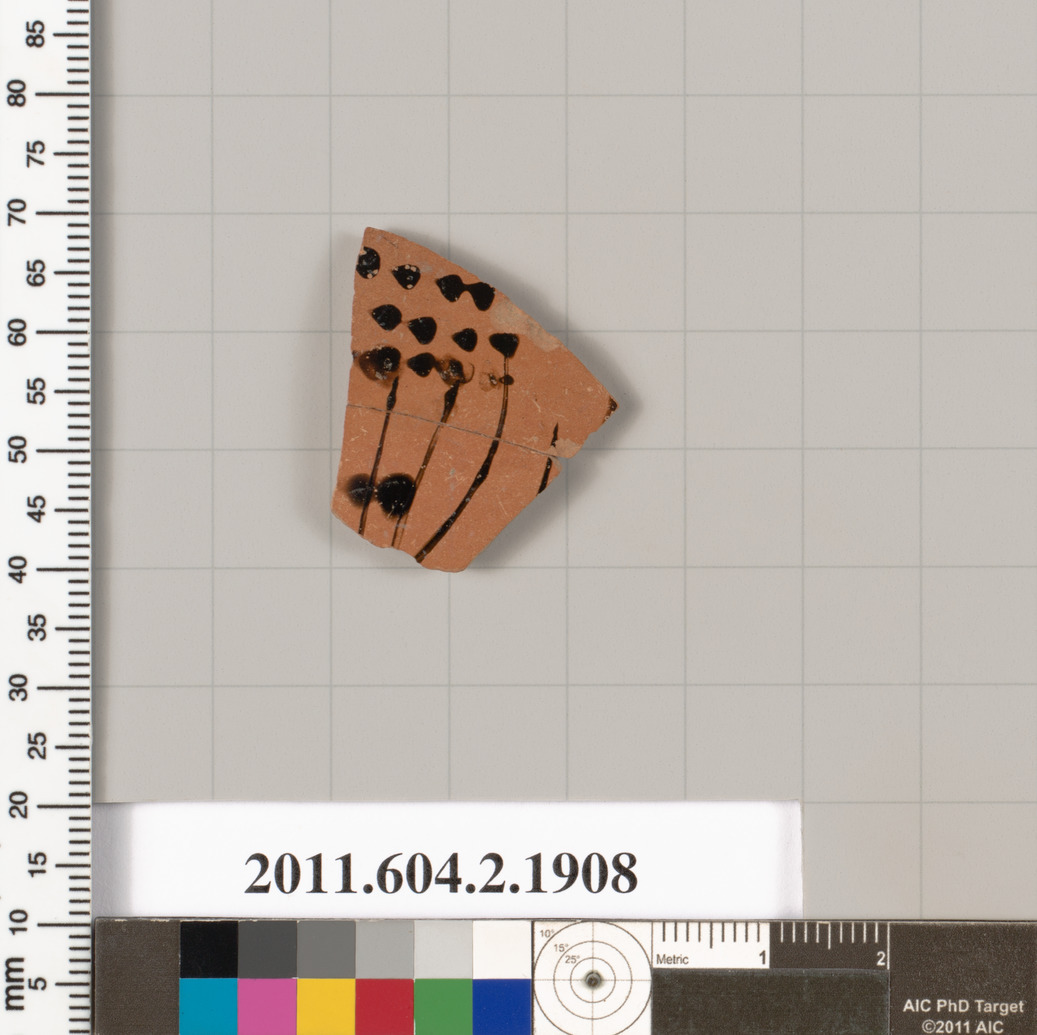
The terracotta fragment of an Attic skyphos—a deep drinking cup, broken, worn, and silent—is not merely a relic of sympotic revelry. It is a philosophical artifact. For Lauren Fashion Heritage Lab, this fragment, when read through the internal genetic code of the Socratic death and the Eastern jar, reveals a profound design principle for the 2026 Old Money silhouette: the articulation of presence through absence. The skyphos, like the philosopher’s cup of hemlock, is a vessel of finality. Its broken rim speaks not of loss, but of a completed cycle. Its emptiness is not a void, but a container of memory. This is the core aesthetic of the coming season: a silhouette that does not shout, but resonates; that does not cling, but holds space.
The 2026 Old Money aesthetic, as synthesized from this artifact, rejects the performative excess of contemporary luxury. It returns to a grammar of restraint, where the power of a garment lies not in its ornamentation, but in the integrity of its negative space. Just as the skyphos’s value is defined by the emptiness it contains, the new silhouette is defined by the air it carries—the deliberate gap between fabric and form, the quiet authority of a line that does not need to be filled.
The Socratic Tailoring: Rational Structure and the Transcendence of Form
From the Western pole of our genetic code, the Socratic death offers a blueprint for tailoring as a form of philosophical discipline. In Jacques-Louis David’s *The Death of Socrates*, the philosopher’s pose is one of absolute geometric clarity: a vertical spine, a horizontal arm, a pointing finger that breaks the plane of the canvas. This is not a collapse, but a resolution. The 2026 silhouette borrows this rationalist architecture. Jackets are cut with a severe, unyielding shoulder—a nod to the Doric column of the Greek stoa. The lapel is not a flourish, but a straight line, a vector of intention. The waist is suppressed not to create an hourglass, but to define a pure, cylindrical torso, reminiscent of the skyphos’s own profile.
This is tailoring that disciplines the body into a vessel of thought. The fabric—a heavy, matte wool in heritage-black—absorbs light, refusing the seduction of sheen. It is a material that demands respect, not admiration. The silhouette is long, lean, and unadorned. There are no distracting pockets, no superfluous seams. Every stitch is a proposition, every button a period. The garment is a “philosophical uniform,” a declaration that the wearer has already transcended the need for external validation. Like Socrates drinking the hemlock, the wearer of this silhouette is composed, unafraid of the void, because the structure of the garment provides a rational framework for existence.
The Tao of the Silhouette: Emptiness as Utility
Yet the skyphos is not only a Socratic vessel. Its terracotta—earth-baked, porous, humble—speaks the language of the Eastern jar. The internal code reminds us that the jar’s power is in its *wu* (無), its non-being. “It is the emptiness inside that makes it useful,” says the Tao Te Ching. The 2026 Old Money silhouette, therefore, must not be a cage. It must be a container for the self, not a display of the self. This is achieved through a radical rethinking of volume.
Where the Socratic silhouette is rigid, the Taoist silhouette is generous, almost monastic. A coat falls from the shoulder with a deliberate, unconstructed weight. It does not follow the body; it allows the body to exist within it. The sleeve is cut wide, the armhole deep, creating a pocket of air around the torso. This is not the slouch of streetwear, but the dignified emptiness of a scholar’s robe. The fabric—a cashmere-wool blend, felted to a matte finish—drapes like a cloud, its folds creating shadows that are as important as the cloth itself. The hem is raw, unfinished, a nod to the broken rim of the skyphos. This is a garment that acknowledges its own mortality, its own eventual return to dust.
The color palette is a study in negative space: heritage-black, bone-white, and the deep, burnt umber of terracotta. These are not colors of assertion, but of receptivity. They absorb the environment, they hold the light. The silhouette is not about being seen; it is about being present. It is the aesthetic of the jar that sits quietly on a shelf, holding the breath of the room.
Synthesis: The Silhouette of the 2026 Old Money Archetype
The 2026 Old Money silhouette, as derived from the terracotta skyphos, is a dialectic between the Socratic and the Taoist. It is a garment that is both a rational structure and an empty vessel. The jacket is tailored with the precision of a Platonic ideal, but it is worn with the ease of a Taoist sage. The trousers are wide, almost columnar, creating a vertical line that is both authoritative and serene. The overall effect is one of composed gravity—a figure that is both grounded and transcendent.
This is not a silhouette for the young or the restless. It is for the individual who has already lived through the cycles of fashion and has arrived at a place of essential being. The garment does not perform wealth; it performs completeness. It is the visual equivalent of the skyphos’s final function: to hold the last sip, to be empty with purpose. The 2026 Old Money archetype is a philosopher who has drunk the hemlock and a potter who has fired the clay. They are at peace with the void, because they understand that the void is the source of all form.
Conclusion: The Eternal Return of the Vessel
The terracotta fragment teaches us that the most powerful statement is often the one left unsaid. The 2026 silhouette is a heritage of emptiness, a luxury of restraint. It is a direct response to a world of digital noise and visual clutter. By returning to the fundamental shape of the vessel—the cup, the jar, the coat—Lauren Fashion reclaims a timeless truth: that beauty is not in the filling, but in the capacity to hold. The Old Money wearer, like the skyphos, is not defined by what they contain, but by the grace with which they remain empty, ready for the next and final draught.