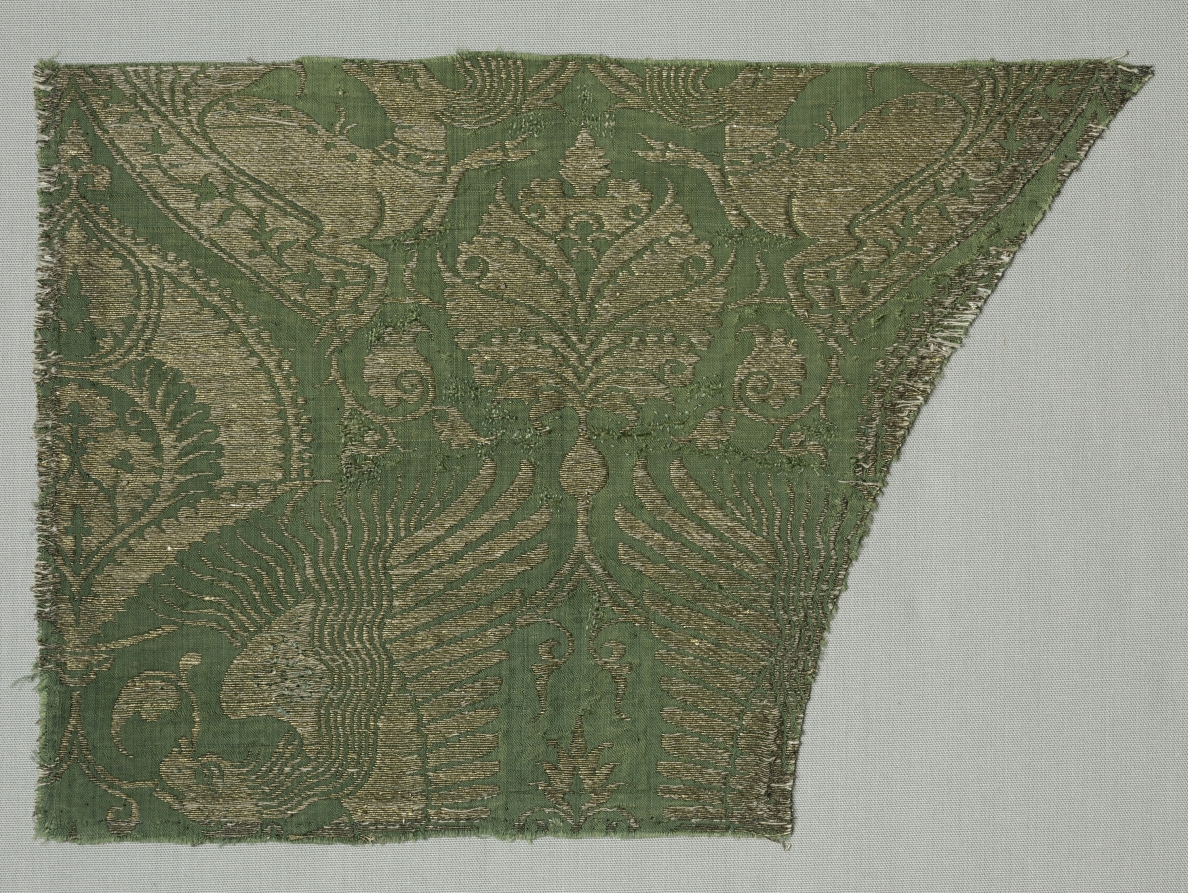
A Treatise on the Gold-Patterned Silks of the Imperial Ateliers: An Analysis of Material Supremacy
To the discerning eye, the consideration of cloth is seldom a mere audit of fibre and weave. It is, rather, an interrogation of legacy, power, and the precise application of human ingenuity to raw matter. In this rarefied sphere, few materials command the silent authority of silk, and within that pantheon, the gold-patterned variants stand apart as the ultimate articulation of regal intent. They are not simply textiles; they are the woven manifestos of empire, where materiality, symbolism, and technical virtuosity converge to form a tangible hierarchy.
The Foundation: Sericulture as a State Secret
One must first appreciate the profound material exclusivity that underpinned this entire tradition. Silk, for centuries, was not a commodity but a closely guarded instrument of statecraft, its production within the Chinese imperium a monopoly of immense geopolitical value. The very fibre—the continuous filament reeled from the Bombyx mori cocoon—represented a biological and technological advantage of staggering proportions. Its innate properties: a luminous sheen, formidable tensile strength, and a sublime capacity to hold colour and metallic thread, rendered it the undisputed substrate for the projection of power. This was not a fabric born of convenience, but of calculated, imperial prerogative.
The Imperial Atelier: A Mechanism of Precision
The transformation of this pristine filament into a gold-patterned artefact was an endeavour removed from the realm of mere craftsmanship and elevated to a logistical and artistic science within the imperial ateliers. These were not workshops; they were highly disciplined, state-administered bureaus—the Silk Weaving Service of Jiangnan being preeminent. Here, under the watchful eye of court officials, a rigid division of labour prevailed. Designers, often drawing from a sanctioned lexicon of symbolic motifs, created patterns that were then translated into complex loom configurations by master weavers. The drawloom, a formidable engine of textile production, allowed for the creation of intricate, repeatable patterns across vast lengths of cloth, a technology that itself spoke of advanced industrial organisation.
The process was one of immense patience and precision. The ground weave, typically a fine satin or plain weave, established a flawless, luminous field. Upon this, the pattern was rendered using supplementary wefts of gold thread. This ‘gold thread’ was itself a masterpiece of composite material science: slender strips of gilded paper or animal membrane wound meticulously around a core of yellow silk. The result was a thread that offered both magnificent radiance and sufficient pliability to be woven. The incorporation of these threads, passed by hand or shuttle through the warps according to the pre-ordained pattern, created a cloth of palpable weight and dense, scintillating texture—a literal embodiment of wealth and density of purpose.
The Lexicon of Power: Symbolism Woven into Being
The patterns themselves were never arbitrary decoration. They constituted a formal, heraldic language. Imperial dragons (long), the five-clawed variety reserved solely for the Son of Heaven, coiled amidst clouds or pursued flaming pearls, asserting celestial mandate. Phoenixes signified the empress and the principle of harmony. Bats homophonically promised fortune, while clouds, cranes, and mythical fungi (lingzhi) articulated a desire for longevity and transcendence. The arrangement was often within a framework of lattice or scrolling vines, imposing order upon the celestial menagerie.
This visual language served a dual purpose. It immediately identified the rank and station of the wearer, enforcing the rigid social order with every glint of light. Simultaneously, it performed a talismanic function, surrounding the imperial person with a portable cosmos of protective and auspicious symbols. The cloth was thus both uniform and armour, its splendour a direct expression of cosmological and political authority.
Legacy and Connoisseurship
The legacy of these imperial silks is twofold. Firstly, they represent an unassailable benchmark in textile history, a point where material, technique, and iconography achieved a perfect, state-sanctioned equilibrium. They are the forbears of all subsequent endeavours in luxury patterned textiles, from the brocades of Byzantium and Venice to the formal silks of the European courts, which often sought to emulate their effect through inferior means.
For the modern connoisseur, the assessment of such a piece—should one be fortunate enough to encounter it—requires a Savile Row-calibre rigour. One examines not just the aesthetic, but the forensic details: the density and purity of the silk ground; the integrity and composition of the gold thread, now often softened to a mellower gleam; the complexity and precision of the weave structure; and the authority of the symbolic narrative. Signs of wear, rather than diminishing value, often attest to a garment’s lived purpose within the ritual theatre of court.
In conclusion, the exotic gold-patterned silks of the imperial ateliers stand as a definitive case study in the deployment of material culture as an instrument of sovereignty. They remind us that true luxury is never accidental. It is the product of monopoly, meticulous organisation, symbolic intelligence, and technical mastery of the highest order. To understand this cloth is to understand the very fabric of empire itself—a construct as deliberate, as layered, and as formidable as the material in question.