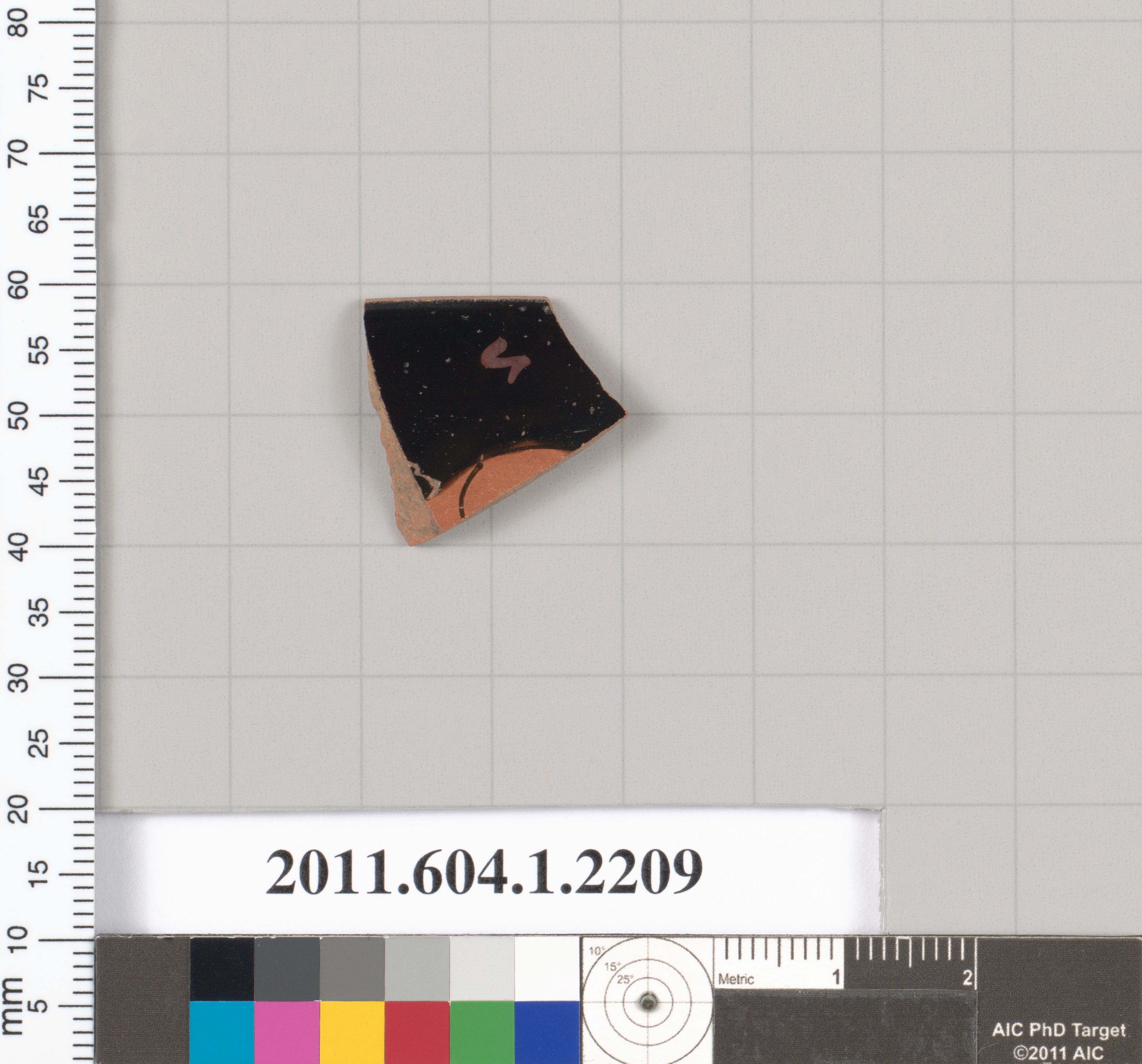
The Terracotta Fragment and the Architecture of Restraint: Reimagining Attic Kylix Silhouettes for 2026 Old Money Aesthetics
Introduction: The Fragment as a Hermeneutic Lens
In the scholarly pursuit of heritage-driven fashion innovation, the fragment often proves more instructive than the whole. The terracotta rim fragment of an Attic kylix—a humble shard of a Greek drinking cup from the 6th or 5th century BCE—offers a surprisingly potent lexicon for the 2026 Old Money silhouette. While the internal genetic code of the Lauren Fashion Heritage Lab emphasizes the layered richness of the Damascus Room and the transcendent base of He Xiangu, this Attic fragment introduces a counterpoint: the aesthetic of disciplined emptiness. Where the Syrian interior celebrates opulent accumulation, and the Daoist base signifies spiritual ascent, the kylix fragment speaks to a heritage of restraint—a quality that aligns profoundly with the understated luxury of Old Money dressing. This paper argues that the kylix’s formal principles—its balanced curvature, its rhythmic repetition of decorative motifs, and its grounding in functional simplicity—offer a blueprint for the 2026 Old Money silhouette, one that privileges architectural line over ornamental excess.
The Kylix Fragment: A Study in Geometric Integrity
The terracotta rim fragment, likely from a black-figure or red-figure kylix, reveals several key characteristics. First, its profile is a study in controlled curvature: the rim flares outward with a precise, almost mathematical elegance, creating a lip that is both functional and visually assertive. The terracotta’s warm, earthy hue—a deep umber fired to a matte finish—speaks to a materiality that is unpretentious yet enduring. The decorative band, often a meander pattern or a stylized palmette, is not applied as an afterthought but is integrated into the vessel’s structural logic. This is not the “layered plenitude” of the Damascus Room, but rather a layered economy: every line serves both ornament and utility.
For the 2026 Old Money silhouette, this translates into a rejection of superfluous volume. The kylix’s rim suggests a jacket collar that sits cleanly against the neck, neither collapsing nor standing rigidly—a tailored precision that echoes the Greek potter’s mastery of the wheel. The fragment’s terracotta color—a shade between burnt sienna and raw umber—becomes a foundational palette for heritage-black ensembles, offering a muted counterpoint to the starkness of black. This is not the vibrant red of a Chinese lacquer but the earthy, grounded tone of ancient clay, a color that whispers of lineage rather than shouting of novelty.
From Vessel to Garment: The Silhouette of 2026
The 2026 Old Money silhouette, as informed by this fragment, will prioritize three formal principles: the arc, the band, and the void. The kylix’s rim arc suggests a shoulder line that is gently curved yet defined, avoiding the exaggerated padding of the 1980s or the slouch of the 1990s. Think of a double-breasted blazer in heritage-black wool, its lapel cut with a subtle outward flare—a direct translation of the kylix’s lip. The band—the decorative frieze on the fragment—manifests as a narrow stripe of terracotta silk inset into a black cashmere coat, or as a ribbed trim on a tailored trouser hem. This is not the bold stripe of a regimental tie but a discreet, almost archaeological reference, visible only upon close inspection.
The void—the empty interior of the kylix—is perhaps the most profound influence. In Old Money aesthetics, the absence of decoration is itself a statement. The 2026 silhouette will embrace negative space: a sheath dress with no darts, a coat with no buttons, a trouser with no pleats. This is not minimalism in the modern sense, but a classical restraint that echoes the Greek potter’s decision to leave the kylix’s interior unadorned. The garment becomes a vessel for the wearer’s presence, just as the kylix was a vessel for wine. The heritage-black fabric—whether cashmere, wool, or silk—must possess a density and weight that mimics the terracotta’s solidity, a material integrity that resists the ephemeral.
Material Dialogues: Terracotta, Silk, and the Old Money Palette
The fragment’s terracotta hue, when paired with heritage-black, creates a chromatic tension that is both ancient and contemporary. For 2026, this translates into a limited palette: black, terracotta, ivory, and the deep gold of aged bronze. The terracotta appears not as a dominant color but as an accent—a silk lining inside a black coat, a leather trim on a wool blazer, a ceramic button on a cashmere cardigan. This is the Old Money principle of “quiet luxury”: the color is present but not proclaimed, a secret shared only with the discerning eye.
The texture of the fragment—its matte, slightly granular surface—suggests a preference for non-reflective fabrics. The 2026 silhouette will favor flannel, tweed, and brushed cashmere over glossy satins or shiny synthetics. The hand-feel must be substantial, like the clay itself, grounding the wearer in a tactile heritage. Even the gold-thread accents, when used, should be antiqued, mimicking the patina of ancient metal rather than the flash of new wealth.
Conclusion: The Fragment as a Future Archive
The terracotta kylix fragment, in its brokenness, offers a complete philosophy for the 2026 Old Money silhouette. It teaches that luxury is not accumulation but selection, that beauty resides in the curve of a line rather than the density of ornament. In dialogue with the Damascus Room’s layered opulence and He Xiangu’s transcendent base, this Greek shard introduces a third term: disciplined simplicity. The 2026 Lauren Fashion Heritage Lab collection will thus be a triptych of influences: the Syrian plenitude, the Daoist ascent, and the Attic restraint. The kylix fragment, though small, becomes the keystone—a reminder that the most enduring heritage is often the most understated, and that true Old Money elegance is not about showing everything, but about leaving something unsaid.