The Fragment as a Testament: Deconstructing the Materiality of Silk Velvet in the Context of Classic Craftsmanship
Introduction: The Silent Narrator of Heritage
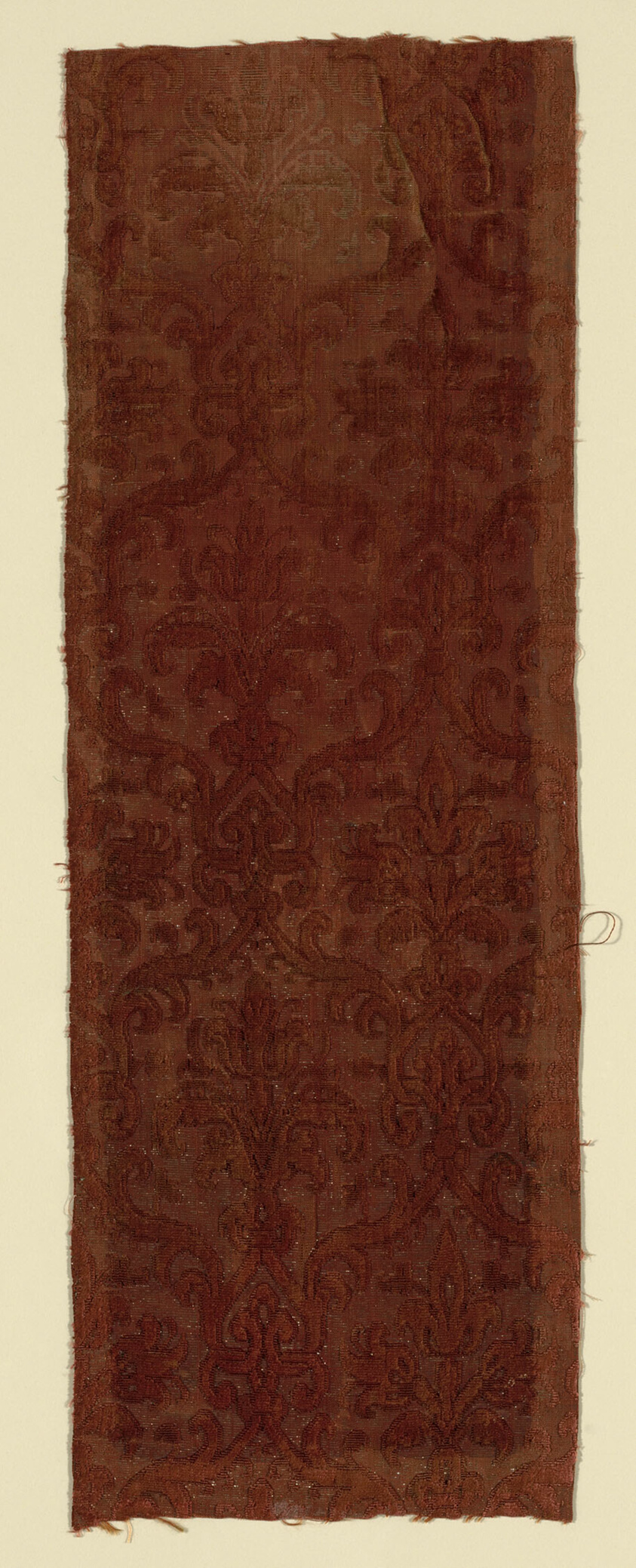
In the hallowed corridors of London’s Savile Row, where tailoring is elevated to an art form, the fragment is not merely a remnant; it is a profound historical document. As the Senior Heritage Specialist for the Lauren Fashion Heritage Lab, I present this artifact—a fragment of silk, cut, uncut, voided velvet with additional patterning wefts in gold foil against a plain weave foundation—as a microcosm of classic silk craftsmanship and fluid elegance. This piece, though small in scale, embodies the meticulous techniques and aesthetic ambitions that have defined luxury textiles for centuries. Its materiality speaks to a lineage of artisans who understood that true elegance lies not in ostentation, but in the nuanced interplay of texture, light, and structure. In the following analysis, we will dissect the fragment’s composition, contextualize its construction within the broader tapestry of silk heritage, and explore its enduring relevance to contemporary fashion and heritage preservation.
Materiality: The Anatomy of a Masterpiece
The Foundation: Plain Weave as the Canvas
At its core, this fragment is built upon a plain weave foundation, a structure so fundamental that it is often overlooked. Yet, in the hands of a master weaver, this simple interlacing of warp and weft becomes the stage for extraordinary complexity. The plain weave provides stability and a subtle, uniform ground, allowing the more opulent elements to command attention. This is not a fabric of haste; it is a deliberate choice, ensuring that the silk’s natural luster remains unmarred by excessive texture. The foundation’s neutrality is a testament to the discipline of classic craftsmanship—a reminder that luxury is as much about restraint as it is about richness.
The Velvet: Cut, Uncut, and Voided
The velvet component of this fragment is where the artistry truly unfolds. Velvet, by definition, is a pile fabric, but here we encounter a sophisticated hybrid: cut and uncut velvet, combined with voided sections. The cut velvet, achieved by shearing loops to create a plush, dense surface, offers a tactile depth that invites touch. The uncut velvet, where loops remain intact, introduces a contrasting texture—a subtle, almost ribbed effect that catches light differently. The voided areas, where the pile is absent, expose the plain weave foundation, creating negative space that amplifies the design’s rhythm. This interplay of raised and flat surfaces is a hallmark of Renaissance and Baroque textiles, where artisans used voided velvet to create intricate patterns without the weight of full pile. The result is a fabric that breathes, moving with the wearer rather than against them—a quality that defines fluid elegance.
The Gold Foil: A Lustrous Accent
Additional patterning wefts in gold foil elevate this fragment from mere textile to objet d’art. Gold foil, applied as a thin, malleable thread, is not woven in the traditional sense; it is often wrapped around a silk or linen core or used as a supplementary weft. Here, it is introduced selectively, catching light with every shift in angle. The gold does not dominate; it punctuates. This restraint is critical: in Savile Row tailoring, as in heritage textiles, gilding must serve the design, not overwhelm it. The foil’s placement within the voided areas or alongside the velvet pile creates a chiaroscuro effect, where light and shadow dance across the fabric’s surface. This technique, perfected in 17th-century Italian and French workshops, required immense skill to prevent the foil from fraying or tarnishing. The fragment thus preserves a moment of technical mastery that few modern looms can replicate.
Context: Classic Silk Craftsmanship and Fluid Elegance
The Legacy of Silk Velvet in European Fashion
To understand this fragment, one must place it within the lineage of silk velvet production that flourished in centers like Lyon, Venice, and Florence. These cities were the Savile Rows of their era, producing textiles for royal courts and ecclesiastical vestments. The combination of cut and uncut velvet with gold foil was particularly prized in the 16th and 17th centuries, adorning the garments of nobility who demanded both visual splendor and physical comfort. The term “fluid elegance” is not poetic license; it describes the fabric’s ability to drape with a liquid quality, thanks to the silk’s natural protein structure and the velvet’s pile density. Unlike stiff brocades, this velvet moves with the body, enhancing the silhouette without constricting it. This is the essence of classic craftsmanship: a marriage of form and function that transcends trends.
Preservation and the Fragment’s Role
As a heritage artifact, this fragment serves multiple purposes. It is a teaching tool for conservators, who study its weave structure to understand historical techniques. It is a source of inspiration for designers at the Lauren Fashion Heritage Lab, who seek to reinterpret traditional methods for modern audiences. And it is a cautionary tale: the gold foil, while stunning, is fragile, prone to oxidation and cracking. The fragment’s survival—likely as a sample from a larger garment or upholstery—underscores the importance of proper storage, away from light and humidity. In the context of Savile Row, where bespoke garments are built to last decades, this fragment reminds us that even the most durable materials require stewardship. The Lab’s mission is to ensure that such artifacts inform future craftsmanship, not merely as relics, but as living references.
Implications for Contemporary Fashion and Heritage
Relevance to Modern Tailoring
Today’s luxury market, particularly in London, is witnessing a resurgence of interest in heritage textiles. Designers are revisiting voided velvets and metallic accents for evening wear, but with a contemporary twist—lighter weights, sustainable sourcing, and digital jacquard looms. Yet, the fragment reminds us that no technology can replace the human touch. The irregularity of hand-woven velvet, the slight variations in pile height, and the organic shimmer of gold foil are qualities that machines struggle to replicate. For the discerning client of Savile Row, this fragment offers a benchmark: true elegance is found in the imperfect, the artisanal, the slow. The Lab encourages designers to study such fragments not as templates, but as dialogues with the past, asking how we can honor tradition while innovating for the future.
A Call to Preserve and Interpret
This fragment is more than a piece of fabric; it is a narrative of human ingenuity. Its materiality—silk, cut and uncut velvet, gold foil—tells a story of trade routes, technical innovation, and aesthetic evolution. As heritage specialists, we must resist the urge to see fragments as mere curiosities. They are primary sources, as vital as any manuscript or painting. The Lauren Fashion Heritage Lab is committed to digitizing and interpreting such artifacts, making them accessible to scholars and practitioners alike. In doing so, we ensure that the fluid elegance of classic silk craftsmanship continues to inspire, not as a ghost of the past, but as a vibrant thread in the fabric of contemporary fashion.
Conclusion: The Fragment’s Enduring Voice
In the quiet space of the heritage lab, this fragment of silk velvet speaks volumes. It reminds us that luxury is not about excess, but about intention—the deliberate choice of materials, the mastery of technique, the pursuit of beauty that moves with grace. For Savile Row, for the Lauren Fashion Heritage Lab, and for all who cherish fine craftsmanship, this fragment is a touchstone. It challenges us to see beyond the surface, to understand the labor and love embedded in every thread. As we move forward, let us carry this fragment’s lesson: that true elegance is timeless, and that heritage is not a static archive, but a living, evolving art.