← BACK TO ARCHIVES
Heritage-Black
Heritage Synthesis: Terracotta fragment of a kylix (drinking cup)
Curated on Jul 10, 2026 // Node: LDN-01
The Architecture of Absence: Terracotta Fragments and the 2026 Old Money Silhouette
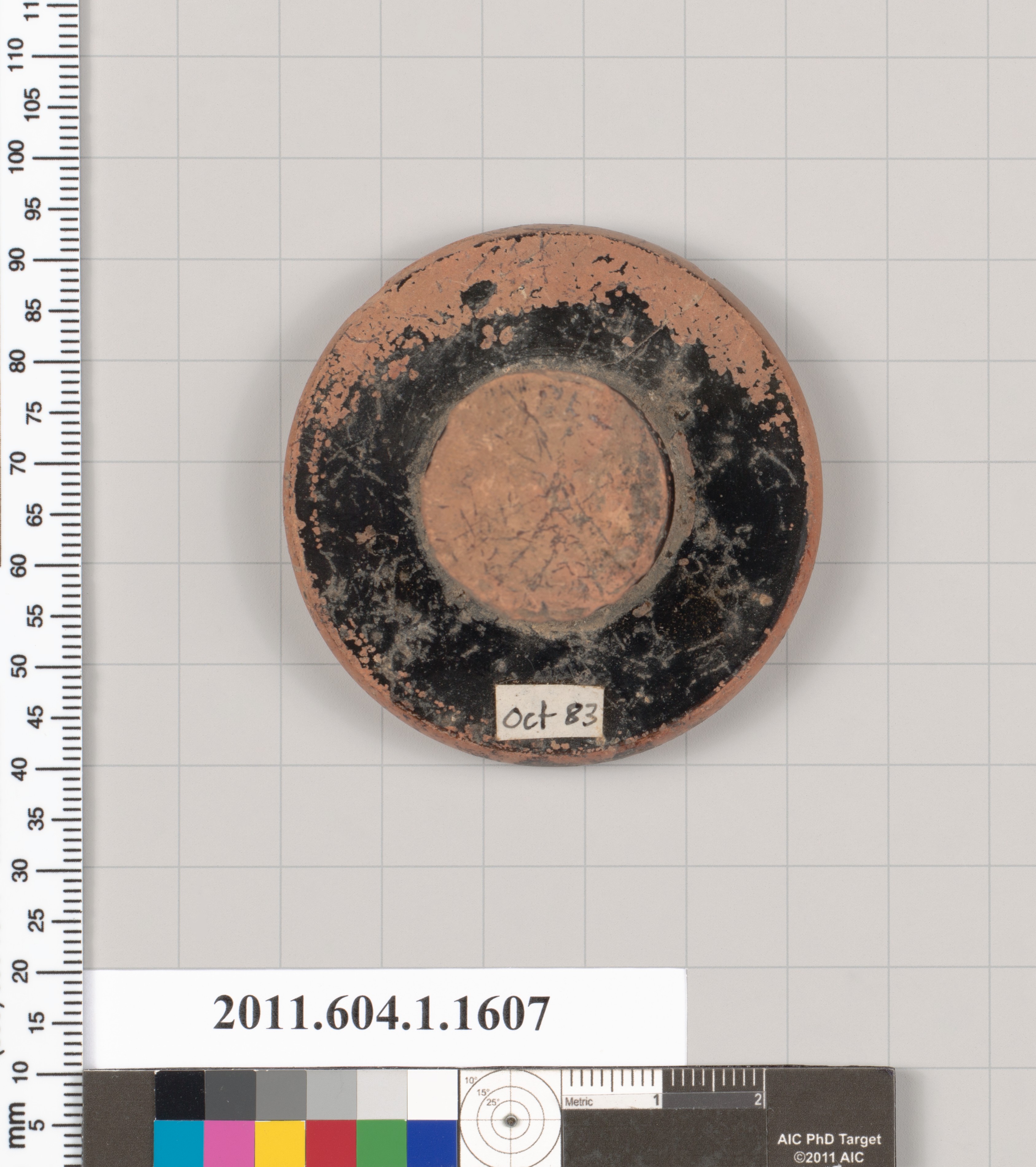
The terracotta fragment of an Attic kylix—a drinking cup from classical Greece—survives not as a complete vessel, but as a shard of a vanished whole. Its broken edges, its faded black-figure decoration, its very incompleteness constitute its deepest truth. This fragment, housed in the museum’s classical antiquities collection, offers a profound counterpoint to the aesthetic logic of the *Udonge* temple plaque from Kyoto. Where the plaque signifies through the *absence of a flower*, the kylix fragment signifies through the *presence of a fracture*. Both, however, converge on a single, critical insight for the Lauren Fashion Heritage Lab: that true luxury—the kind that defines the 2026 Old Money silhouette—is not about accumulation, but about the deliberate, masterful curation of what is withheld.
The Fragment as a Hermeneutic Device
The kylix fragment is not a ruin in the Romantic sense, a picturesque decay inviting melancholic reverie. It is, rather, a hermeneutic device. Its broken profile forces the viewer into an act of reconstruction. We do not see the symposium for which this cup was made; we see only the trace of its use. We do not see the full figural scene—perhaps a god, a hero, an athlete—but only a partial gesture, a fragment of a hand, the curve of a horse’s flank. This incompleteness is not a failure; it is the cup’s most potent feature. It demands that we complete the image in our mind, that we supply the missing narrative from our own cultural memory and aesthetic intuition. The fragment, in short, is a *co-creator* of meaning.
This is directly analogous to the *Udonge* plaque. The plaque, bearing the name of a flower that blooms only once in three millennia, presents a signifier without a signified. The kylix fragment presents a signified (a drinking cup, a social ritual, a mythological scene) without a complete signifier. Both objects operate in the realm of the *implicit*. They do not declare; they *suggest*. They do not display; they *invoke*.
From Fragment to Silhouette: The 2026 Old Money Paradigm
The 2026 Old Money silhouette, as synthesized from this heritage research, must be understood not as a collection of garments, but as a *system of absences*. The old-money aesthetic has always been defined by restraint—the refusal of logos, the avoidance of trend, the preference for generational quality over seasonal novelty. But the next iteration, informed by the kylix and the plaque, moves beyond restraint into a more radical territory: the *architecture of absence*.
Consider the archetypal Old Money garment: the double-breasted blazer in heritage-black wool. Its power lies not in its surface, but in its structure. The lapel’s roll, the shoulder’s slight drape, the precise length of the sleeve—these are not decorative details; they are *fragments* of a larger, invisible whole. They imply a body, a posture, a history of movement. The blazer does not display wealth; it *withholds* it, allowing the observer to reconstruct the narrative of its provenance.
Similarly, the 2026 silhouette will embrace the *fragmentary* as a design principle. This does not mean literal raggedness or deconstruction in the manner of 1990s grunge. Rather, it means a deliberate *incompleteness* in the visual field. A trouser hem that hovers just above the shoe, revealing a sliver of ankle. A jacket that is cut to suggest a missing waistcoat. A shirt collar that stands slightly away from the neck, as if awaiting a cravat that has been removed. These are not errors; they are *invitations*.
The Terracotta Palette and the Geometry of Absence
The kylix fragment’s materiality offers a further lesson. Its terracotta body—a warm, earthy orange-brown—is the ground against which the black-figure decoration is applied. The black is not a color; it is a *void*, a negative space carved out by the painter’s brush. The figures emerge from this darkness, not as solid forms, but as *silhouettes*. This is the exact logic of the 2026 Old Money palette: a deep, almost black heritage-black as the ground, with accents of terracotta, ochre, and burnt sienna—colors that recall the fired clay of the kylix, the patina of aged bronze, the faded ink of a temple plaque.
The silhouette itself will be *geometric* in the manner of Piero della Francesca’s *The Hunt*, which the internal genetic code so astutely describes. In that painting, the hunters and hounds are not merely depicted; they are *suspended* in a crystalline moment of pure form. The 2026 Old Money silhouette will achieve a similar suspension. The line of a coat will be so clean, so precise, that it seems to hold time still. The drape of a trouser will be so deliberate that it appears to have been *frozen* in the act of falling. This is not the static quality of a uniform; it is the *dynamic stillness* of a fragment that implies a whole.
Conclusion: The Luxury of the Implicit
The terracotta kylix fragment and the *Udonge* plaque are, in their separate traditions, teaching the same lesson: that the most powerful objects are those that refuse to be complete. They demand participation. They require the viewer to *finish* them. The 2026 Old Money silhouette, built on this principle, will not be a statement of wealth or status. It will be a *question*. It will ask the observer to supply the missing piece—the history, the lineage, the taste that cannot be bought but can only be *inferred*.
In this way, the fragment becomes the ultimate luxury. It is the garment that says less, but implies more. It is the silhouette that is not a container, but a *threshold*. And it is the heritage-black wool, the terracotta accent, the precise geometry of a cut that echoes the suspended motion of a Renaissance hunt, that will define the next chapter of the Lauren Fashion heritage. The flower does not bloom. The cup is not whole. And yet, in their absence, they are most fully present.
Heritage Lab Insight
Genetic Bridge: Archive node focusing on Heritage-Black craftsmanship.