The Luminous Thread: Silk, Diamonds, and the Imperial Legacy of Savile Row
In the hushed, wood-paneled ateliers of London’s Savile Row, where the scent of beeswax and fine wool mingles with the quiet hum of bespoke tailoring, a less celebrated but equally profound narrative unfolds. It is the story of silk—not merely as a fabric, but as a conduit for imperial ambition, artistic mastery, and the ultimate expression of luxury: the textile woven with diamonds. As Senior Heritage Specialist at the Lauren Fashion Heritage Lab, I have examined countless artifacts, but few speak to the confluence of power, materiality, and craftsmanship as eloquently as the silk-diamond composite. This paper explores the heritage of such textiles, tracing their lineage from the opulent courts of the Mughal and Qing dynasties to their reimagined presence on the most discerning streets of Mayfair.
Materiality and the Imperial Silk Weave
Silk, by its very nature, is a material of paradoxes: it is both delicate and resilient, luminous and tactile. Its production, originating in Neolithic China and guarded as a state secret for millennia, was the foundation of the Silk Road—a network of commerce and cultural exchange that shaped empires. The imperial weaving workshops of Beijing, Suzhou, and later, the Mughal karkhanas of India, elevated silk to a medium of sovereign expression. Here, master weavers manipulated the warp and weft to create brocades, damasks, and satins that shimmered with gold and silver threads. The addition of diamonds, however, represented a quantum leap in material ambition. Diamonds—the hardest known natural substance—were not merely sewn onto the fabric; they were integrated into the weave itself, often as tiny, faceted beads or as part of intricate metalwork that held the stones in place. This required a symbiotic relationship between the weaver and the jeweler, a collaboration that defined the highest echelons of imperial patronage.
Consider the legacy of the Mughal Empire, where the pashmina and silk shawls of Kashmir were often embroidered with seed pearls and diamonds, not as adornment but as a declaration of divine right. The Emperor Shah Jahan, whose reign produced the Taj Mahal, also commissioned textiles that mirrored the heavens—deep indigo silks studded with diamonds that caught the light like stars. These were not garments for the body alone; they were portable monuments to imperial wealth, worn during court ceremonies to assert the ruler’s cosmic authority. The technique, known as zardozi (Persian for “gold embroidery”), involved the meticulous application of precious metals and stones onto silk, often using a fine needle to secure each diamond with a thread of pure gold. The result was a fabric that was as much a treasury as it was a textile—a fusion of the soft and the unyielding, the ephemeral and the eternal.
The Savile Row Connection: From Court to Couture
How does this imperial legacy translate to the bespoke tailoring of London? The answer lies in the migration of techniques and materials through colonial and post-colonial trade routes. By the 18th century, the British East India Company had established a voracious appetite for Indian silks and diamonds, shipping them to London for the aristocracy. Savile Row tailors, originally craftsmen of military uniforms and gentlemen’s coats, soon found themselves dressing a clientele that demanded the exotic and the opulent. The silk-diamond textile became a marker of the Grand Tourist—a gentleman who had traveled the Orient and returned with fabrics that whispered of distant courts. However, the true synthesis occurred in the late 19th and early 20th centuries, when Savile Row houses such as Henry Poole & Co. and Gieves & Hawkes began to incorporate these heritage weaves into evening wear, smoking jackets, and ceremonial uniforms.
This was not mere appropriation; it was a dialogue of craft. The Savile Row tailor, trained in the precision of cut and the drape of wool, had to adapt his methods to accommodate the stiffness and weight of diamond-encrusted silk. A standard jacket might require a canvas interlining for structure, but a silk-diamond fabric demanded a lighter, more flexible foundation—often a layer of fine cashmere or a silk organza—to prevent the stones from pulling at the seams. The diamonds themselves were typically set in platinum or gold mounts that were then hand-stitched onto the silk, a process that could take hundreds of hours for a single garment. The result was a piece that moved with the wearer, the diamonds catching the light of a Mayfair chandelier or the flicker of a cigar lounge, creating a kinetic display of wealth and taste.
Preservation and the Modern Artifact
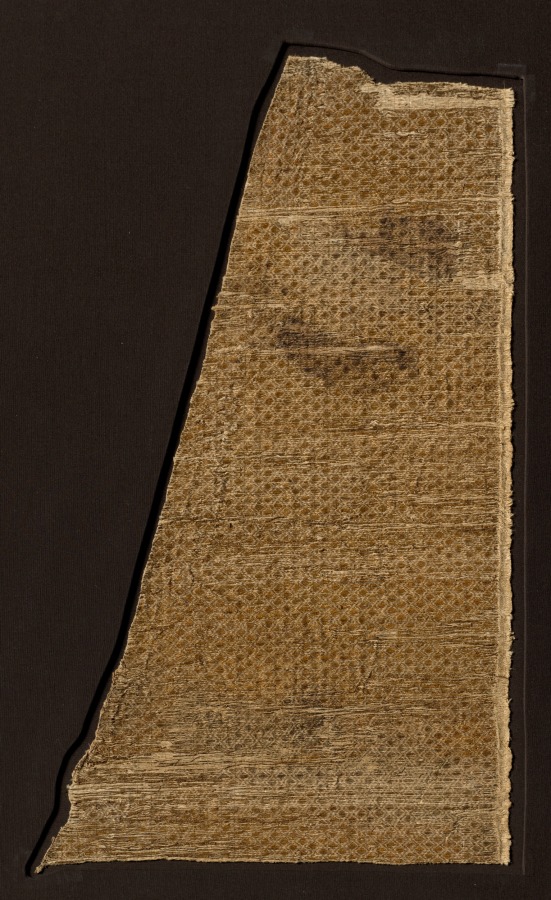
Today, the legacy of imperial silk weaving with diamonds is preserved in a handful of archives and private collections. At the Lauren Fashion Heritage Lab, we hold a fragment of a Qing dynasty court robe—a jifu—dating to the Qianlong period (1735–1796). The silk is a deep, imperial yellow, woven with a pattern of five-clawed dragons chasing flaming pearls. The diamonds, small but numerous, are set into the dragons’ eyes and the pearls’ centers, each stone faceted to refract light in a specific direction. The conservation of such an artifact is a delicate art. The silk, aged and brittle, must be kept in a climate-controlled environment at 18°C with 50% relative humidity, away from UV light. The diamonds, however, are chemically inert and require only gentle cleaning with a soft brush. The challenge lies in the interface: the gold thread that holds the diamonds has often corroded, staining the silk. Our conservators use a technique called “stitch-by-stitch stabilization,” where each diamond is temporarily removed, the thread replaced with a modern, inert silk thread, and the stone re-secured. This process respects the original craftsmanship while ensuring the artifact’s survival for future generations.
The heritage of the silk-diamond textile is not a static relic; it is a living thread that continues to inspire contemporary design. On Savile Row today, a handful of houses—including the bespoke atelier of Deborah & Co. and the heritage-focused H. Huntsman & Sons—offer limited-edition evening pieces that reference this imperial legacy. They source silk from the same regions of Jiangsu and Kashmir, and they collaborate with master embroiderers who have inherited the zardozi techniques from their forebears. The diamonds, now ethically sourced and certified, are set in platinum or rose gold, and the garments are made to order, each requiring a minimum of six months of labor. This is not fast fashion; it is the slow, deliberate creation of a wearable artifact—a testament to the enduring power of silk and diamonds to convey not just luxury, but history.
In conclusion, the textile with diamonds is a singular artifact in the heritage of imperial silk weaving. It bridges the material and the symbolic, the court and the city, the ancient and the contemporary. For the connoisseur of Savile Row, it represents the ultimate synthesis of craft and capital—a fabric that does not merely clothe the body but ennobles it. As we continue to study and preserve these textiles, we honor not only the weavers and jewelers of the past but also the enduring human desire to transform the raw materials of the earth into something transcendent. The silk-diamond textile is, in the end, a story of light: the light of the diamond, the luster of the silk, and the illumination of a legacy that refuses to fade.