The Terracotta Kylix and the Architecture of Restraint: A Dialogue for 2026 Old Money Silhouettes
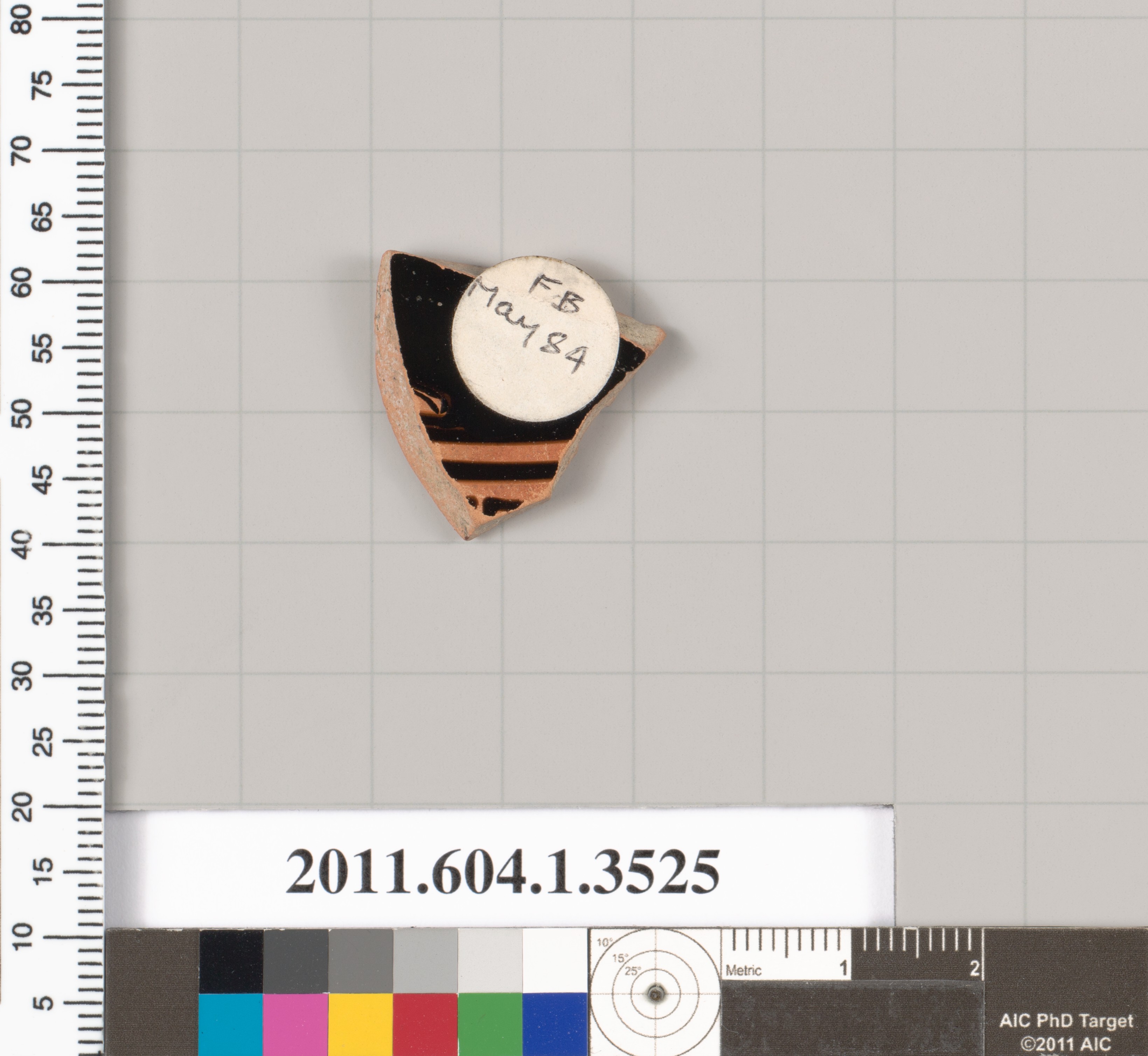
At the Lauren Fashion Heritage Lab, the synthesis of internal archives with external museum artifacts is not a mere exercise in historical pastiche, but a rigorous excavation of the genetic code that underpins enduring elegance. The museum artifact under consideration—a fragment of a Greek Attic kylix, a terracotta drinking cup—appears, at first glance, a world apart from the silk and cashmere of our ateliers. Yet, when read through the lens of our internal genetic code—which privileges the “天人合一” (unity of heaven and man) philosophy of “观物取象” (observing things to capture their essence) and “生命共感” (resonance of life)—this humble shard of fired clay reveals itself as a profound blueprint for the 2026 Old Money silhouette. The kylix, like the Qing dynasty porcelain and the ink-wash crab apple branch, is not merely an object of utility; it is a vessel of cosmic order, a study in “纳须弥于芥子” (containing the vast within the minute), and a testament to the power of restrained form to evoke infinite space.
From Symposion to Silhouette: The Kylix as a Model of Proportion
The Greek kylix was designed for the symposion—a ritualized, intellectual gathering. Its form is deceptively simple: a shallow bowl on a stem, with two horizontal handles. Yet within this simplicity lies a rigorous logic of proportion. The bowl’s curve is not arbitrary; it is a mathematical harmony designed to hold wine while allowing the drinker to recline and gaze into its interior, where painted figures often danced. This is the antithesis of ostentation. The kylix’s power lies in its negative space—the empty interior, the void of the cup—which, like the “留白” (reserved blankness) of the crab apple painting, is not absence but potential. For the 2026 Old Money silhouette, this translates into a garment that does not clamor for attention but commands it through impeccable proportion and quiet authority. The silhouette must be a “vessel” for the wearer, not a spectacle. Think of a double-breasted jacket with a suppressed waist and a gently flared skirt: the “bowl” of the jacket holds the torso; the “stem” of the leg is elongated by a straight, unadorned trouser. The “handles” are the subtle details—a horn button, a pick-stitched lapel—that exist only to be discovered, never to shout.
The Terracotta Temperament: Materiality and the Philosophy of Imperfection
Terracotta is humble earth, fired into permanence. It bears the marks of its making—the potter’s wheel, the kiln’s heat, the inevitable slight asymmetry. This is not a flaw; it is a record of life. Our internal genetic code celebrates the “气韵” (spirit resonance) that flows through all things, including the imperfect hand. The 2026 Old Money silhouette must reject the sterile perfection of fast fashion. Instead, it embraces material integrity. A cashmere coat, for instance, should drape with a weight that speaks of its fiber’s origin—the highlands, the goat, the combing. A wool suiting should hold a crease with the crispness of a well-tended field. The “terracotta temperament” in fashion is the acceptance of natural slubs in linen, the subtle sheen of aged silk, the honest texture of a hand-finished buttonhole. This is not about “wabi-sabi” as a trend, but about a deeper truth: that the most luxurious garment is one that does not fear time, but wears it as a badge of lived experience. The kylix fragment, with its chipped edge and faded glaze, teaches us that permanence is born from vulnerability. A 2026 silhouette must be designed to be inherited, not discarded.
“移动的山水” and the Kinetic Silhouette: The Kylix as a Rotating World
The Qing porcelain was described as a “移动的山水” (moving landscape), a world that unfolds as the viewer rotates the vessel. The kylix, too, is a kinetic object. Its painted scenes—often of revelry or myth—were meant to be seen in motion, as the drinker tipped the cup. This introduces a crucial design principle for 2026: the silhouette in motion. Old Money dressing is not static; it is the grace of a woman stepping from a town car, the drape of a coat as she gestures, the fall of a skirt as she walks. The kylix teaches us that the garment’s true form is revealed in transition. A 2026 coat should have a back vent that opens like a fan, a sleeve that swings with a deliberate arc, a hem that ripples with the wearer’s stride. This is the antithesis of the rigid, “posed” silhouette of social media. It is a return to the 游观 (wandering gaze) of the Chinese scholar—the garment is a world to be explored, not a billboard to be read. The internal archive’s emphasis on “物我界限悄然消融” (the boundary between object and self dissolving) finds its expression here: the wearer and the garment become one, moving through space as a single, harmonious entity.
格物致知: The Kylix’s Lesson in Focus and Restraint
The crab apple painting achieved its power through “格物致知” (investigating things to attain knowledge)—a deep, focused gaze on a single branch. The kylix fragment, with its limited surviving imagery, demands a similar editorial discipline. We do not see the entire cup; we see a fragment of a figure, a curve of a handle. This forces the imagination to complete the whole. For the 2026 silhouette, this is a radical call for restraint. The temptation in luxury is to over-embellish—to add a logo, a pattern, a superfluous detail. The kylix says: less is more, but that “less” must be perfect. A single, perfectly placed pocket. A seam that follows the body’s contour like a drawn line. A color—say, a deep, undyed black—that is so rich it becomes a texture. The “Old Money” aesthetic is not about poverty of design, but about the poverty of distraction. It is the courage to leave the “留白” empty, trusting that the wearer’s presence will fill it. The kylix fragment, in its broken state, is a masterclass in this: it does not need to be whole to be beautiful. It only needs to be true to its essence.
Conclusion: The Kylix as a Mirror of the Eternal
The terracotta kylix, the Qing porcelain, and the ink-wash painting are not separate artifacts. They are three dialects of the same language—a language that speaks of proportion, material truth, kinetic grace, and profound restraint. For the 2026 Old Money silhouette, the kylix offers a foundational grammar. It reminds us that the most powerful garment is not the loudest, but the one that contains a world within its seams. It is a vessel for the life of the wearer, a fragment of a larger whole, a piece of earth fired into eternity. At Lauren Fashion Heritage Lab, we do not copy the past; we extract its genetic code. And in the humble curve of a drinking cup, we find the blueprint for a future where elegance is not performed, but inhabited.