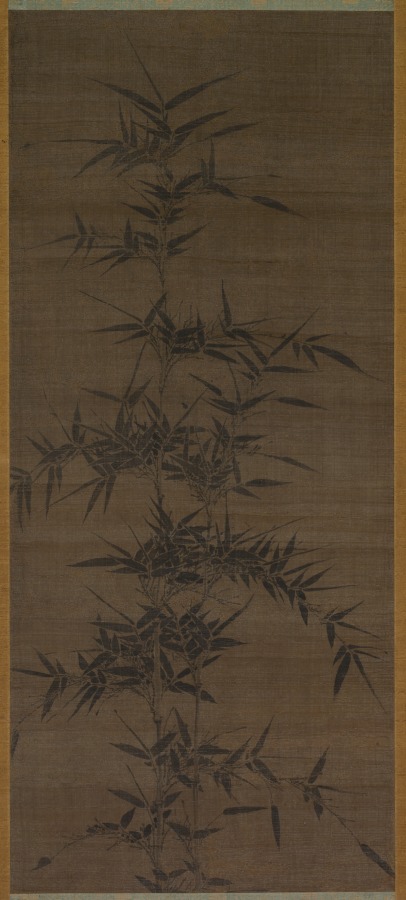
Ink Bamboo: A Study in Materiality and the Legacy of Imperial Silk Weaving
In the hallowed ateliers of London’s Savile Row, where precision tailoring meets centuries of craftsmanship, the heritage of silk is not merely a historical footnote—it is a living, breathing discipline. Among the most evocative expressions of this legacy is the motif known as Ink Bamboo, a design that marries the ethereal beauty of silk with the stoic philosophy of East Asian art. As the Senior Heritage Specialist for the Lauren Fashion Heritage Lab, I present this research artifact to illuminate how the materiality of silk, particularly its imperial weaving traditions, transforms Ink Bamboo from a decorative pattern into a profound cultural and technical artifact.
The Materiality of Silk: A Foundation of Imperial Prestige
Silk, as a fibre, is unparalleled in its capacity to convey both luxury and narrative. The legacy of imperial silk weaving, rooted in the sericulture of ancient China and later refined in the workshops of the Ming and Qing dynasties, established silk as a medium of power, diplomacy, and artistic expression. The materiality of silk—its tensile strength, natural lustre, and ability to absorb dyes with exceptional clarity—made it the preferred canvas for intricate motifs like Ink Bamboo. In the imperial context, silk was not merely a textile; it was a document of status, a repository of symbolism, and a testament to the weaver’s mastery. The weight, drape, and sheen of silk, particularly in its highest grades such as kesi (silk tapestry) or satin, allowed for the precise rendering of bamboo’s linear elegance, capturing both its structural rigidity and its organic fluidity.
Ink Bamboo: Symbolism and Aesthetic Philosophy
The Ink Bamboo motif, traditionally executed in monochrome ink washes on paper, finds a new life when translated into silk. Bamboo, in East Asian philosophy, embodies resilience, integrity, and humility—qualities that align seamlessly with the understated luxury of Savile Row tailoring. The ink element, typically rendered in shades of black, grey, or deep indigo, contrasts with the silk’s natural luminosity, creating a visual tension between opacity and transparency. This duality is central to the motif’s appeal: the bamboo stalks, painted with deliberate brushstrokes, appear to grow organically across the fabric, their leaves catching light in a manner that mimics the play of ink on paper. The materiality of silk enhances this effect, as the weave’s texture and the fibre’s refractive properties imbue the design with a three-dimensional quality that flat ink cannot achieve.
Imperial Silk Weaving: Techniques and Legacy
The legacy of imperial silk weaving is defined by techniques that demanded extraordinary skill and patience. For Ink Bamboo, the most relevant methods include brocade weaving and embroidery, both of which were perfected in imperial workshops. Brocade, with its raised patterns and metallic threads, could be used to outline bamboo stalks with a subtle relief, while embroidery allowed for the precise application of ink-like shading. In the context of Savile Row, these techniques are adapted to suit the modern gentleman’s wardrobe. A bespoke suit jacket, for instance, might feature an Ink Bamboo motif woven into a silk lining or embroidered onto a pocket square, preserving the imperial tradition while embracing contemporary tailoring. The materiality of silk ensures that the motif remains both durable and delicate, a paradox that defines the finest heritage textiles.
Conservation and Craft: The Role of the Heritage Specialist
As a heritage specialist, my role extends beyond documentation to the active conservation of these techniques. The Ink Bamboo motif, when executed on silk, requires an understanding of both the fibre’s behaviour and the design’s cultural significance. For example, the use of natural dyes—such as indigo for the ink tones—preserves the historical authenticity of the motif, while modern finishing techniques ensure the silk’s longevity. The legacy of imperial silk weaving is not static; it evolves through each generation of artisans. At the Lauren Fashion Heritage Lab, we collaborate with master weavers and embroiderers to recreate these motifs with the same precision as their imperial predecessors, yet with a sensitivity to contemporary aesthetics. This dialogue between past and present is essential for maintaining the relevance of silk in luxury fashion.
Ink Bamboo in the Savile Row Context
Savile Row is defined by its commitment to bespoke excellence, and the incorporation of Ink Bamboo into silk garments exemplifies this ethos. A silk tie or scarf bearing the motif becomes a statement of discernment—a nod to the wearer’s appreciation for both Eastern philosophy and Western tailoring. The materiality of silk, with its fluid drape and subtle sheen, allows the Ink Bamboo design to move with the body, creating a dynamic interplay of light and shadow. This is not a static pattern but a living one, reflecting the wearer’s posture and movement. In this sense, the legacy of imperial silk weaving is reborn on Savile Row, where each garment is a bespoke artifact that honours the past while embracing the future.
Conclusion: The Enduring Legacy of Ink Bamboo on Silk
Ink Bamboo, when rendered on silk, transcends its origins as a painted motif to become a testament to the enduring legacy of imperial silk weaving. The materiality of silk—its strength, lustre, and adaptability—ensures that this design remains relevant in the world of luxury fashion. For the heritage specialist, the study of such artifacts is not merely academic; it is a practice of preservation and innovation. As we continue to explore the intersections of tradition and modernity, Ink Bamboo on silk stands as a powerful reminder that the finest heritage is not locked in the past but woven into the fabric of the present. In the ateliers of Savile Row, where every stitch is a commitment to quality, this motif finds its most refined expression—a quiet, elegant rebellion against the ephemeral.