A Discourse on Imperial Fragments: The Materiality of Legacy
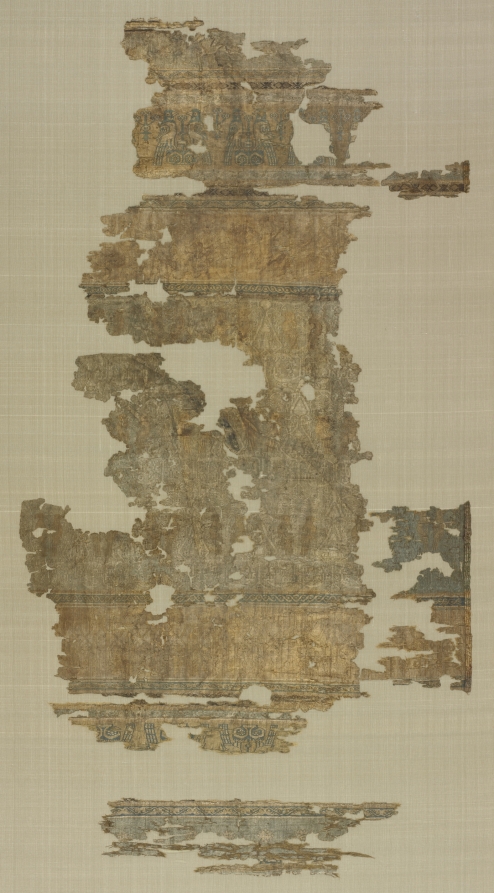
One must, if one is to appreciate the matter at hand, dispense with the notion of the fragment as mere remnant. It is not a casualty of time, but rather its most eloquent witness. Consider, if you will, a single, unassuming swatch of imperial silk, perhaps no larger than a gentleman’s pocket square. Its edges are raw, its once-vibrant palette softened by centuries. To the untrained eye, a relic. To the connoisseur, a condensed archive. This fragment, this material synecdoche, contains within its warp and weft the entire apparatus of empire—its aesthetics, its hierarchies, its relentless pursuit of perfection. The legacy of imperial silk weaving is not a ghostly echo; it is physically embedded in these surviving textiles, demanding a reading as nuanced as the patterns they bear.
The Loom as Throne: Administrative Weft and Bureaucratic Warp
The imperial silk workshop was never merely an atelier; it was a ministry. From the Byzantine gynaeceum to the Ming Dynasty weaving and dyeing bureaus, and onto the French royal manufactories of Lyon, the production of these textiles was a state affair of the first order. The fragment before us, therefore, is an object of policy. Its existence speaks of standardised dye formulas, guarded with the secrecy of state intelligence. Its intricate pattern—a phoenix, a dragon, a fleur-de-lis—was not a designer’s whim but a codified visual language, its use often restricted by sumptuary laws. The quality of the thread, the density of the weave, the complexity of the technique: each was a measurable indicator of imperial reach and administrative control. To hold such a fragment is to feel the weight of a managed economy, where the loom’s rhythm was set to the tempo of court ceremony and diplomatic gift-giving.
The Hand of the Artisan: Invisible Excellence
Yet, for all the bureaucracy, the final authority rested—and remains visible—in the hand. Imperial silks represent the apex of specialised labour. The cultivation of the mulberry groves, the careful unreeling of the cocoon, the mastery of the draw-loom operated by a team: these were tiers of expertise. The fragment reveals this. Run a thumb across its surface. The sublime evenness of a satin ground, the precise, raised clarity of a brocaded motif—these are the signatures of consummate skill, achieved through years of disciplined apprenticeship. This is where the imperial mandate met human virtuosity. The weaver, often anonymous, was an instrument of the state, yet their technical fluency breathed life into the imperial iconography. The fragment is their testament, a proof of execution so flawless it becomes impersonal, which is precisely the point. The individual is subsumed into the perfection of the whole, much as the subject was to the crown.
Patina as Provenance: The Integrity of Degradation
Here we arrive at a point of some delicacy: the condition of the artifact. The frayed selvedge, the faded crimson, the slight brittleness to the touch. In the world of bespoke tailoring, we speak of a garment’s ‘life’; how it moulds to the wearer, how it acquires a narrative. The silk fragment elevates this principle to the historical plane. Its degradation is not a flaw to be lamented but a critical component of its authenticity. The fading tells of specific dye compounds—madder root, cochineal, sappanwood—and their reaction to light. The wear patterns suggest use, perhaps as a lining or an ecclesiastical vestment. This patina is earned. It is the visual record of its passage through time, a palimpsest of environmental and human interaction. To ‘conserve’ such an item is not to restore it to a hypothetical original state, but to stabilise its current, truthful one. Its beauty is inextricably linked to its fragility; its value is confirmed by its survival against the odds.
Contemporary Resonance: The Thread Through the Eye of the Needle
What, then, is the modern practitioner—the designer, the curator, the discerning client—to make of this legacy? It is not a template for replication. The imperial context is gone, and rightly so. The lesson lies instead in the philosophy of material commitment. It is an argument for depth over breadth, for allowing material and technique to dictate form, and for understanding that true luxury is a product of ecosystem—from agrarian source to artistic hand. When one examines a length of the finest contemporary silk, one is seeing the direct descendant of this imperial standard: the expectation of peerless raw material, the investment in complex machinery (the digital jacquard loom being the logical heir to the draw-loom), and the unyielding pursuit of a flawless finish.
The imperial silk fragment, in its silent, tactile eloquence, serves as a permanent reminder. It asserts that textiles of consequence are never simply made. They are governed, wrought, and endured into being. They are physical manifestations of cultural ambition. To engage with them is not an act of nostalgia, but one of measured respect for a grammar of excellence that, in its purest principles, remains eternally relevant. The legacy is not the pattern book; it is the ingrained insistence that the cloth itself must bear the unmistakable mark of uncompromised authority.