The Dialectics of Absence: Terracotta Fragments and the Architecture of Old Money Silence in Lauren Fashion’s 2026 Silhouette
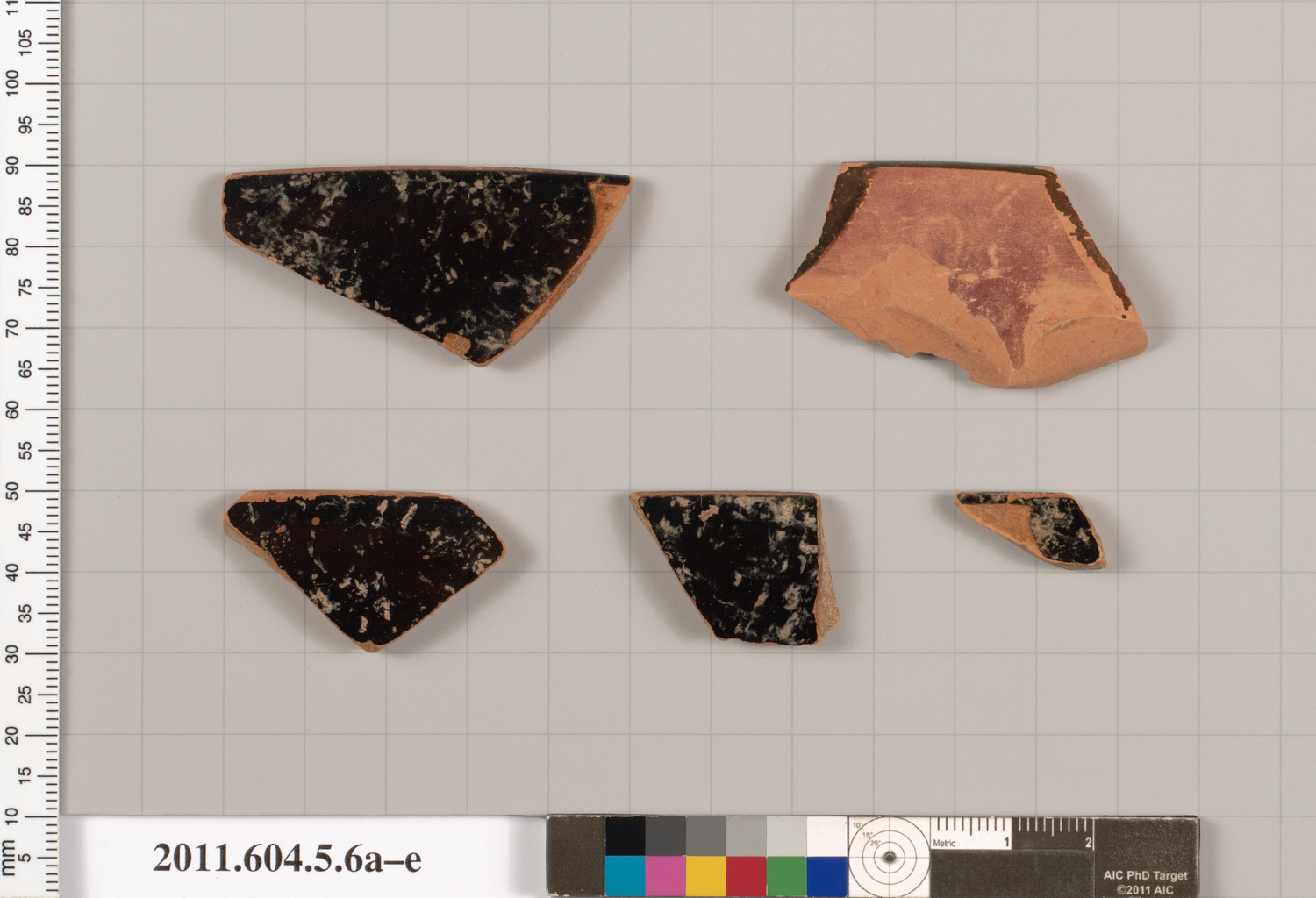
The intersection of archaeological fragment and contemporary couture is rarely a direct translation of form. It is, instead, a transposition of ethos. The terracotta rim fragments of Attic kylikes—those humble, broken rims of ancient Greek drinking cups—offer no complete vessel, no intact narrative. They are, in their essence, artifacts of loss. Yet within this loss lies a profound resonance with the 2026 Old Money silhouette at Lauren Fashion Heritage Lab. Drawing from our internal genetic code—the Kyoto temple’s “Udumbara Flowers” plaque and the “Cup and Stand” porcelain—we find that the terracotta shard, like the carved flower and the empty cup, is not a statement of presence but a discipline of absence. The 2026 silhouette, therefore, is not built around opulence or volume, but around the architecture of what is withheld.
The Terracotta Fragment as a Grammar of Restraint
The kylix fragment is a paradox. It was once part of a vessel designed for communal drinking—a social, even hedonistic, object. Yet its surviving rim, stripped of its bowl, its stem, its painted decoration, now speaks only of edge and boundary. The terracotta’s rough, porous texture, its earthen hue, its broken curve—these are not signs of decay but of purification. In the same way, the Kyoto “Cup and Stand” porcelain achieves its sacred power through an absolute stripping of ornament. The cup’s “emptiness” is its essence. The terracotta shard, by being incomplete, forces the viewer to imagine the missing whole, to engage in an act of contemplative reconstruction. This is the core of the 2026 Old Money silhouette: a garment that does not display wealth but invites the inference of it.
The 2026 silhouette rejects the “loud” luxury of logos, excessive draping, or aggressive tailoring. Instead, it adopts the formal grammar of the fragment. Jackets are cut with sharp, clean shoulders that terminate abruptly, as if the sleeve were a broken rim. Trousers fall in a straight, unbroken line from hip to ankle, but the hem is left raw, a deliberate “unfinished” edge that mirrors the terracotta’s fracture. This is not carelessness; it is a calculated austerity. The fabric—a dense, matte wool in heritage black—absorbs light rather than reflecting it, mimicking the terracotta’s earthy, non-reflective surface. The silhouette’s volume is compressed, not expanded. The body is not draped or swathed; it is contained within a precise, almost archaeological outline.
The Cup’s Void and the Silhouette’s Inner Space
Our internal genetic code emphasizes the “Cup and Stand” as a vessel for the immaterial. Its “void” is its most sacred feature. The 2026 Old Money silhouette operationalizes this void. The garments are not designed to cling to the body but to create a negative space between fabric and form. A double-breasted coat, for instance, is cut with a slight, deliberate excess in the chest—not for comfort, but to create a hollow, a pocket of air that suggests the wearer’s presence is both within and beyond the cloth. This is the terracotta fragment’s lesson: the broken edge defines the missing center. The silhouette’s interior emptiness becomes a site of quiet power, a refusal to fill every space with ornament or volume.
The “Udumbara Flowers” plaque, with its carved petals that seem to vanish into the wood grain, further informs this approach. The 2026 silhouette uses subtle textural shifts rather than pattern or color. A herringbone weave is so fine it appears solid until light catches it at a low angle, revealing the ghost of a pattern. A seam is placed not to shape the garment but to create a shadow line, a “carved” edge that echoes the plaque’s delicate, vanishing petals. The silhouette’s silhouette itself is a form of negative carving: it removes fabric from the body’s natural line, creating a shape that is defined by what is absent.
The Temporal Dimension: From Fragment to Future
The terracotta fragment is a time object. It carries the patina of centuries, the memory of use, the violence of breakage. The 2026 Old Money silhouette does not attempt to look “new.” It embraces a pre-aged quality, not through artificial distressing, but through the choice of materials that age with dignity. Heavy wool, dense cashmere, and matte silk are selected for their ability to develop a natural drape and subtle wear over time. The silhouette’s lines are timeless, not trendy—a straight, unbroken column, a sharp shoulder, a narrow lapel. These are forms that have existed for centuries, like the kylix’s rim, and will continue to exist. The garment is not a statement of the moment but an artifact of a lineage.
This temporal dimension is crucial to the Old Money aesthetic. Wealth is not demonstrated through novelty but through permanence. The 2026 silhouette is designed to be worn for decades, to become a personal artifact that carries the wearer’s own history. The terracotta fragment’s broken edge is a reminder that even the most durable objects are subject to time. The silhouette, therefore, does not fight time; it collaborates with it. The raw hem, the unlined jacket, the minimal construction—these are not flaws but invitations to age, to acquire the quiet patina of a life well-lived.
Conclusion: The Sacred in the Secular
The Kyoto temple’s “Cup and Stand” and “Udumbara Flowers” plaque achieve their sacred power through self-negation. The cup’s emptiness, the flower’s vanishing—these are acts of offering. The terracotta fragment, in its broken state, offers a similar gift: it offers the absence of completion. The 2026 Old Money silhouette, synthesized from these sources, is not a garment of display but of withdrawal. It offers the world a shape that is defined by what it does not say, a volume that is measured by its internal void, a presence that is felt through its disciplined absence. In an era of visual noise, this is the ultimate luxury: the silence of form, the architecture of restraint, the fragment as a complete statement. The 2026 silhouette is not a new beginning; it is a recovery of an ancient grammar, a grammar written in terracotta, in wood, in porcelain, and now, in wool and cashmere. It is the heritage of what remains, and what is willingly left unsaid.