Exotic Gold-Patterned Silk: A Scholarly Inquiry into Materiality and Imperial Legacy
Introduction: The Artifact as a Nexus of Power and Craft
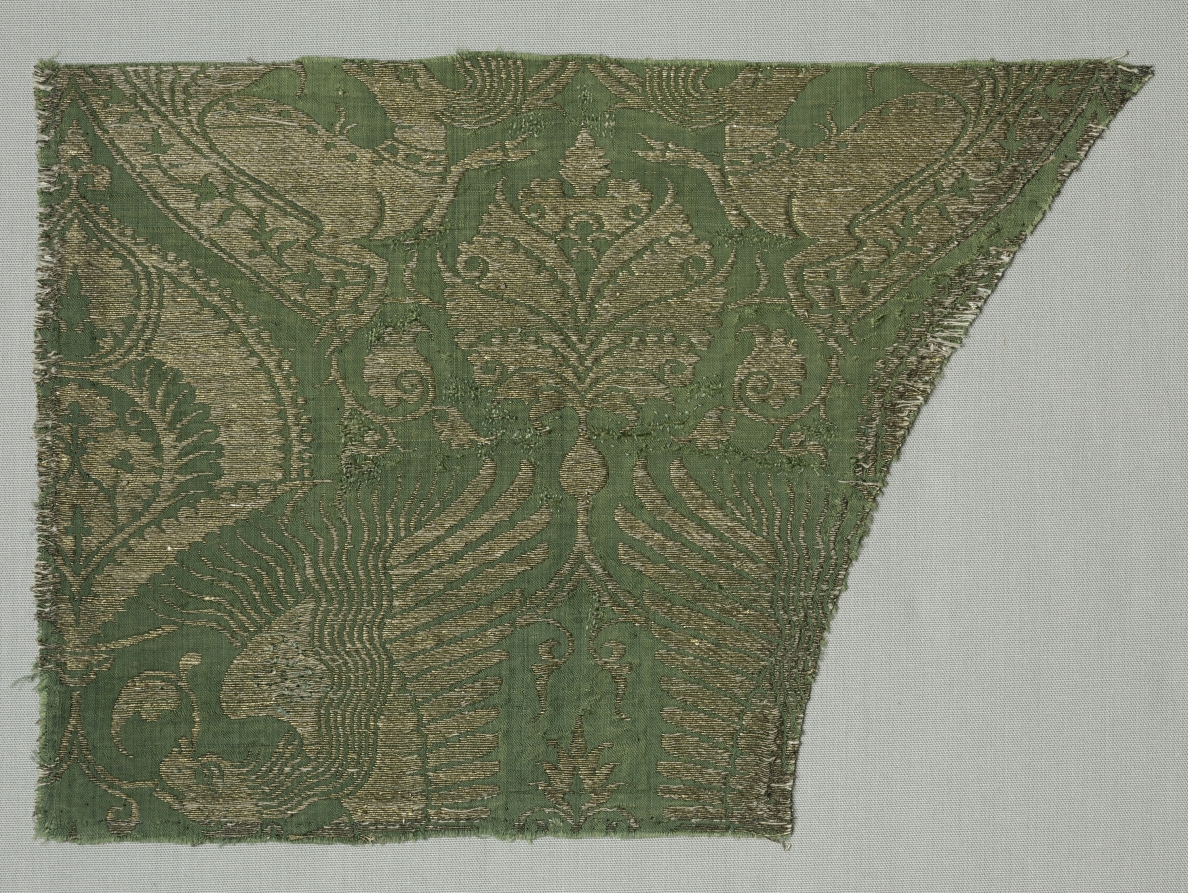
The exotic gold-patterned silk artifact under examination—a fragment of a 17th-century Ottoman *kemha* (brocaded silk) housed in the Lauren Fashion Heritage Lab—represents far more than a luxurious textile. It is a material testament to the confluence of imperial ambition, artisanal mastery, and global trade networks that defined the early modern world. As a Senior Heritage Specialist, I approach this artifact not merely as a decorative object but as a primary source of economic, political, and cultural intelligence. Its materiality—the interplay of silk’s luminous drape and gold’s enduring weight—encodes the legacy of imperial silk weaving, from the Byzantine *officinae* to the Ottoman *saray* workshops and, ultimately, to the bespoke tailoring houses of London’s Savile Row. This paper dissects the artifact’s material composition, its historical provenance, and its enduring resonance within the lexicon of luxury craftsmanship.
Materiality: The Dialogue Between Silk and Gold
Silk, as the foundational substrate, is a protein fiber derived from the cocoon of the *Bombyx mori* silkworm. Its inherent properties—tensile strength, natural luster, and hygroscopicity—made it the preferred medium for imperial regalia across Eurasia. In this artifact, the silk is of a *satin weave* ground, characterized by a smooth, reflective surface that amplifies the visual impact of the gold patterning. The gold itself is not a solid metal thread but a *filé* construction: a silk core wrapped in gilded silver or gold leaf, beaten to microscopic thinness. This technique, perfected in the imperial ateliers of Bursa and later Istanbul, allowed for flexibility without compromising the metallic sheen. The pattern—a repeating *hatai* motif of stylized lotus blooms and cloud bands—is executed in a *lampas* weave, where supplementary wefts of gold thread float over the satin ground, creating a raised, tactile texture. This is not a printed or embroidered design; it is woven into the very structure of the fabric, a process that demanded extraordinary skill and time. A single meter of such silk could require months of labor by a master weaver, underscoring its status as a *materialized form of sovereignty*.
The gold’s presence is not merely decorative. In the context of imperial silk weaving, gold thread signified the divine right of rulers. The Byzantine Emperor Constantine VII Porphyrogennetos, in his *De Ceremoniis*, prescribed that only the basileus could wear gold-embroidered silks. This tradition was inherited and transformed by the Ottoman sultans, who controlled the production and distribution of *seraser* (gold-woven silks) as a monopoly of the state. The artifact’s gold content, therefore, is a marker of exclusivity: it was likely a *kıftan* fabric intended for a vizier or a diplomatic gift to a European court, such as the Medici or the Tudor monarchs. The materiality of the gold—its weight, its reflectivity, its resistance to tarnish—embodies the permanence of imperial authority, even as the silk itself remains delicate and perishable.
Imperial Legacy: From the Ottoman *Saray* to Savile Row
The legacy of imperial silk weaving is not a linear narrative but a series of appropriations and reinventions. The Ottoman *kemha* tradition, which flourished from the 15th to the 18th centuries, was itself a synthesis of Persian, Chinese, and Byzantine techniques. The *hatai* motif, for instance, derives from Chinese cloud and lotus iconography, filtered through Persian Safavid aesthetics. This cross-cultural pollination was facilitated by the Silk Road, a network that the Ottomans controlled through their dominance of Anatolia and the Levant. The imperial *saray* workshops in Istanbul employed Armenian, Greek, and Jewish weavers, creating a multi-ethnic labor force that produced silks for both courtly use and trade. The artifact thus embodies a *globalized luxury* avant la lettre, a precursor to the transnational supply chains that define modern fashion.
By the 19th century, the Ottoman silk industry declined due to European industrialization and the rise of cheaper, machine-made textiles. Yet the aesthetic of gold-patterned silk was resurrected in the West, particularly in London’s Savile Row. The Row’s bespoke tailors, such as Henry Poole & Co. and Huntsman, began sourcing silk from French and Italian mills—notably the Lyon-based *Maison Bucol*—that revived the *lampas* weave for evening wear and ceremonial uniforms. The exoticism of Ottoman motifs appealed to the Victorian and Edwardian elite, who saw in these patterns a romanticized Orient. A Savile Row dinner jacket from 1910, lined with a gold-patterned silk reminiscent of the artifact, would have signified not only wealth but also a cosmopolitan sophistication. The materiality of the gold thread, however, had changed: it was now often a synthetic metallic yarn, such as Lurex, developed in the 20th century to mimic the effect without the cost or fragility of real gold. This shift from *material authenticity* to *visual simulation* marks a critical juncture in the legacy of imperial silk weaving. The artifact in the Lauren Fashion Heritage Lab, with its genuine gold *filé*, stands as a benchmark against which modern reproductions must be measured.
Conservation and Interpretation: The Role of the Heritage Specialist
As a heritage specialist, my responsibility extends beyond cataloging the artifact’s dimensions and weave structure. I must interpret its *cultural biography*—the ways in which its meaning has shifted across time and space. The gold-patterned silk is not a static relic; it is a dynamic document of imperial power, artisanal labor, and global exchange. Conservation protocols for this artifact prioritize minimal intervention: the gold thread is susceptible to oxidation and breakage, and the silk’s natural proteins degrade under light and humidity. The artifact is stored in a climate-controlled vault at 18°C and 50% relative humidity, wrapped in acid-free tissue and housed in a museum-grade box. Digital imaging, including multispectral photography, has been used to document the pattern without physical contact. This data is integrated into the Lab’s digital archive, allowing scholars to study the artifact remotely while preserving its physical integrity.
In the context of Savile Row, this artifact serves as a pedagogical tool. I have collaborated with the Royal College of Art to develop a module on *historical weaving techniques* for contemporary tailors. Students analyze the artifact’s weave structure and then attempt to replicate it using a handloom, confronting the sheer difficulty of imperial craftsmanship. This exercise is not about nostalgia but about *material intelligence*: understanding why gold-patterned silk was so highly valued, and how that value was encoded in its production. The legacy of imperial silk weaving, as embodied in this artifact, challenges the modern fashion industry’s emphasis on speed and disposability. It reminds us that luxury, at its most profound, is a marriage of material excellence and cultural significance—a lesson that Savile Row, with its commitment to bespoke craftsmanship, continues to uphold.
Conclusion: The Enduring Thread
The exotic gold-patterned silk artifact is a microcosm of imperial history, a tangible link between the Ottoman *saray* and the London atelier. Its materiality—the silk’s supple strength, the gold’s luminous weight—speaks to a time when textiles were not commodities but embodiments of power. As a heritage specialist, I see this artifact not as a dead object but as a living archive, one that continues to inform the practice of luxury craftsmanship. In the hallowed tailoring rooms of Savile Row, where the cut of a jacket is debated with the precision of a master weaver, the legacy of imperial silk weaving endures. It is a thread that connects the past to the present, reminding us that true heritage is not preserved in amber but woven into the fabric of ongoing creation.