From Terracotta Fragment to Tailored Silence: The Attic Eye-Cup as a Prototype for 2026 Old Money Silhouettes
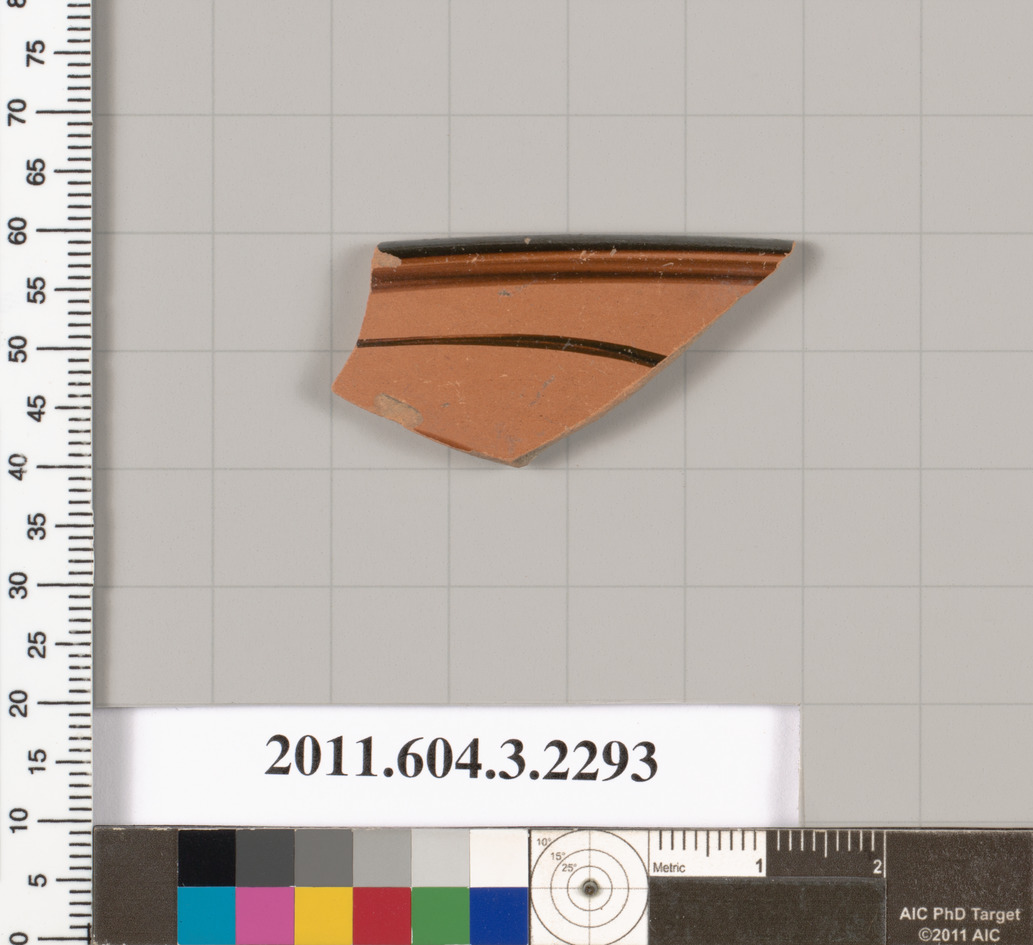
In the vast genealogy of Lauren Fashion Heritage Lab, the museum artifact under consideration—a terracotta rim fragment of a kylix, specifically an Attic eye-cup from the late sixth century BCE—might appear an unlikely interlocutor for the 2026 Old Money collection. Yet, as our internal genetic code reveals, the deepest aesthetic truths often emerge from the tension between disparate epochs. The eye-cup, a humble drinking vessel, and the Old Money silhouette, a statement of understated power, converge on a shared philosophical ground: the articulation of presence through absence, of authority through restraint. This paper argues that the fragmentary, ocular geometry of the kylix—its encircling gaze, its broken rim, its functional elegance—provides a foundational lexicon for the 2026 Old Money silhouette, translating ancient Greek principles of symmetry, containment, and the dialectic of the visible and invisible into a contemporary sartorial language of quiet dominion.
The Ocular Imperative: The Eye-Cup as a Gaze of Authority
The defining feature of the Attic eye-cup is its painted eyes, large and apotropaic, flanking the vessel’s surface. These eyes are not merely decorative; they function as a prophylactic gaze, warding off evil and asserting the vessel’s presence. For the drinker, the eyes become a mask, transforming the human face into a composite of mortal and divine surveillance. This concept of the gaze as a form of power is central to the Old Money aesthetic. The 2026 silhouette, in its purest form, does not shout; it watches. The clean, unbroken lines of a single-breasted jacket, the precise drop of a trouser, the absence of logos or embellishment—these are the sartorial equivalents of the kylix’s painted eyes. They command attention not through spectacle, but through a self-contained, almost stoic, authority. The wearer is not observed; they are the observer. The garment becomes a frame that directs the gaze outward, rather than inviting scrutiny inward.
This is where the terracotta fragment’s materiality becomes crucial. The clay is fired, hardened, and broken. Its edges are raw, its surface textured. The 2026 Old Money silhouette, in response, must embrace a similar tactile integrity. We are not speaking of the soft, pliable luxury of cashmere or the liquid sheen of silk. Instead, the collection will privilege structured wools, dense cottons, and matte-finished linens—fabrics that hold their shape, that possess a monumental weight. The shoulder of a coat, for instance, will be cut with a precision that echoes the kylix’s geometric rim, creating a clean, architectural line that does not yield to the body but rather defines it. This is a silhouette of contained energy, where the fabric’s resistance to the body mirrors the clay’s resistance to the hand. The “agony” of the Renaissance garden, with its tangible, materialized suffering, finds a distant echo here: the discipline of the garment is a form of composure under pressure, a visible manifestation of internal control.
The Fragment and the Whole: The Aesthetics of Incompleteness
The museum artifact is a rim fragment. It is not a complete cup. This incompleteness is not a flaw but a generative condition. It forces the viewer to reconstruct the whole, to imagine the missing body, the absent narrative. This principle of fragmentation as a tool of suggestion is directly applicable to the 2026 Old Money silhouette. The Old Money wardrobe is never fully revealed; it is always a series of discrete, carefully chosen fragments. A single, impeccably cut blazer. A pair of trousers with a near-invisible crease. A white shirt whose collar stands with a particular, unforced authority. The ensemble is never a complete “look” in the fast-fashion sense; it is a collection of parts that imply a whole, a life lived in a world where completeness is assumed, not displayed.
This echoes the “vaporous contours” of the modern work referenced in our internal code. Just as that piece presents a human form on the verge of dissolution, the fragmentary nature of the Old Money wardrobe presents a presence that is always slightly deferred. The wearer is not a fully legible text; they are a series of clues. The eye-cup’s broken rim becomes a metaphor for the deliberate silence of the Old Money aesthetic. It is a form that refuses to be fully known, that holds back, that invites a contemplative, rather than consuming, gaze. The 2026 silhouette will therefore feature unfinished edges, raw hems, and subtle asymmetries—not as signs of carelessness, but as deliberate markers of a heritage that predates perfection. A jacket might have a slightly longer back panel, a trouser a cuff that is not quite even. These are the sartorial equivalents of the terracotta’s fracture: they speak of time, of use, of a history that is carried, not curated.
Symmetry and the Circular Gaze: The Silhouette as a Vessel
The kylix is a vessel for drinking, but its form is also a container for the gaze. The painted eyes on its surface create a circular, all-encompassing field of vision. The 2026 Old Money silhouette must function similarly: it must contain the wearer within a field of composed authority. This is achieved through a rigorous, almost mathematical approach to proportion. The silhouette will be built on a circular logic—not literally round, but cyclical in its balance. The shoulder width will be precisely calibrated to the hip measurement; the length of the jacket will echo the drop of the trouser; the collar’s spread will mirror the lapel’s width. This is not the symmetry of a military uniform, but a dynamic equilibrium that allows the wearer to move through space with a centered, unshakeable presence.
The terracotta’s materiality—its fired, earthen quality—also informs the color palette. The 2026 Old Money collection will not rely on the bright whites or deep navies of conventional luxury. Instead, it will draw from the earth tones of the fragment itself: burnt sienna, ochre, terra-cotta, and a deep, almost black umber. These are colors that absorb light rather than reflect it, that speak of groundedness and permanence. They are the colors of the ancient world, of the foundations upon which modern power was built. The “heritage-black” of our category tag is not a void; it is a compressed darkness, a color that contains the memory of fire and earth. It is the black of the kylix’s glaze, a surface that is both reflective and opaque, inviting and withholding.
Conclusion: The Silent Gaze of 2026
The terracotta rim fragment of the Attic eye-cup is not a decorative inspiration for the 2026 Old Money silhouette; it is a structural and philosophical prototype. It teaches us that true authority is not displayed but implied through containment; that the gaze of power is most effective when it is directed outward, not inward; and that incompleteness is a form of invitation, a way of creating a dialogue between the garment and the observer. The 2026 silhouette will be a vessel for a gaze—a gaze that is silent, composed, and utterly unshakeable. It will be a garment that, like the kylix, holds its contents—the wearer’s presence—within a frame of disciplined, almost ritualistic, form. In the end, the Old Money aesthetic is not about wealth; it is about the power of the unseen. And in the broken rim of an ancient cup, we have found a perfect, enduring model for that power.