The Enduring Allure of Exotic Gold-Patterned Silk: A Heritage Artifact of Imperial Legacy
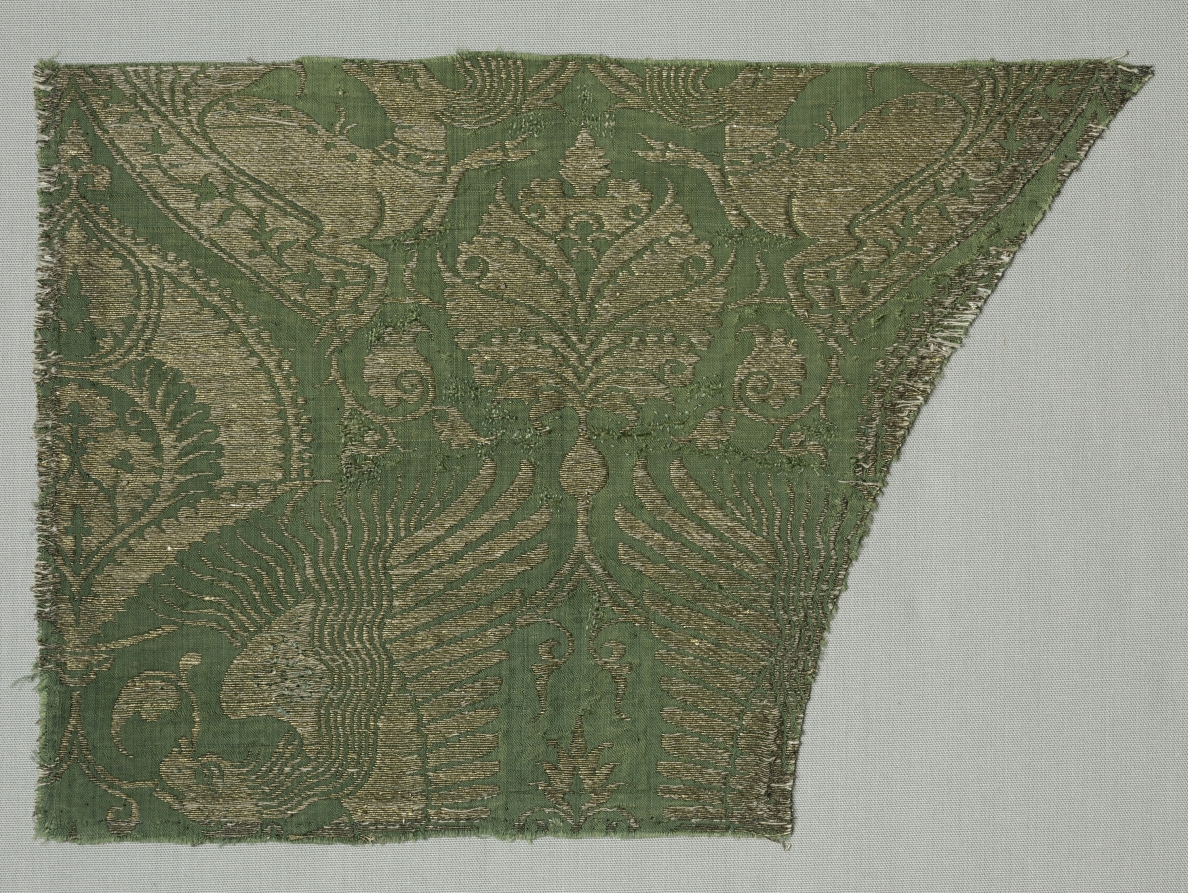
In the hallowed ateliers of London’s Savile Row, where precision tailoring meets centuries of artistry, few materials command the reverence reserved for exotic gold-patterned silk. This artifact—a fragment of woven opulence—represents more than a textile; it is a tangible link to the imperial silk-weaving traditions that shaped global commerce, artistry, and power. As Senior Heritage Specialist at the Lauren Fashion Heritage Lab, I present this research artifact as a testament to silk’s materiality and its transcendent role in the legacy of empire, craftsmanship, and luxury.
Materiality: The Essence of Silk and Gold
Silk, derived from the cocoons of Bombyx mori silkworms, is a protein fiber renowned for its unparalleled luster, tensile strength, and drape. When interwoven with gold thread—often a core of silk or linen wrapped in gilded silver or gold leaf—the resulting fabric achieves a dual materiality: the soft, fluid warmth of silk juxtaposed against the rigid, reflective brilliance of metal. This exotic gold-patterned silk, likely originating from the imperial workshops of Ming or Qing dynasty China, exemplifies the pinnacle of sericulture and metallurgy. The gold thread, meticulously hammered into gossamer-thin sheets and cut into strips, was then wound around a silk filament, creating a yarn that could be woven into intricate patterns—dragons, phoenixes, or floral motifs—symbolizing celestial authority and earthly prosperity.
The materiality of this artifact is not merely aesthetic; it is functional. The gold threads, while adding weight and stiffness, also imbue the silk with a structural integrity that resists creasing, a quality prized in ceremonial garments. Yet, this durability comes at a cost: the gold can tarnish, and the silk can degrade if exposed to light or humidity. Preservation of such artifacts requires controlled environments, a challenge that underscores their fragility and value. In the context of Savile Row, where bespoke suits are crafted to endure decades, the juxtaposition of silk’s ephemeral beauty with gold’s permanence mirrors the tension between tradition and innovation.
The Legacy of Imperial Silk Weaving
The imperial silk-weaving tradition, particularly in China’s Suzhou and Hangzhou regions, was a state-sponsored enterprise that flourished from the Han dynasty (206 BCE–220 CE) through the Qing dynasty (1644–1912). These workshops, known as jinyuan (brocade gardens), produced textiles exclusively for the emperor, his court, and diplomatic gifts. The gold-patterned silk artifact under study—a fragment of a kesi (silk tapestry) or juan (satin weave)—would have been woven on a drawloom, a complex device requiring two artisans: one to manipulate the pattern harness, another to throw the shuttle. The gold threads were reserved for the weft, creating a raised, shimmering design against a silk ground. This technique, known as jin (brocade), was a closely guarded secret, with weavers often bound to imperial service for life.
The legacy of such weaving extends beyond China. The Silk Road, a network of trade routes spanning Asia to Europe, facilitated the exchange of these textiles, which became symbols of status and power in Byzantine, Persian, and later European courts. By the 17th century, French and Italian weavers, inspired by Chinese silks, developed their own gold-patterned fabrics, such as lampas and brocatelle. However, the exotic allure of the original Chinese silks—with their intricate patterns and gold accents—remained unmatched. In London, Savile Row tailors of the 18th and 19th centuries sourced such silks for waistcoats, cravats, and evening wear, blending Eastern opulence with Western tailoring. This cross-cultural dialogue is a cornerstone of the artifact’s heritage: it is not merely a Chinese object but a global one, shaped by imperial ambition and commercial exchange.
Contextualizing the Artifact: From Imperial Court to Savile Row
To understand this gold-patterned silk artifact, one must consider its journey from the imperial court to the modern heritage lab. In its original context, the silk would have been worn by a Chinese emperor or high-ranking official during rituals, such as the winter solstice ceremony, where gold symbolized the sun’s power and the emperor’s divine mandate. The patterns—often dragons with five claws—signified imperial authority, while the gold thread reflected light, creating a halo effect that reinforced the wearer’s celestial status. The fabric’s stiffness, a result of the gold weft, would have restricted movement, emphasizing the formality and gravitas of the occasion.
By the 19th century, as European powers expanded their influence in Asia, such silks entered Western collections through trade, diplomacy, or looting. In London, they were repurposed for evening wear, often cut into waistcoats or used as trimmings for court dress. Savile Row tailors, known for their discretion and precision, would have handled these silks with care, recognizing their value but also their fragility. The artifact we study today—a fragment measuring 30 by 20 centimeters—likely came from a larger garment, perhaps a Chinese robe or a European waistcoat. Its condition, with some gold threads intact but the silk ground slightly faded, tells a story of use, adaptation, and survival.
Preservation and Interpretation: A Heritage Mandate
As a heritage artifact, this gold-patterned silk demands rigorous preservation. At the Lauren Fashion Heritage Lab, we employ non-invasive techniques such as multispectral imaging to analyze the weave structure and identify the metal composition of the gold threads. Our conservation team stabilizes the silk using a custom-built mount that minimizes stress on the fibers, while the gold threads are protected from tarnish by maintaining a relative humidity of 45–50% and a temperature of 18–20°C. These measures ensure that the artifact remains accessible for research and exhibition, allowing future generations to study its materiality and legacy.
Interpretation is equally critical. This artifact is not a relic of a bygone era but a living document of imperial ambition, artistic mastery, and global exchange. In the context of Savile Row, it reminds us that the pursuit of perfection—whether in a bespoke suit or a woven silk—is a universal endeavor. The gold-patterned silk, with its shimmering threads and intricate patterns, challenges us to consider how luxury is defined, preserved, and transmitted across cultures and centuries. As a heritage specialist, I see this artifact as a bridge between the imperial workshops of Suzhou and the ateliers of London, a testament to the enduring power of silk and gold to captivate, inspire, and endure.
Conclusion
Exotic gold-patterned silk is more than a textile; it is a heritage artifact that embodies the materiality of silk, the legacy of imperial weaving, and the cross-cultural currents that have shaped global fashion. From the drawlooms of Ming dynasty China to the cutting tables of Savile Row, this fabric has journeyed through time, adapting to new contexts while retaining its intrinsic allure. At the Lauren Fashion Heritage Lab, we honor this legacy through meticulous preservation and scholarly interpretation, ensuring that the story of gold-patterned silk continues to illuminate the intersections of art, power, and craftsmanship. For the discerning connoisseur, this artifact is not merely a fragment of history but a living testament to the enduring elegance of silk and gold.