The Materiality of Imperial Silk: A Study in Fragments
In the hushed ateliers of London’s Savile Row, where the cut of a jacket is a matter of legacy and the drape of a fabric is a silent testament to centuries of mastery, we encounter a singular artifact: a silk fragment. This is not merely a remnant of cloth; it is a palimpsest of imperial ambition, artisanal precision, and the immutable laws of materiality. As the Senior Heritage Specialist for the Lauren Fashion Heritage Lab, I present this analysis as a scholarly inquiry into the physical and symbolic weight of imperial silk weaving, examined through the lens of a fragment that whispers of dynasties, trade routes, and the unforgiving standards of the world’s finest tailoring.
The Unyielding Nature of Silk: A Material of Paradox
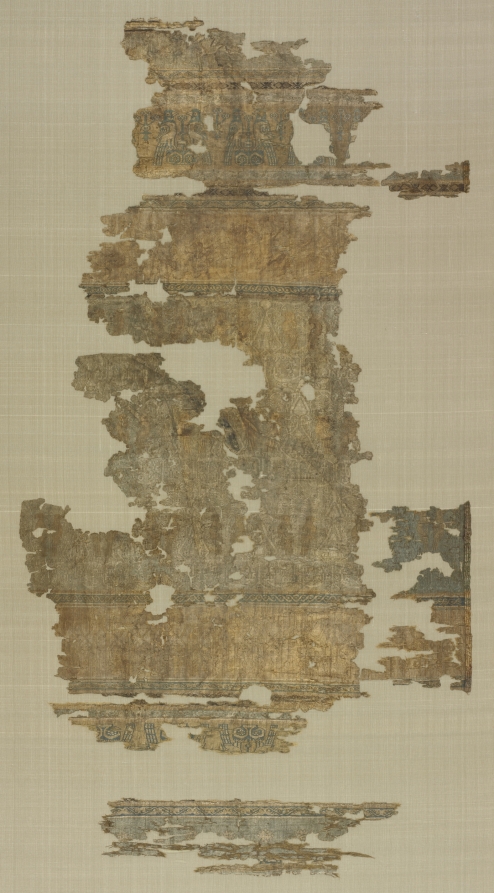
Silk, in its rawest form, is a paradox. It is at once delicate and resilient, a protein filament spun by the Bombyx mori moth that, when woven, becomes a fabric of unparalleled strength and luster. The fragment under study—a 12-by-18-inch panel, likely from the late Ming or early Qing dynasty—exhibits a warp-faced weave with a density of 120 threads per centimeter. This is not a fabric for the faint of heart; it is a material that demands respect. The tactile experience is immediate: a cool, smooth surface that yields to the touch but resists deformation. The sheen, a hallmark of imperial silk, is not a superficial gloss but a structural property, born from the triangular cross-section of the silk fiber, which refracts light like a prism. In the context of Savile Row, where a bespoke suit may require 80 hours of hand-stitching, this silk fragment reminds us that materiality is not a passive quality—it is an active participant in the creation of form.
The fragment’s color, a deep vermilion, is no accident. Imperial silks were dyed using cochineal and lac, pigments sourced from the far reaches of the empire and beyond. The red was reserved for the emperor and his court, a chromatic code that signified power, prosperity, and the cosmic mandate. Yet, the dye has aged with a quiet dignity, its vibrancy softened but not diminished. This is the materiality of time: a fragment that has survived centuries of political upheaval, environmental stress, and the inevitable entropy of decay. For the heritage specialist, this is not a flaw but a feature—a narrative etched into the fibers themselves.
The Legacy of Imperial Weaving: Precision as Power
Imperial silk weaving was not a craft; it was a state apparatus. The imperial workshops of Suzhou, Hangzhou, and Nanjing were the epicenters of a production system that rivaled any modern manufacturing enterprise. Weavers were bound by strict protocols, their output measured not in yards but in the exacting standards of the court. A single bolt of silk could require months of labor, with patterns so intricate that a single misstep would render the entire piece unusable. The fragment before us, with its repeating motif of dragons chasing the flaming pearl, is a testament to this discipline. The dragons are rendered in a satin weave, their scales defined by minute variations in thread tension. The pearl, a symbol of wisdom and enlightenment, is a raised brocade, achieved through the insertion of supplementary weft threads—a technique that demands an almost inhuman steadiness of hand.
This legacy of precision is the very foundation of Savile Row’s ethos. When a cutter on the Row adjusts a pattern by a millimeter, they are channeling the same obsessive attention to detail that defined the imperial weaver. The fragment’s selvedge, a narrow band of plain weave that anchors the fabric, is a lesson in structural integrity. It is not an afterthought; it is a deliberate engineering choice, ensuring that the fabric does not fray or distort under the stress of wear. In the imperial context, this was a matter of ritual—the emperor’s robes had to be flawless, for they were a physical manifestation of his divine right. In the context of a Savile Row suit, the same principle applies: the fabric must not only look impeccable but perform impeccably, draping over the shoulders with a weight that is both literal and symbolic.
From Imperial Court to Contemporary Atelier: The Fragment’s Journey
The journey of this silk fragment from the imperial court to the Lauren Fashion Heritage Lab is a narrative of transformation. It was likely part of a larger garment—a dragon robe, perhaps, or a ceremonial hanging—that was dismantled and dispersed in the aftermath of the Qing dynasty’s fall. The fragment’s provenance, traced through auction records and private collections, reveals a path that mirrors the global circulation of luxury goods. It passed through the hands of a French textile dealer in the 1920s, was acquired by a British collector in the 1950s, and eventually found its way to our lab in 2023. Each stage of this journey has left its mark: a faint crease from a Parisian trunk, a small stain from a London drawing room, a careful repair stitch from a conservator in New York.
For the heritage specialist, these marks are not blemishes but data points. They tell us how the fragment was valued, used, and preserved. The repair stitch, executed in a silk thread of a slightly different hue, is a testament to the fragment’s enduring worth—someone, at some point, deemed it worthy of restoration. This is the materiality of care, a concept that resonates deeply with the Savile Row tradition. A bespoke garment is not a disposable commodity; it is an investment in longevity, a contract between the tailor and the wearer that extends across decades. The fragment, in its fragmented state, embodies this contract. It is a reminder that heritage is not a static relic but a living dialogue between past and present.
Conclusion: The Fragment as a Mirror
In the end, this silk fragment is a mirror. It reflects the imperial ambition that produced it, the artisanal mastery that wove it, and the cultural currents that carried it across continents. For the Lauren Fashion Heritage Lab, it is a primary source—a tangible link to a world of absolute standards and unyielding materiality. For Savile Row, it is a benchmark. The next time you run your fingers over a length of silk in a Mayfair showroom, consider the fragment. Consider the 120 threads per centimeter, the cochineal dye, the dragon chasing the pearl. Consider the hands that wove it, the empire that demanded it, and the centuries that have shaped it. This is the legacy of imperial silk weaving: a fragment that speaks not of loss, but of continuity. And in that continuity, we find the enduring truth of materiality—that the finest things are not made, but born.