The Terracotta Fragment and the Architecture of Restraint: A Heritage Analysis for 2026 Old Money Silhouettes
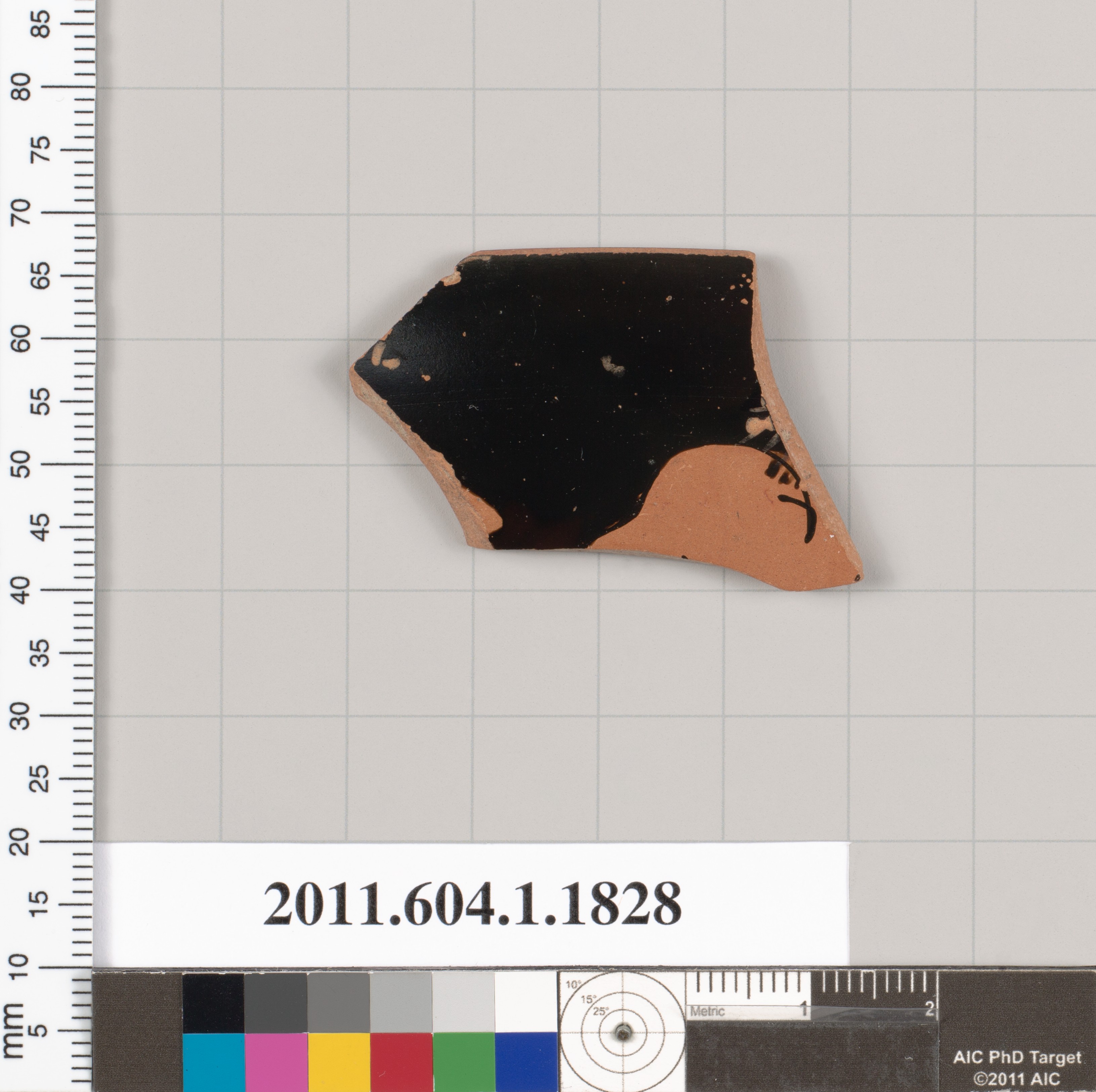
The Lauren Fashion Heritage Lab has long maintained that the most enduring aesthetic principles are not born of novelty, but of rediscovered order. The museum artifact under consideration—a terracotta rim fragment of a kylix (drinking cup) from Attic Greece—appears, at first glance, to belong to a world far removed from the tailored quietude of Old Money dressing. Yet, when read through the internal genetic code of our archive, this humble shard of fired clay reveals a profound resonance with the aesthetic philosophy articulated by Johannes Vermeer’s A Maid Asleep and George Caleb Bingham’s A Vignette of Life on the Frontier. Both paintings, as our internal analysis demonstrates, elevate the transitional, the paused, and the peripheral into vessels of universal meaning. The kylix fragment, in its materiality and form, offers a third term in this dialogue—a tangible artifact of how ancient artisans encoded the same dialectic of order and release, structure and flow, that defines the 2026 Old Money silhouette.
Material Memory: The Kylix as a Vessel of Transition
The kylix, a wide-mouthed drinking cup with two horizontal handles, was the quintessential vessel of the Greek symposium—a ritualized space of social bonding, philosophical discourse, and measured intoxication. The terracotta rim fragment, now stripped of its painted figural decoration, retains only the purest formal geometry: the curve of the lip, the slight flare of the bowl, the tactile roughness of fired clay. This is not a pristine object; it is a relic of use, of handling, of the passage from hand to hand across centuries. The fragment’s aesthetic power lies precisely in its incompleteness—it is a synecdoche for a lost whole, a fragment that gestures toward a vanished order.
This material condition mirrors the “edge state” that Vermeer and Bingham both explored. Vermeer’s sleeping maid exists in the liminal space between labor and leisure, consciousness and dream. Bingham’s frontier figures occupy the boundary between wilderness and civilization, movement and settlement. The kylix fragment, similarly, is caught between function and artifact, between the symposium’s communal vitality and the museum’s sterile contemplation. Its terracotta body—fired, porous, earth-toned—speaks to a materiality that is at once humble and monumental. The clay is not precious; it is common, drawn from the Attic soil, shaped by anonymous hands. Yet its survival across millennia confers upon it a dignity that transcends its origins.
Formal Order: The Geometry of Restraint
The 2026 Old Money silhouette, as articulated in our heritage research, is defined not by ostentation but by architectural precision. The shoulder line is sharp, the waist suppressed, the hemline deliberate. Fabrics are heavy, structured, and often monochromatic—cashmere, wool, brocade in muted tones of charcoal, navy, and heritage black. This is a wardrobe of controlled volumes, where every seam and dart is a declaration of intention. The kylix fragment offers a direct formal analogue: its rim is a perfect arc, its handles (now lost) would have extended horizontally, creating a visual tension between the vessel’s circular opening and its linear extensions. The cup’s design is fundamentally about containment and release—the bowl holds the wine, the handles invite the grasp, the lip directs the flow.
This formal logic is precisely what underpins the most successful Old Money silhouettes. A tailored jacket, for instance, operates on the same principle: the torso is contained, the shoulders are structured, the arms are freed. The garment’s power lies in its ability to hold form while allowing movement. The kylix fragment teaches us that the most elegant design is one that acknowledges its own limits. The rim is not merely a decorative edge; it is the boundary that defines the vessel’s capacity. In the same way, the hem of a coat, the collar of a shirt, the cuff of a sleeve—these are not arbitrary lines but thresholds that mark the transition between the body and the world.
The Dialectic of Stasis and Flow
Our internal analysis of Vermeer and Bingham identified a shared aesthetic principle: the depiction of stasis within flow. Vermeer’s maid is frozen in a moment of rest, yet the tilted wine glass and the half-open door suggest a narrative of recent activity and impending awakening. Bingham’s frontier scene is a tableau of bustling life, yet the composition is so harmoniously balanced that it feels like a frieze—a moment arrested in time. The kylix fragment embodies this same dialectic. The cup was designed for the symposium, a dynamic social ritual of drinking, conversation, and performance. Yet the fragment itself is static, a relic of a moment that has passed. Its terracotta surface bears the marks of its making—the potter’s wheel, the kiln’s heat—but also the traces of its use: the slight wear from countless hands, the residue of wine that has long since evaporated.
This tension is crucial for understanding the 2026 Old Money silhouette. The garments we propose are not static uniforms; they are designed for the transitional spaces of contemporary life—the commute, the meeting, the evening event. A cashmere overcoat, for example, is both a protective shell and a statement of belonging. Its weight and drape suggest permanence, yet its cut allows for the fluidity of movement. The kylix fragment reminds us that the most powerful design is one that acknowledges its own temporality. The cup was meant to be held, passed, and eventually broken. The garment is meant to be worn, creased, and eventually discarded. This acceptance of impermanence is a form of grace—a recognition that beauty is not eternal but emergent from the interplay of use and form.
Conclusion: The Fragment as a Mirror
The terracotta kylix fragment, like Vermeer’s sleeping maid and Bingham’s frontier vignette, is a mirror of the human condition. It is humble, incomplete, and yet resonant with meaning. For the 2026 Old Money silhouette, this artifact offers a profound lesson: that true elegance is not about perfection but about presence. The fragment does not try to be whole; it accepts its partiality and, in doing so, becomes a testament to the passage of time. The Old Money wardrobe, similarly, does not seek to impress through novelty or excess. Instead, it cultivates a quiet authority—a sense of belonging to a lineage that values restraint, durability, and the subtle poetry of form.
In the heritage black of our category, we find the color of the Attic clay, the shadow of the symposium’s lamp, the depth of the frontier’s river. This is not a color of mourning but of contemplation. It is the ground against which all other colors gain meaning. The 2026 Old Money silhouette, informed by this ancient fragment, will be a silhouette of edges and thresholds—shoulders that define, hems that conclude, cuffs that transition. It will be a wardrobe for those who understand that the most profound beauty often resides in the spaces between—the pause, the fragment, the edge. And in that understanding, we find the enduring truth that great art, whether painted, sculpted, or woven, always returns us to the same question: How do we hold form in the face of flow? The kylix fragment, silent and broken, offers its answer: with grace, with restraint, and with the quiet dignity of a thing that has been well used.