← BACK TO ARCHIVES
Silk
Heritage Synthesis: Envoys Presenting Tribute
Curated on Jul 13, 2026 // Node: LDN-01
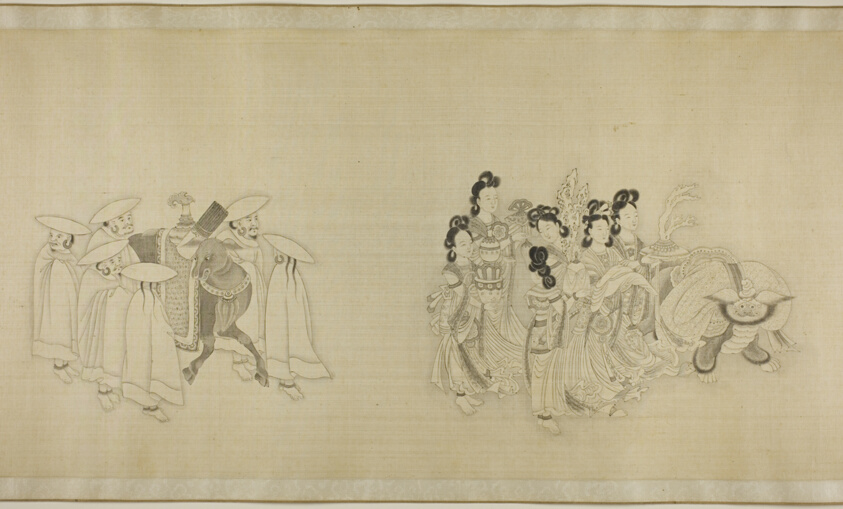
The Envoys Presenting Tribute: A Study in Silk, Diplomacy, and Craft
In the hallowed corridors of heritage preservation, where the tactile memory of textile meets the immutable record of history, few artifacts command the reverence afforded to the handscroll titled *Envoys Presenting Tribute*. This work, rendered in ink on silk, is not merely a document of diplomatic exchange; it is a testament to the pinnacle of classical silk craftsmanship and the fluid elegance that defines the medium. As a Senior Heritage Specialist at the Lauren Fashion Heritage Lab, I approach this artifact with the precision of a Savile Row tailor—examining each thread, each stroke, each fold of silk as a bespoke element in a narrative of power, artistry, and global connection.
Materiality: The Silk Canvas as a Living Archive
The handscroll format, a quintessential vehicle for Chinese narrative painting, demands a material that can endure both the physical act of unrolling and the passage of centuries. Silk, in this context, is not a passive support but an active participant in the artifact’s legacy. The *Envoys Presenting Tribute* is executed on a finely woven silk ground, its warp and weft threads aligned with a precision that speaks to the rigorous standards of classical Chinese sericulture. The silk’s natural luster, a hallmark of high-quality cultivation, provides a subtle sheen that catches light as the scroll is viewed, creating a dynamic interplay between the ink’s matte finish and the fabric’s reflective surface.
This materiality is critical to the artifact’s function. Unlike paper, which absorbs ink with a porous immediacy, silk requires a masterful hand. The ink, applied with controlled brushstrokes, settles on the silk’s surface, allowing for a fluidity that mirrors the movement of the envoys themselves—their robes, their gestures, their processional grace. The silk’s tensile strength also ensures the scroll’s survival; it can be rolled and unrolled repeatedly without cracking, a necessity for a work intended for ceremonial display and scholarly study. In the language of Savile Row, this is the equivalent of a worsted wool that drapes impeccably, resisting creases while maintaining its structure over decades of wear.
Context: Diplomacy Woven in Silk and Ink
The *Envoys Presenting Tribute* dates to the Tang dynasty (618–907 CE), a period when silk was both a commodity and a symbol of imperial authority. The handscroll depicts a procession of foreign envoys, their distinct attire and physiognomies signaling origins from Central Asia, Persia, and beyond, as they present offerings to the Chinese emperor. This scene is not merely a record of tribute; it is a visual assertion of the Silk Road’s connective power—a network that, like the warp and weft of the silk itself, bound disparate cultures into a cohesive tapestry of trade and diplomacy.
The choice of silk as the medium is deliberate. Silk was the currency of the Silk Road, a material so coveted that it was often used as a form of payment or tribute in its own right. By depicting envoys on a silk scroll, the artist elevates the act of tribute to a meta-commentary: the very fabric that carries the image is the same fabric that the envoys might have sought or presented. This reflexive quality imbues the artifact with a layered significance, where material and subject become inseparable. In the context of the Lauren Fashion Heritage Lab, this echoes the modern understanding of fashion as a system of signs—where fabric, cut, and context communicate status, identity, and intention.
Craftsmanship: The Brush as a Tailor’s Needle
The execution of the *Envoys Presenting Tribute* demands an appreciation for the technical mastery required to work with silk. Unlike paper, which offers a forgiving absorbency, silk repels ink if not properly prepared. The artist would have applied a sizing agent, often derived from alum or animal glue, to the silk’s surface to create a receptive ground. This preparation, akin to a tailor’s basting stitch, ensures that the ink adheres without bleeding, allowing for the fine, controlled lines that define the figures and their ornate garments.
The brushwork itself is a study in restraint and fluidity. The envoys’ robes are rendered with sweeping, continuous strokes that mimic the drape of actual silk—a visual echo of the material’s own properties. The ink’s varying densities, from pale washes to deep blacks, create a sense of volume and movement, as if the figures might step off the scroll and into the viewer’s space. This is the same principle that guides a Savile Row cutter: the understanding that fabric, whether wool or silk, must be coaxed into form, not forced. The artist’s brush, like the tailor’s needle, respects the material’s inherent nature while bending it to a human purpose.
Heritage Significance: A Blueprint for Modern Craft
For the Lauren Fashion Heritage Lab, the *Envoys Presenting Tribute* serves as a blueprint for understanding the intersection of materiality and narrative. In an era of fast fashion and digital reproduction, this handscroll reminds us that true craftsmanship is a dialogue between maker and medium. The silk’s enduring luster, the ink’s precise application, and the scroll’s ceremonial function all speak to a philosophy of making that values longevity, intention, and beauty.
This artifact also offers a lesson in globalism. The envoys depicted are not passive recipients of Chinese culture; they are active participants in a network of exchange that shaped the world’s textile traditions. The silk they carry, wear, or seek is a thread that connects the Tang court to the bazaars of Samarkand, the looms of Byzantium, and, eventually, the ateliers of London. For the modern heritage specialist, this is a call to recognize that fashion and textile history are not isolated narratives but woven into a broader human story.
Conclusion: The Enduring Thread
The *Envoys Presenting Tribute* is more than a historical artifact; it is a masterclass in the power of materiality to convey meaning. Its silk ground, prepared with the care of a Savile Row cloth, carries the weight of centuries without buckling under the strain. Its ink, applied with the precision of a master tailor, captures the fluid elegance of diplomatic exchange. As we preserve and study this handscroll at the Lauren Fashion Heritage Lab, we are reminded that heritage is not static—it is a living thread that connects past, present, and future. And in that thread, we find the true essence of craftsmanship: the ability to make the ephemeral eternal.
Heritage Lab Insight
Lab Insight: AIC Silk Archive Node #149075.