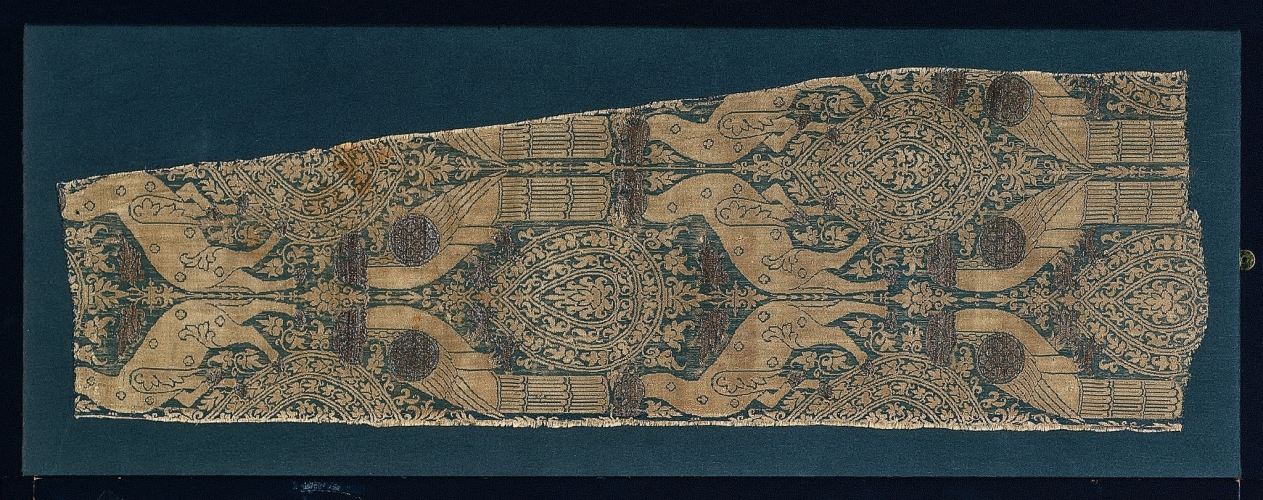
The Avian and the Animal: Silk as a Testament to Imperial Craft and Naturalistic Narrative
In the hallowed ateliers of London’s Savile Row, where the whisper of shears and the weight of worsted wool define the pinnacle of masculine tailoring, silk occupies a singular, almost paradoxical position. It is not the fabric of the everyday; it is the fabric of the statement. Yet, within the Lauren Fashion Heritage Lab, we do not merely study silk as a textile. We study it as a document—a material artifact that encodes the ambitions, ecologies, and aesthetic hierarchies of its era. The subject of parrots and animals, rendered in silk, offers a particularly rich case study. It is a motif that bridges the exoticism of the New World with the disciplined, hierarchical luxury of imperial silk weaving. This artifact is not a scarf or a gown; it is a narrative woven in thread, a testament to how the natural world was captured, commodified, and elevated into a symbol of power.
The Materiality of Silk: A Conduit for Imperial Prestige
To understand the significance of the parrot motif, one must first appreciate the materiality of silk itself. Imperial silk weaving, particularly during the Qing dynasty (1644–1912) and the European Renaissance, was not a mere industry; it was a state-sanctioned art form. The silkworm, Bombyx mori, was a creature of myth and economics, its thread a liquid gold that flowed from China to the courts of Europe. The materiality of silk—its lustre, its ability to absorb the most vibrant of natural dyes, its tensile strength—made it the ideal medium for depicting the vivid plumage of parrots. Unlike wool or linen, silk could capture the iridescence of a macaw’s wing or the deep green of a parrot’s back. This was not accidental. The weavers of the imperial workshops, whether in Suzhou or Lyon, understood that the parrot was a symbol of the exotic, a living jewel from the colonies. To render it in silk was to assert dominion over both the natural world and the distant lands from which these creatures came.
The legacy of imperial silk weaving is one of controlled luxury. The patterns were often dictated by sumptuary laws, which restricted the use of certain colours and motifs to the imperial family and high-ranking nobility. The parrot, therefore, was not a whimsical choice. It was a deliberate assertion of global reach. The animal motifs—the phoenix, the dragon, the crane—were deeply symbolic in Chinese culture, representing virtues such as longevity, power, and fidelity. The parrot, however, was a relative newcomer to this pantheon. Its inclusion in silk brocades and damasks from the 17th and 18th centuries signals a shift: the imperial gaze was turning outward. The parrot was a trophy of exploration, a living artifact from the Americas or Southeast Asia, woven into the very fabric of imperial authority.
Parrots and Animals: The Naturalistic Turn in Silk Design
When we examine a specific heritage artifact—a Qing dynasty silk panel, circa 1750, featuring a central parrot perched on a flowering branch, flanked by smaller songbirds and a stylised lion-dog—we see more than decoration. We see a sophisticated negotiation between naturalism and symbolism. The parrot is rendered with remarkable anatomical precision: the curved beak, the zygodactyl feet, the ringed eye. This is not the generic bird of medieval bestiaries. This is a specific creature, likely a blue-and-yellow macaw (Ara ararauna), a species that was being imported into China via Portuguese and Dutch traders. The silk weavers, working from sketches or even preserved specimens, translated this living creature into a pattern of warp and weft. The result is a tension between the organic and the geometric. The parrot’s feathers are suggested by a complex twill weave, while the background is a solid, imperial yellow—a colour reserved for the emperor himself.
The inclusion of other animals—the lion-dog, the butterflies, the carp—creates a microcosm of the imperial world. The lion-dog, a guardian figure, anchors the composition in Chinese cosmology, while the parrot, a foreign element, disrupts the traditional hierarchy. This is the genius of imperial silk weaving: it could absorb the new without abandoning the old. The materiality of silk allowed for this synthesis. The warp threads, often made of raw silk, provided the structure, while the weft threads, dyed with cochineal or indigo, provided the colour. The result was a fabric that was both rigid in its technique and fluid in its narrative.
The Savile Row Perspective: From Imperial Court to Tailored Garment
How does this heritage artifact speak to the modern Savile Row sensibility? The answer lies in the concept of bespoke luxury. Savile Row is not about mass production; it is about the individual relationship between client, cutter, and cloth. The imperial silk weaver and the Savile Row tailor share a fundamental philosophy: the garment must be a perfect expression of the wearer’s status and identity. When a contemporary client commissions a silk smoking jacket or a waistcoat featuring a parrot motif, they are not merely choosing a pattern. They are engaging with a lineage of power, exploration, and craftsmanship. The parrot, once a symbol of imperial conquest, becomes a symbol of personal taste—a quiet rebellion against the anonymity of modern fashion.
The materiality of silk remains paramount. A Savile Row tailor will select a silk with a specific weight, sheen, and drape. A heavy silk damask, woven with a parrot pattern, is suitable for a formal evening jacket. A lighter silk, perhaps a jacquard with a subtle animal motif, might be used for a summer blazer. The legacy of imperial weaving is felt in the precision of the pattern repeat and the depth of the colour. The parrot’s blue must be as vivid as it was in the 18th century; the animal’s form must be as clear as it was on the imperial loom. This is not nostalgia; it is continuity.
Conclusion: The Enduring Thread
The heritage artifact of parrots and animals in silk is a reminder that fashion is never merely about clothing. It is about the stories we choose to wear. The imperial silk weavers, working in the shadow of the throne, understood that a parrot was more than a bird—it was a statement of global ambition. The Savile Row tailor, working in the shadow of a different kind of tradition, understands that a silk jacket is more than a garment—it is a connection to that legacy. The materiality of silk, with its lustre and strength, ensures that these stories endure. The parrot still perches on its branch, the lion-dog still guards the gate, and the thread of imperial craftsmanship continues to run through the finest tailoring in London.
In the Lauren Fashion Heritage Lab, we preserve these artifacts not as relics, but as resources. They teach us that luxury is not about excess; it is about meaning. And in the weave of a silk panel, we find the meaning of an empire, a craft, and a creature that flew from the rainforest to the court, and now rests in the hands of a discerning gentleman on Savile Row.