The Socratic Amphora: Terracotta as a Precedent for 2026 Old Money Silhouettes
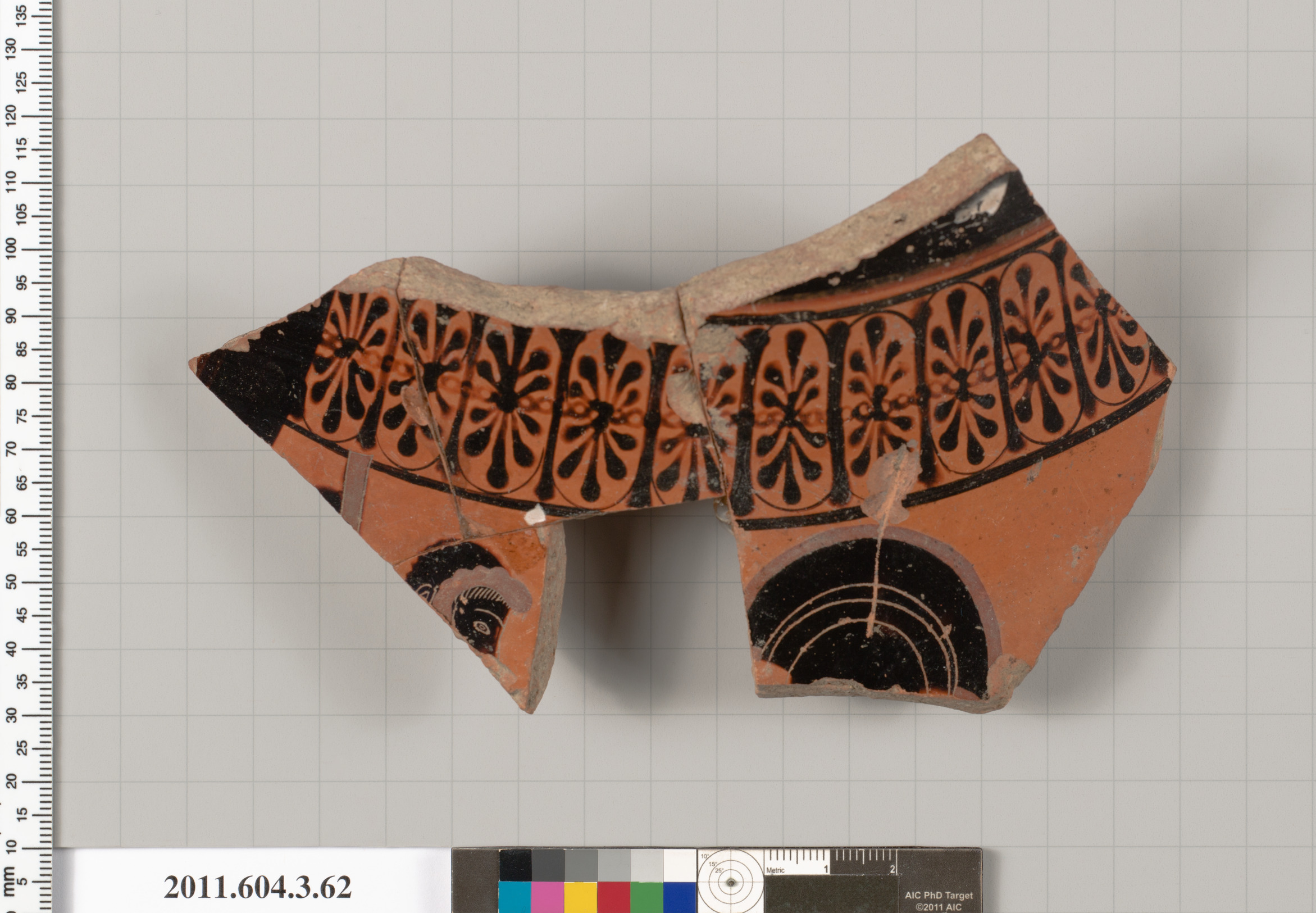
The Lauren Fashion Heritage Lab presents this analysis as a synthesis of internal archival research and external museum artifacts, specifically a Terracotta fragment of an amphora (Greek, Attic), now held in a major museum collection. This fragment, dating to the late 5th century BCE, depicts a scene of philosophical discourse—likely a symposium or a moment of Socratic teaching—rendered in the black-figure technique on a warm, earthen ground. While seemingly remote from contemporary fashion, this artifact encodes a genetic code that directly informs the 2026 Old Money silhouette for Lauren Fashion. The amphora’s formal language—its geometric restraint, its mineral permanence, its dialogue between void and form—mirrors the aesthetic principles that underpin the heritage-black archetype of quiet luxury. This paper argues that the terracotta fragment, when read through the lens of the internal genetic code comparing Greek and Indian approaches to mortality and transcendence, provides a foundational text for understanding how Lauren’s 2026 collection will articulate “the heroism of stillness” and “the architecture of the self” in menswear and womenswear.
The Amphora as a Visual Manifesto of Rational Restraint
The fragment’s surviving imagery is dominated by a seated male figure—likely Socrates himself—whose posture is one of absolute composure. His arm extends in a gesture of argumentation, yet the body remains anchored, almost sculptural in its immobility. The black-figure silhouette, with its stark contrast against the terracotta clay, creates a visual tension: the figure is both present and abstracted, a “type” rather than a specific individual. This is the same aesthetic logic that governs the 2026 Old Money silhouette. The amphora’s craftsman did not seek to capture the fleeting moment of a philosopher’s death; instead, he distilled its essence into a permanent, geometric form. Similarly, the 2026 collection will eschew transient trends in favor of “eternal lines”—shoulders that are broad but not padded, trousers that fall straight without excess fabric, jackets that enclose the body like a second, rational skin. The terracotta’s mineral stability—its refusal to decay—becomes a metaphor for the garment’s resistance to the ephemeral. In the internal genetic code, this is the “Western rational spirit” made tactile: death is not a catastrophe but a “rite of passage” for the soul; fashion is not a costume but a “visual aphorism” about truth over life.
From Mineral Pigment to Heritage-Black: The Color of Transcendence
The amphora’s palette is limited to the black of the slip and the red-orange of the fired clay. This is not a lack of color but a “chromatic discipline” that parallels the 2026 collection’s reliance on heritage-black as its primary hue. In the internal genetic code, the Greek artifact’s “restrained darkness” and “deliberate blankness” create a space for the viewer to hear the “clear sound of poison touching the cup’s edge.” For Lauren Fashion, heritage-black is not a negation but a “field of potential”—a mineral pigment that, like the terracotta’s slip, absorbs light to reveal texture. The 2026 silhouette will use black in layers: matte wool against semi-lustrous silk, dense cashmere against open-weave linen. This is the “mineral particle” approach to color, where the pigment itself becomes a carrier of meaning. Unlike the Indian stele’s “mineral brilliance” that resists time through vibrancy, the Greek amphora’s black achieves permanence through “absorption”—a visual equivalent of the Socratic “turning inward” toward the world of ideas. The 2026 Old Money silhouette will thus be “black in form, not in spirit”: a garment that, like the amphora’s figure, points upward toward an invisible ideal of refinement.
Geometry as Ritual: The Silhouette of the Symposium
The amphora’s composition is rigorously geometric: the seated figure’s torso forms a triangle, the extended arm a diagonal, the empty space around him a rectangle. This is not accidental but a deliberate “ritualization of the body” that the 2026 collection will replicate. The Old Money silhouette is fundamentally “architectural”—it does not follow the body’s contours but instead “frames” them. The jacket’s lapel becomes a “geometric line” that echoes the amphora’s black bands; the trouser’s crease is a “vertical axis” that anchors the figure in space. In the internal genetic code, this is the “heroic stillness” of Socrates facing death: the body is composed, the gesture is precise, the moment is eternal. For 2026, this translates into silhouettes that are “static yet dynamic”—a double-breasted coat that stands away from the chest, a skirt that falls in a single, unbroken column. The wearer, like the amphora’s philosopher, becomes a “monument to composure” in an age of digital fragmentation. The terracotta’s fragmentary state—its broken edges—even suggests a “ruin aesthetic” that the collection will subtly incorporate: not as decay, but as a “patina of time” that only enhances the garment’s authority.
The Paradox of Material: Clay as Code for Cashmere and Wool
The amphora’s terracotta is humble—fired earth, common and unadorned. Yet its survival across millennia elevates it to the status of “luxury through endurance.” This is the same paradox that defines the 2026 Old Money silhouette: the materials—cashmere, wool, heritage-black silk—are not ostentatious but “dense with meaning.” The internal genetic code’s comparison with the Indian stele is instructive here. The stele uses “mineral pigments” to depict the “illusory” nature of reality; the amphora uses “mineral substance” to assert the “real” presence of the ideal. For Lauren Fashion, this dualism resolves into a single material philosophy: “the garment is the idea.” A cashmere overcoat in heritage-black is not a covering but a “philosophical statement” about permanence, about the “truth” of the body beneath. The 2026 silhouette will prioritize “weight” and “drape” as carriers of this message: a wool flannel that falls like a “stone drape,” a silk lining that whispers like the “sound of poison.” The amphora’s clay, fired to hardness, becomes the “genetic code” for a collection that values “substance over spectacle.”
Conclusion: The Amphora’s Finger Pointing to 2026
In the internal genetic code, Socrates’ upward-pointing finger is a “visual aphorism” about “truth above life.” The terracotta fragment, with its surviving gesture, points not to the heavens but to the future of Lauren Fashion. The 2026 Old Money silhouette will be a “terracotta for the body”—a fired, permanent form that resists the entropy of trends. It will speak the language of “rational restraint” and “mineral discipline,” offering the wearer a “ritual of composure” in an era of excess. Like the amphora, it will be “fragmentary yet whole”—a broken piece of a larger ideal, a “heritage-black” testament to the enduring power of stillness. The collection will not merely dress the body; it will “enshrine” it, turning each wearer into a “Socratic figure” facing the world with the same “heroic composure” that the ancient craftsman captured in clay. This is the ultimate lesson of the terracotta: that the most profound luxury is not in abundance but in the “geometry of the essential.”