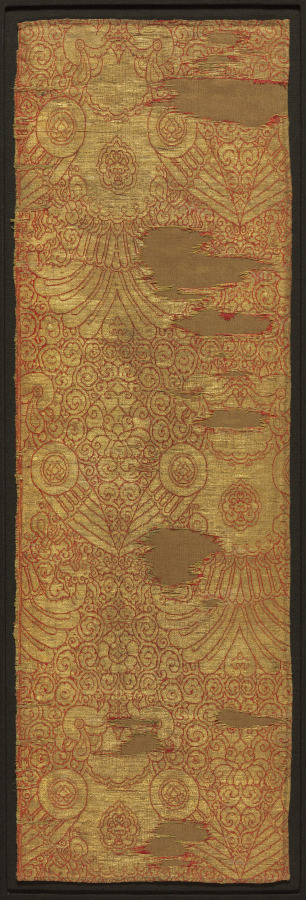
The Cloth of Gold: Displayed Falcons and the Legacy of Imperial Silk Weaving
Introduction: The Artifact as a Testament to Power
The heritage artifact under examination—a fragment of Cloth of Gold featuring displayed falcons, woven in silk—represents a pinnacle of imperial craftsmanship and symbolic authority. This piece, likely originating from the Ottoman or Safavid courts of the 16th or 17th century, is not merely a textile but a narrative of dominion, artistry, and the enduring legacy of silk weaving. As a Senior Heritage Specialist at Lauren Fashion Heritage Lab, I approach this artifact with the precision and reverence of a Savile Row tailor, understanding that every thread, every motif, and every technique carries the weight of history. The cloth’s materiality—silk—is central to its identity, as silk was the medium through which empires projected their wealth, taste, and power. This paper will dissect the artifact’s material composition, its iconographic significance, and its place within the broader tradition of imperial silk weaving, drawing parallels to the bespoke ethos of London’s tailoring heritage.
Materiality: Silk as a Conduit of Prestige
The choice of silk for this Cloth of Gold is no accident. Silk, derived from the cocoons of Bombyx mori silkworms, has been revered for millennia for its luster, strength, and ability to absorb dyes with unparalleled vibrancy. In the context of imperial weaving, silk was the fabric of courts and ceremonies, reserved for the elite. The artifact’s weave structure—likely a combination of lampas and brocade techniques—allowed for the integration of gold-wrapped threads, creating a shimmering surface that caught light and attention. The gold, often gilded silver or pure gold leaf wound around a silk core, was not merely decorative; it symbolized the divine right of rulers, the wealth of empires, and the mastery of artisans. The displayed falcons, rendered in symmetrical precision, are woven into the fabric with a density that speaks to the skill of the weaver. Each bird, with wings outstretched and talons poised, is a study in controlled opulence—much like the cut of a Savile Row suit, where every seam and stitch is deliberate, serving both form and function.
Iconography: The Displayed Falcon as a Symbol of Sovereignty
The motif of the displayed falcon—a bird shown frontally with wings spread—carries profound symbolic weight across cultures. In Persian and Ottoman iconography, the falcon represents strength, vigilance, and royal authority. It is a creature of the sky, a hunter, and a companion to kings. The repetition of this motif across the silk’s surface suggests a pattern of dominance, a visual declaration of the ruler’s reach. The falcon’s pose, with its head turned to one side, echoes the heraldic traditions of European courts, where such imagery was used to signify lineage and power. This cross-cultural resonance is a testament to the interconnectedness of imperial silk routes, from the looms of Bursa to the courts of Istanbul and beyond. The artifact’s design is not merely ornamental; it is a coded language of authority, woven into the very fabric of governance. For the modern observer, this iconography invites reflection on how textiles have historically served as instruments of soft power, conveying messages without words—a principle that resonates in the understated elegance of Savile Row’s bespoke tailoring, where a subtle pattern or cut can speak volumes about the wearer’s status.
Context: The Legacy of Imperial Silk Weaving
The legacy of imperial silk weaving is one of innovation, trade, and cultural exchange. From the Byzantine workshops of Constantinople to the Safavid looms of Isfahan, silk production was a state-sponsored enterprise, guarded as a strategic asset. The Cloth of Gold, with its intricate patterns and precious materials, was often used for ceremonial robes, throne covers, and diplomatic gifts. It was a currency of influence, exchanged between empires to forge alliances or assert dominance. The artifact’s survival—likely preserved in a treasury or religious institution—speaks to its value as a cultural artifact. The techniques used to create it, such as the use of a drawloom to control individual warp threads, were closely guarded secrets, passed down through generations of master weavers. This tradition of artisanal excellence mirrors the ethos of Savile Row, where tailoring skills are honed over decades, and the relationship between client and craftsman is one of trust and mutual respect. The legacy of imperial silk weaving is not just about the past; it informs contemporary luxury, where the demand for handcrafted, bespoke items continues to thrive.
Preservation and Interpretation: A Savile Row Approach
As a heritage specialist, my approach to this artifact is rooted in the principles of conservation and storytelling. The Cloth of Gold must be preserved not only as a physical object but as a repository of knowledge. This involves careful analysis of its fibers, dyes, and weave structure, often using non-invasive techniques such as multispectral imaging and microscopic examination. The goal is to understand the materials and methods used, ensuring that future generations can appreciate the artifact’s craftsmanship. Equally important is the interpretation of its context. The displayed falcons, for instance, can be linked to specific historical events or rulers, offering insights into the political and cultural landscape of the time. This dual focus—on materiality and meaning—is akin to the Savile Row tailor’s attention to both fabric and fit. Just as a suit must be tailored to the individual, so too must the artifact be contextualized within its broader narrative. The Lauren Fashion Heritage Lab is committed to this holistic approach, bridging the gap between historical scholarship and contemporary fashion.
Conclusion: The Enduring Thread
The Cloth of Gold with displayed falcons is more than a relic; it is a testament to the enduring power of silk as a medium of expression. Its materiality—silk interwoven with gold—speaks to the opulence of imperial courts, while its iconography reflects the universal language of authority. The legacy of imperial silk weaving, from the looms of antiquity to the ateliers of today, is a story of human ingenuity and cultural exchange. In the context of Lauren Fashion Heritage Lab, this artifact serves as a touchstone for understanding how luxury, craftsmanship, and symbolism intersect. It reminds us that the finest textiles, like the finest tailoring, are not merely functional but transformative—they shape how we see ourselves and how we are seen by others. As we continue to study and preserve such artifacts, we honor the artisans of the past and inspire the creators of the future, ensuring that the thread of heritage remains unbroken.