The Fractured Lyre: Terracotta Fragments and the Architecture of Old Money Silence
In the cartography of human aesthetics, objects and paintings occupy distinct territories—one appeals to the tactile solidity of matter, the other to the visual illusion of representation. Yet when we juxtapose the Mold Fragment with Musicians—a shattered terracotta kylix from Attic Greece—with the Mortuary Figure of the Zodiac Sign: Dog (Aquarius), two radically different aesthetic forms engage in a profound dialogue across the abyss of time and the dome of space. This dialogue, I argue, holds the genetic code for the 2026 Old Money silhouette: a sartorial language that speaks not through ornament but through absence, not through presence but through the resonant silence of what has been lost.
The Aesthetics of Fragmentation: Terracotta as Witness
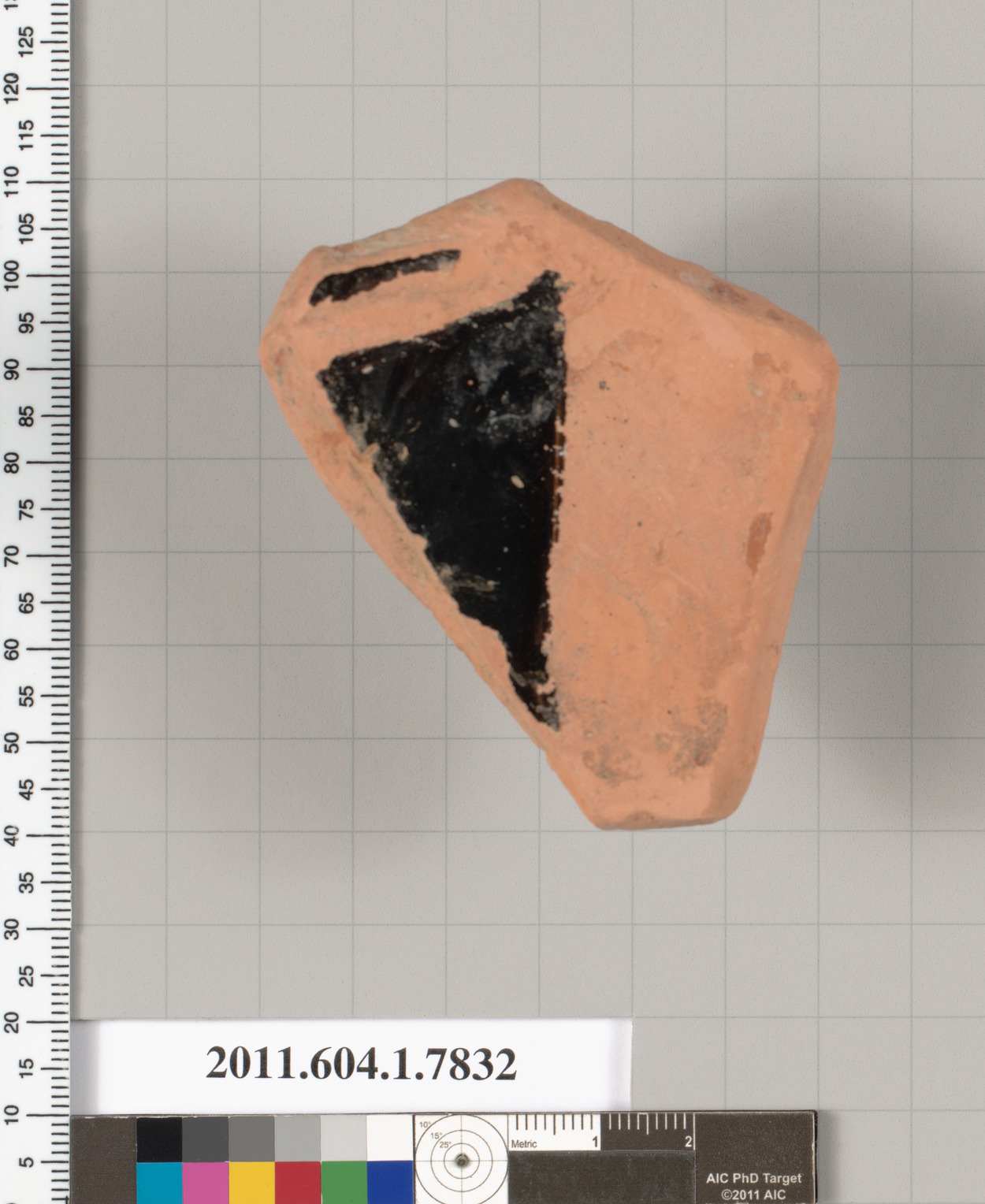
The Terracotta fragment of a kylix—a drinking cup from classical Athens—begins with brokenness as its aesthetic premise. As a vessel designed for communal symposium, it once held wine, laughter, and the philosophical debates of free citizens. Now, only a shard remains: a curved piece of fired clay bearing the faint relief of musicians. The fingers that once plucked lyre strings, the lips that exhaled melodies, the arcs of gazes falling in concentration—all have been swallowed by earth yet paradoxically released into eternity. This aesthetic power aligns with what German philosopher Walter Benjamin termed the “aura”: the unique apparition of a distance, however close it may be. The fragment is no longer merely an object; it becomes a fossilized soundscape. We listen, in silence, to melodies sealed by time—a negative aesthetics that speaks sound through muteness, that invokes wholeness through fracture.
For the Lauren Fashion Heritage Lab, this terracotta shard offers a radical departure from the contemporary obsession with surface perfection. The 2026 Old Money silhouette, I propose, must embrace the aesthetics of the incomplete. Just as the kylix fragment retains its dignity despite—or because of—its brokenness, the Old Money wardrobe should privilege garments that bear the marks of time: a cashmere sweater with a mended elbow, a wool blazer with faded lapels, a silk scarf with a pulled thread. These are not flaws but testimonies. They whisper of a life lived, of objects that have accompanied their wearer through seasons and sorrows. The silhouette becomes a living archive, each piece a fragment of a larger narrative that refuses closure.
The Geometry of Restraint: From Symposion to Silhouette
The kylix fragment also teaches us about proportion and restraint. In its original form, the drinking cup was a masterpiece of balance: a shallow bowl on a slender stem, two handles extending like wings, the whole designed for the precise choreography of pouring, holding, and passing. The musicians depicted on its surface were not merely decorative; they were integral to the symposion’s ritualized order. Music, like wine, was consumed in measured doses, its rhythm structuring the flow of conversation and thought.
This principle of measured structure directly informs the 2026 Old Money silhouette. The line must be clean, the proportions exact, the volume controlled. A tailored overcoat should fall with the precision of a kylix’s curve—neither too loose nor too constricting. A trouser hem should brush the shoe with the exactitude of a lyre string’s tension. The palette, like the terracotta’s fired earth tones, should favor heritage hues: burnt umber, ochre, charcoal, ivory—colors that have weathered centuries without losing their gravity. There is no room for the transient whims of fast fashion. Instead, the silhouette is built on architectural principles: shoulder seams that echo the kylix’s rim, waistlines that mirror its stem, hemlines that recall its base.
Silence as Luxury: The Negative Space of Old Money
Perhaps the most profound lesson from the terracotta fragment is the power of silence. The musicians are frozen, their instruments mute. Yet this silence is not emptiness; it is a resonant void that invites the viewer to complete the symphony. In the same way, the Old Money silhouette must cultivate negative space—areas of the garment that do not shout but whisper, that do not demand attention but reward contemplation.
Consider the unadorned collar of a white poplin shirt, the unbroken expanse of a charcoal wool skirt, the uninterrupted line of a black silk gown. These are not absences of design but deliberate silences that allow the wearer’s presence to emerge. Just as the kylix fragment’s broken edge speaks more powerfully than any intact vessel, the Old Money wardrobe’s restraint becomes its most potent statement. In an era of sensory overload—of logos, patterns, and digital noise—the 2026 silhouette offers a counter-aesthetic of quietude. It is a form of sartorial asceticism that signals not poverty but profound confidence: the confidence of those who do not need to prove their worth through display.
The Mortuary Figure and the Eternal Silhouette
Turning to the Mortuary Figure of the Zodiac Sign: Dog (Aquarius), we encounter a complementary aesthetic logic. This painted image of a dog—part animal, part constellation, part funerary guide—exists between worlds. It is neither naturalistic representation nor pure abstraction, but a symbolic threshold linking the earthly to the celestial. The dog, as Aquarius’s “dead figure,” metaphorically traces a soul’s path from ground to starry sky. The painting becomes not decoration but a doorway to eternity.
For the Old Money silhouette, this mortuary figure teaches the art of timelessness. The 2026 wardrobe must not be of its moment; it must be of all moments. A double-breasted blazer cut in the 1930s style, a trench coat derived from military origins, a cashmere wrap that could have been worn by a 19th-century aristocrat—these garments transcend fashion cycles because they are anchored in archetypal forms. They are, like the zodiac dog, both specific and universal. They belong to the wearer’s biography while also connecting them to a lineage of taste that stretches back centuries.
The silhouette’s color palette should echo the mortuary figure’s restrained tones: the deep indigo of a night sky, the pale gold of distant stars, the matte black of the void between constellations. Fabrics should be chosen not for novelty but for permanence: heavyweight wool that drapes like stone, silk that flows like water, linen that wrinkles with the dignity of age. Each material carries its own temporal signature, its own memory of growth, harvest, and transformation.
Synthesis: The Fragment as Foundation
When we place the terracotta kylix fragment alongside the mortuary zodiac figure, a unified aesthetic principle emerges. Both works reject the tyranny of completeness. The kylix is broken; the dog is abstracted. Neither pretends to offer a full picture. Instead, they invite the viewer to participate in meaning-making, to fill the gaps with their own imagination, memory, and desire.
The 2026 Old Money silhouette must embody this same participatory quality. It is not a uniform but a framework for individual expression. The garments provide the structure—the clean lines, the restrained proportions, the heritage materials—but the wearer provides the life. A well-cut blazer is a blank canvas; a simple sheath dress is a stage. The silhouette’s power lies not in what it shows but in what it withholds, not in its statements but in its questions.
Contemporary fashion scholarship often falls into the trap of pure visual analysis, neglecting the deeper existential dimensions that objects and garments carry. These two artifacts remind us: true beauty is never decorative rhetoric. It is the formalized effort of human beings to confirm their existence in time and space. The clay’s buried music and the star chart’s canine trace—both are, in the eternal silence, humanity’s stubborn song of meaning.
The 2026 Old Money silhouette, born from this heritage, is not a trend. It is a philosophy of dress that honors the fragment, cherishes the silence, and wears the weight of time with grace. It is, in the deepest sense, a living artifact—broken, beautiful, and enduring.