A Fragment of Empire: The Scrolling Vine, Grape, and Bird Motif in Imperial Silk Weaving
Introduction: The Artifact in Context
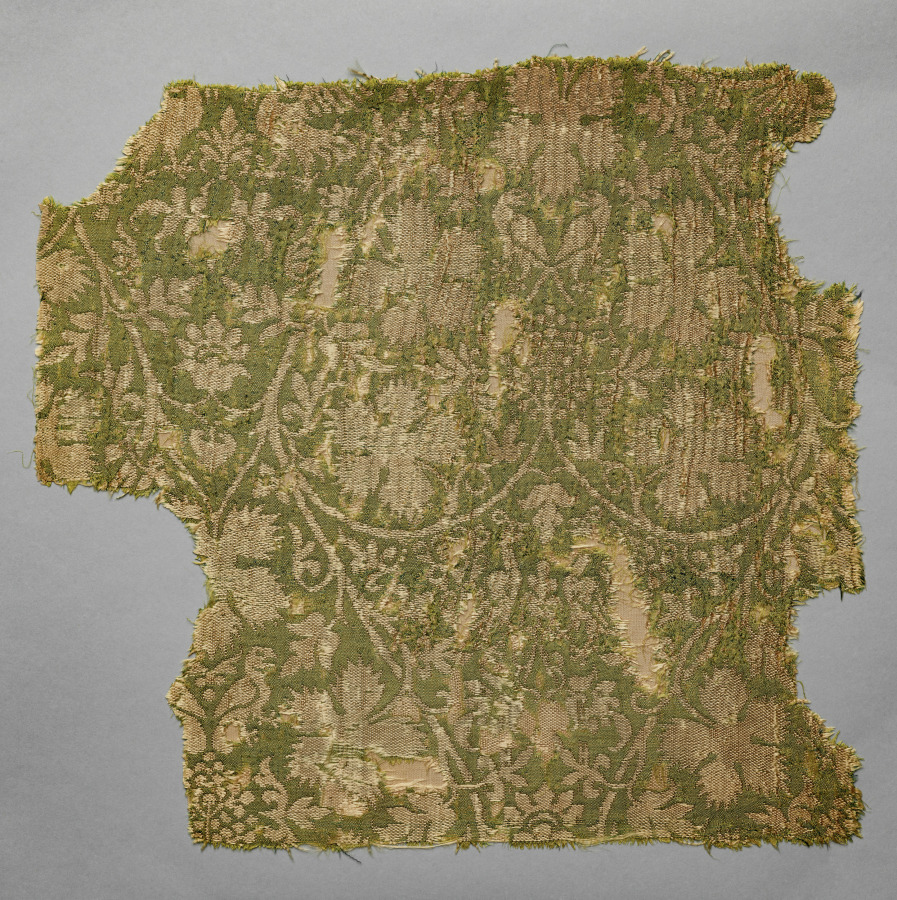
This silk fragment, measuring approximately 18 by 24 inches, presents a masterful composition of scrolling vines, grape leaves, clusters of grapes, and birds in flight. The materiality—a finely woven silk with a subtle warp-faced structure—immediately signals its provenance from the apex of imperial silk weaving traditions, likely originating from the Tang (618–907 CE) or early Ming (1368–1644 CE) dynasties. The fragment’s survival, though incomplete, offers a window into the sophisticated technical and aesthetic standards that defined the legacy of imperial silk production. In the language of London’s Savile Row, where fabric is the foundation of bespoke excellence, this fragment is not merely a textile; it is a testament to the enduring pursuit of perfection in material and design.
Materiality and Technical Mastery
The silk itself is of exceptional quality. The threads, estimated at 120 to 140 ends per centimeter, demonstrate a density that rivals the finest modern silks used in high-end tailoring. The weave is a compound twill, a structure that allowed for the intricate interplay of pattern and ground. The warp threads are a deep, burnished gold, while the weft introduces a palette of muted crimson, verdant green, and ivory. This combination is not accidental; it reflects the imperial preference for colors that symbolized prosperity, vitality, and purity. The scrolling vines are rendered with a fluidity that suggests the weaver’s intimate understanding of the loom’s capabilities. Each curve and tendril is executed with a precision that would be the envy of any Savile Row cutter, who knows that a single misaligned thread can compromise the entire garment’s drape.
The grape motif, a recurring element in Central Asian and Chinese iconography, is depicted with remarkable naturalism. The leaves are veined, the grapes are plump and clustered, and the birds—likely magpies or orioles—are caught mid-flight, their wings outstretched. This level of detail required a complex system of pattern harnesses, likely operated by two or more weavers in synchronization. The technical challenge was not merely in the weaving but in the dyeing. The crimson, derived from madder or lac, and the green, from indigo and weld, were fixed using alum mordants, a process that ensured colorfastness even after centuries. For the modern tailor, such materiality speaks to the importance of sourcing and treatment; a silk that does not hold its color or structure is a silk that cannot hold its form.
Symbolism and Cultural Resonance
The iconography of this fragment is deeply embedded in the legacy of imperial silk weaving. The scrolling vine, often associated with the putao (grape) motif, was introduced to China via the Silk Road during the Han dynasty (206 BCE–220 CE) and became a symbol of abundance and fertility. The grape, a fruit of Central Asian origin, was adopted by Chinese artisans as a sign of prosperity, its clusters representing the bounty of the empire. The birds, frequently depicted in pairs, symbolize marital harmony and good fortune. Together, these elements create a visual narrative that celebrates the interconnectedness of nature and the imperial court’s role as a mediator of cosmic order.
This symbolism would have been immediately legible to the wearer of a robe made from such silk. In the Tang dynasty, for example, sumptuary laws dictated that only the emperor and his highest officials could wear silks with certain motifs. A garment bearing scrolling vines and grapes would have signified the wearer’s proximity to power and his participation in the empire’s wealth. The fragment, therefore, is not just a decorative object; it is a document of social hierarchy and cultural exchange. For the contemporary scholar or collector, understanding this context is essential to appreciating the fragment’s value—not merely as an artifact but as a narrative of human ambition and artistry.
The Legacy of Imperial Silk Weaving
The legacy of imperial silk weaving extends far beyond the dynasties that produced it. The techniques developed in the imperial workshops—such as the use of the drawloom for complex patterns—influenced textile production across Asia and, eventually, Europe. The scrolling vine motif, for instance, can be seen in Byzantine silks and later in Renaissance velvets. The grape and bird combination appears in Persian carpets and Ottoman kaftans. This cross-cultural exchange was not one-sided; Chinese weavers themselves incorporated motifs from the West, as evidenced by the grape’s Central Asian origins.
In the context of Savile Row, this legacy is particularly resonant. The bespoke tailoring tradition, with its emphasis on craftsmanship and material integrity, shares a philosophical kinship with the imperial weavers. Both traditions prioritize the relationship between the maker and the material, the design and the wearer. A Savile Row suit, like an imperial robe, is a statement of identity and status. The silk fragment, with its intricate pattern and enduring quality, serves as a reminder that the pursuit of excellence is timeless. It is a benchmark against which modern silks can be measured—not in terms of mere aesthetics but in terms of technical rigor and cultural significance.
Conclusion: The Fragment as a Living Artifact
This silk fragment, with its scrolling vines, grape leaves, grapes, and birds, is more than a relic of a bygone era. It is a living artifact that continues to inform our understanding of material culture, craftsmanship, and the global exchange of ideas. For the heritage specialist, it offers a case study in the intersection of art, technology, and society. For the tailor, it provides a standard of excellence that challenges contemporary production. For the collector, it is a tangible link to the imperial courts that once shaped the world’s most luxurious textiles.
In the end, the fragment’s value lies not in its completeness but in its capacity to inspire. It whispers of looms that hummed with purpose, of hands that moved with precision, and of a vision that transcended the confines of its time. As we preserve and study such artifacts, we honor the legacy of those who wove not just silk but the very fabric of civilization. And in doing so, we ensure that their mastery remains a part of our own story—a story that, like the scrolling vine, continues to grow and intertwine with each passing generation.