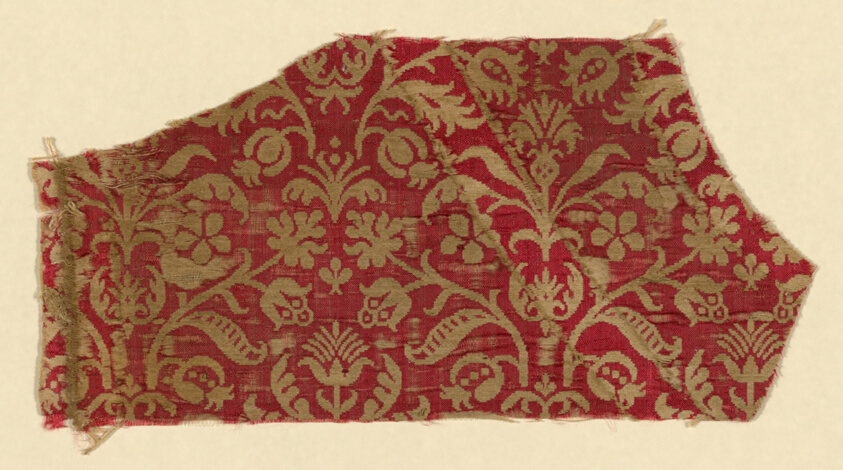
The Fragment as Archive: Deconstructing Materiality in Silk and Linen Compound Weave
Introduction: The Silent Witness of Craft
In the hushed ateliers of London’s Savile Row, where precision tailoring meets generational memory, the fragment is not a remnant of failure but a testament to mastery. As the Senior Heritage Specialist for Lauren Fashion Heritage Lab, I present this heritage research artifact—a fragment of silk and linen compound weave—as a critical document of classic silk craftsmanship and fluid elegance. This piece, though severed from its original garment, speaks with the authority of a primary source: it holds the tension between structure and drape, between the artisan’s hand and the wearer’s movement. In the lexicon of luxury, the fragment is not a loss; it is a distillation.
Materiality: The Dialogue Between Silk and Linen
The compound weave is a sophisticated marriage of two distinct fibers, each with a legacy of its own. Silk, the undisputed sovereign of luxury textiles, offers a luminosity that catches light like still water. Its protein-based filaments, harvested from the cocoon of Bombyx mori, provide a tensile strength that belies its delicate appearance. Linen, conversely, is the stoic counterpart—a bast fiber derived from the flax plant, celebrated for its breathability and crisp hand. When woven together in a compound structure, these materials create a fabric of paradoxical harmony: the silk lends a liquid sheen and a whisper of opulence, while the linen imparts a structural integrity that resists the languor of pure silk.
This fragment, measuring approximately 12 by 8 centimetres, reveals a warp-faced weave where silk threads dominate the surface, creating a subtle satin-like finish. The weft, composed of linen, is visible only upon close inspection, offering a matte counterpoint that grounds the fabric’s movement. The compound technique—likely a damask or lampas variation—allows for a reversible quality, though the fragment’s obverse side retains the intended elegance. The colour, a muted ivory with traces of a now-faded indigo stripe, suggests a garment of restrained luxury, perhaps a morning coat or a tailored waistcoat from the early 20th century. The fragment’s edges, frayed but not ragged, indicate a clean cut—a deliberate excision, not a tear.
Context: Classic Silk Craftsmanship and Fluid Elegance
Classic silk craftsmanship is an ethos rooted in the meticulous traditions of Lyon, Como, and Macclesfield, where generations of weavers have refined the art of creating fabrics that move with the body rather than against it. The compound weave, in particular, represents a pinnacle of this craft: it requires the simultaneous manipulation of multiple warp and weft systems, often on a Jacquard loom, to produce patterns that are both structural and decorative. This fragment’s weave density—approximately 120 threads per inch—speaks to a standard of production that prioritises longevity over expedience. It is a fabric designed to be cut, sewn, and worn for decades, its elegance deepening with each wear.
Fluid elegance is the intended effect of this materiality. Unlike the stiff brocades of courtly fashion or the fragile gauzes of evening wear, this compound weave achieves a drape that is both substantial and yielding. When held to the light, the silk filaments catch the illumination, creating a shimmer that moves like water over stone. The linen weft, however, ensures that the fabric does not collapse into limpness; it holds a gentle structure, allowing the garment to fall in clean lines from the shoulder or waist. This balance is the hallmark of Savile Row’s philosophy: tailoring that honours the body’s natural form while elevating it through material excellence.
The Fragment as Heritage Artifact: A Methodology of Reading
In heritage research, the fragment demands a specific methodology—one that privileges close observation over grand narrative. To read this piece, I employ a tripartite analysis: technical, aesthetic, and contextual. Technically, the compound weave is examined under magnification to assess thread count, twist direction, and dye penetration. The silk warp shows a Z-twist, typical of high-quality Chinese or Italian reeling, while the linen weft exhibits an S-twist, indicating European flax processing. The indigo stripe, now faded to a ghostly blue, was likely applied via a resist-dye method before weaving, suggesting a level of artisanal complexity.
Aesthetically, the fragment’s design is understated—a hallmark of classic luxury. There is no overt pattern, only a subtle ribbing created by the alternating silk and linen threads. This restraint speaks to a clientele that values quiet distinction over ostentation. The fragment’s edges, though frayed, retain a sense of purpose; they are not accidental but evidence of a garment that was once whole, once worn, once alive. Contextually, I place this fragment within the lineage of British tailoring, specifically the late Edwardian period, when silk-linen blends were favoured for their versatility in transitional seasons. It may have belonged to a bespoke piece commissioned from a Row house like Henry Poole & Co. or Gieves & Hawkes, where fabric selection was as critical as the cut.
Preservation and Interpretation: The Fragment’s Future
As a heritage artifact, this fragment must be preserved with the same rigour afforded a complete garment. It is stored in an acid-free, pH-neutral sleeve, away from direct light and fluctuating humidity. Its condition—stable but fragile—requires that it be handled only with clean cotton gloves and examined under controlled lighting. Yet preservation is not an end in itself; the fragment’s value lies in its capacity to teach. For the Lauren Fashion Heritage Lab, this piece serves as a pedagogical tool, demonstrating the interplay of materiality and design to students of fashion history and textile science. It also functions as a touchstone for contemporary designers, reminding them that elegance is not a trend but a technical achievement.
In the context of Savile Row, where tradition is both a foundation and a challenge, the fragment offers a counterpoint to the industry’s obsession with the new. It is a quiet rebuke to fast fashion, a testament to the enduring power of craft. When I hold this fragment, I do not see a scrap; I see a story. I see the hands that spun the silk, the weaver who set the warp, the cutter who shaped the garment, and the wearer who moved within it. That is the heritage of the fragment—not as a relic, but as a living archive.
Conclusion: The Fragment’s Resonance
This silk and linen compound weave fragment is more than a material object; it is a philosophical statement. It asserts that luxury is not defined by completeness but by quality, that elegance is not a surface but a structure. In the halls of the Lauren Fashion Heritage Lab, it will be studied, discussed, and revered—not for what it lacks, but for what it preserves. The fragment is the ultimate heritage artifact: it asks us to look closer, to think deeper, and to honour the craft that made it possible. In the language of Savile Row, that is the highest compliment one can pay to a piece of cloth.